Kim Myung-Sunny, Yamamoto Yasuhiko, Kim Kyungjin, Kamei Nozomu, Shimada Takeshi, Liu Libin, Moore Kristin, Woo Ju Rang, Shoelson Steven E, Lee Jongsoon
The Joslin Diabetes Center and Department of Medicine, Harvard Medical School, Boston, Massachusetts, United States of America ; Korea Food Research Institute, Seongnam, Republic of Korea.
The Joslin Diabetes Center and Department of Medicine, Harvard Medical School, Boston, Massachusetts, United States of America ; Kanazawa University Graduate School of Medical Sciences, Kanazawa, Japan.
PLoS One. 2013 Dec 23;8(12):e82847. doi: 10.1371/journal.pone.0082847. eCollection 2013.
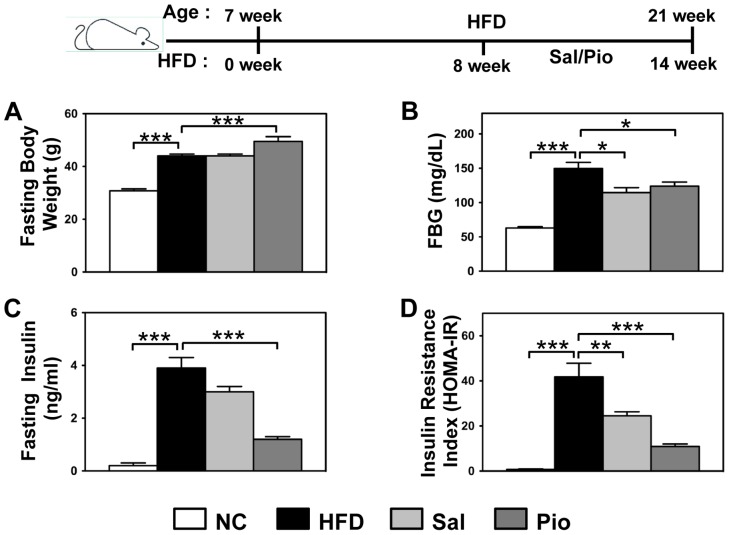
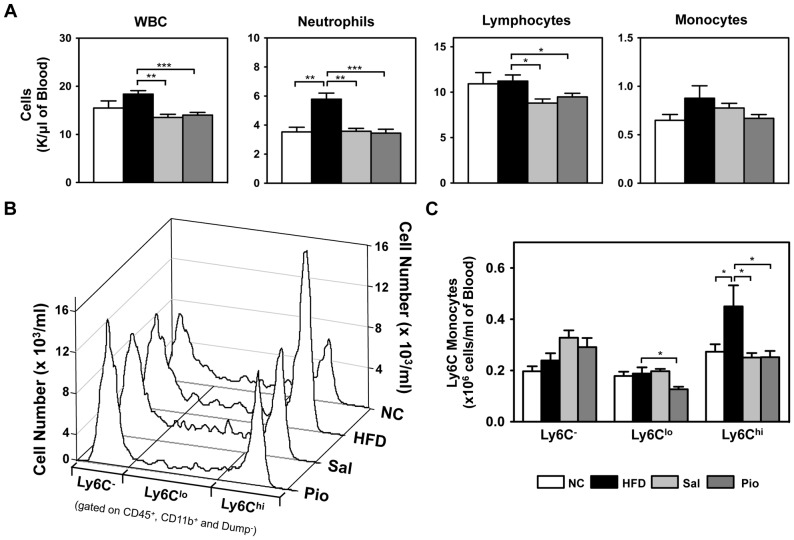
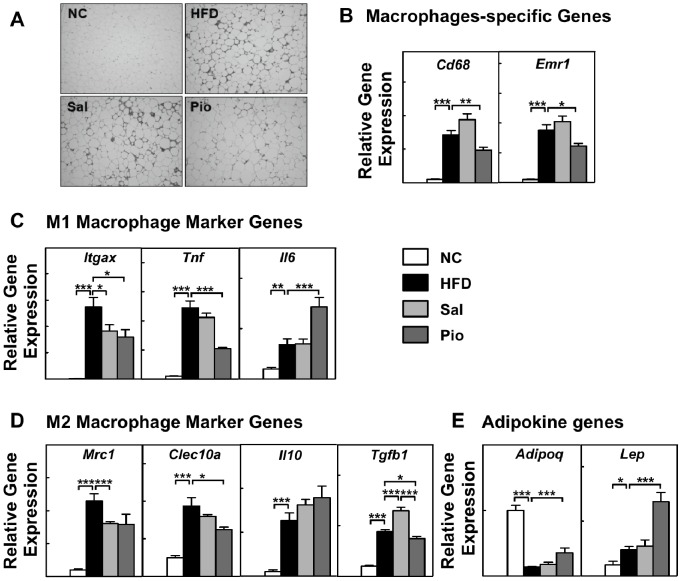
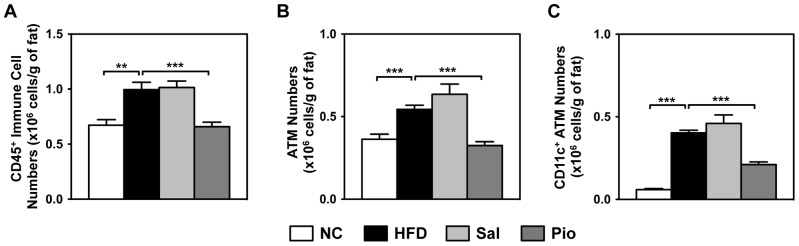
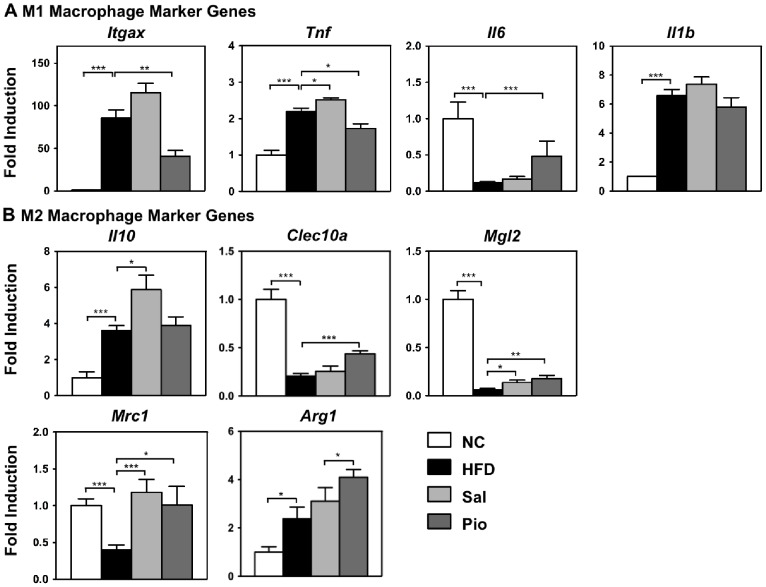
It is increasingly accepted that chronic inflammation participates in obesity-induced insulin resistance and type 2 diabetes (T2D). Salicylates and thiazolidinediones (TZDs) both have anti-inflammatory and anti-hyperglycemic properties. The present study compared the effects of these drugs on obesity-induced inflammation in adipose tissue (AT) and AT macrophages (ATMs), as well as the metabolic and immunological phenotypes of the animal models. Both drugs improved high fat diet (HFD)-induced insulin resistance. However, salicylates did not affect AT and ATM inflammation, whereas Pioglitazone improved these parameters. Interestingly, HFD and the drug treatments all modulated systemic inflammation as assessed by changes in circulating immune cell numbers and activation states. HFD increased the numbers of circulating white blood cells, neutrophils, and a pro-inflammatory monocyte subpopulation (Ly6C(hi)), whereas salicylates and Pioglitazone normalized these cell numbers. The drug treatments also decreased circulating lymphocyte numbers. These data suggest that obesity induces systemic inflammation by regulating circulating immune cell phenotypes and that anti-diabetic interventions suppress systemic inflammation by normalizing circulating immune phenotypes.
越来越多的人认为,慢性炎症参与了肥胖诱导的胰岛素抵抗和2型糖尿病(T2D)。水杨酸盐和噻唑烷二酮(TZDs)都具有抗炎和抗高血糖特性。本研究比较了这些药物对肥胖诱导的脂肪组织(AT)和AT巨噬细胞(ATM)炎症的影响,以及对动物模型代谢和免疫表型的影响。两种药物均改善了高脂饮食(HFD)诱导的胰岛素抵抗。然而,水杨酸盐不影响AT和ATM炎症,而吡格列酮改善了这些参数。有趣的是,通过循环免疫细胞数量和激活状态的变化评估,HFD和药物治疗均调节了全身炎症。HFD增加了循环白细胞、中性粒细胞和促炎单核细胞亚群(Ly6C(hi))的数量,而水杨酸盐和吡格列酮使这些细胞数量恢复正常化。药物治疗还减少了循环淋巴细胞数量。这些数据表明,肥胖通过调节循环免疫细胞表型诱导全身炎症,而抗糖尿病干预通过使循环免疫表型正常化来抑制全身炎症。