Emerg Infect Dis. 2014 Jan;20(1):70-6. doi: 10.3201/eid2001.120386.
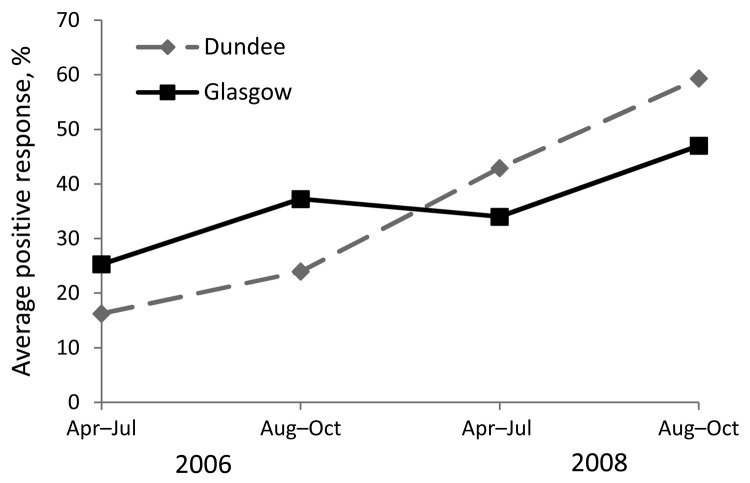
Continuous exposure to low levels of Cryptosporidium oocysts is associated with production of protective antibodies. We investigated prevalence of antibodies against the 27-kDa Cryptosporidium oocyst antigen among blood donors in 2 areas of Scotland supplied by drinking water from different sources with different filtration standards: Glasgow (not filtered) and Dundee (filtered). During 2006-2009, seroprevalence and risk factor data were collected; this period includes 2007, when enhanced filtration was introduced to the Glasgow supply. A serologic response to the 27-kDa antigen was found for ≈75% of donors in the 2 cohorts combined. Mixed regression modeling indicated a 32% step-change reduction in seroprevalence of antibodies against Cryptosporidium among persons in the Glasgow area, which was associated with introduction of enhanced filtration treatment. Removal of Cryptosporidium oocysts from water reduces the risk for waterborne exposure, sporadic infections, and outbreaks. Paradoxically, however, oocyst removal might lower immunity and increase the risk for infection from other sources.
持续接触低水平的隐孢子虫卵囊会产生保护性抗体。我们调查了苏格兰两个地区的献血者中,针对 27 kDa 隐孢子虫卵囊抗原的抗体流行率。这两个地区的饮用水源不同,过滤标准也不同:格拉斯哥(未过滤)和邓迪(过滤)。在 2006-2009 年期间收集了血清流行率和危险因素数据;这一时期包括 2007 年,当时格拉斯哥的供水系统引入了增强型过滤。在这两个队列中,约 75%的献血者对 27 kDa 抗原产生了血清学反应。混合回归模型表明,格拉斯哥地区人群对隐孢子虫的抗体血清流行率下降了 32%,这与增强型过滤处理的引入有关。从水中去除隐孢子虫卵囊可降低经水接触、散发性感染和暴发的风险。然而,具有讽刺意味的是,卵囊的去除可能会降低免疫力,并增加来自其他来源感染的风险。