Jackson Randy, Oda Robert P, Bhandari Raj K, Mahon Sari B, Brenner Matthew, Rockwood Gary A, Logue Brian A
Department of Chemistry and Biochemistry, South Dakota State University , Box 2202, Brookings, South Dakota 57007, United States.
Anal Chem. 2014 Feb 4;86(3):1845-52. doi: 10.1021/ac403846s. Epub 2014 Jan 16.
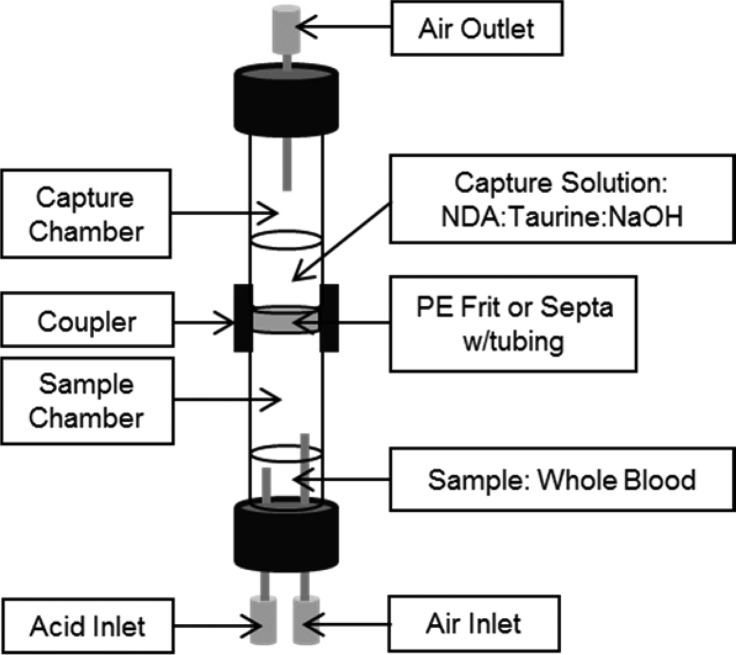
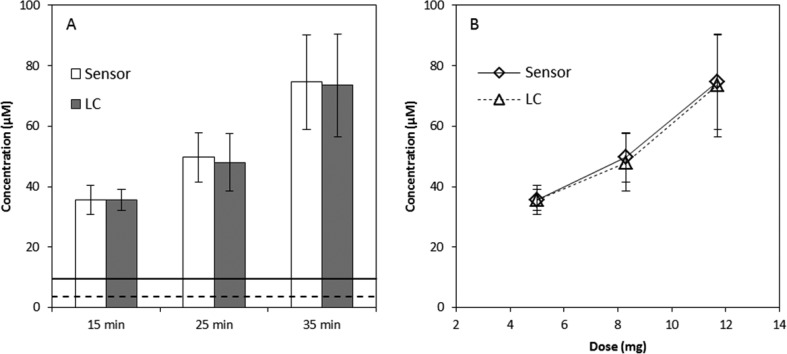
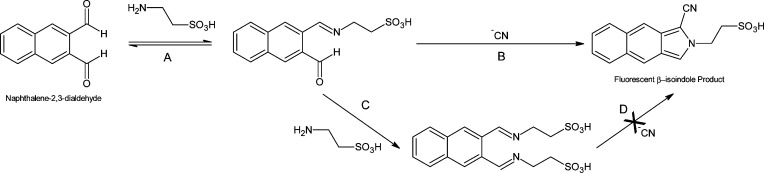
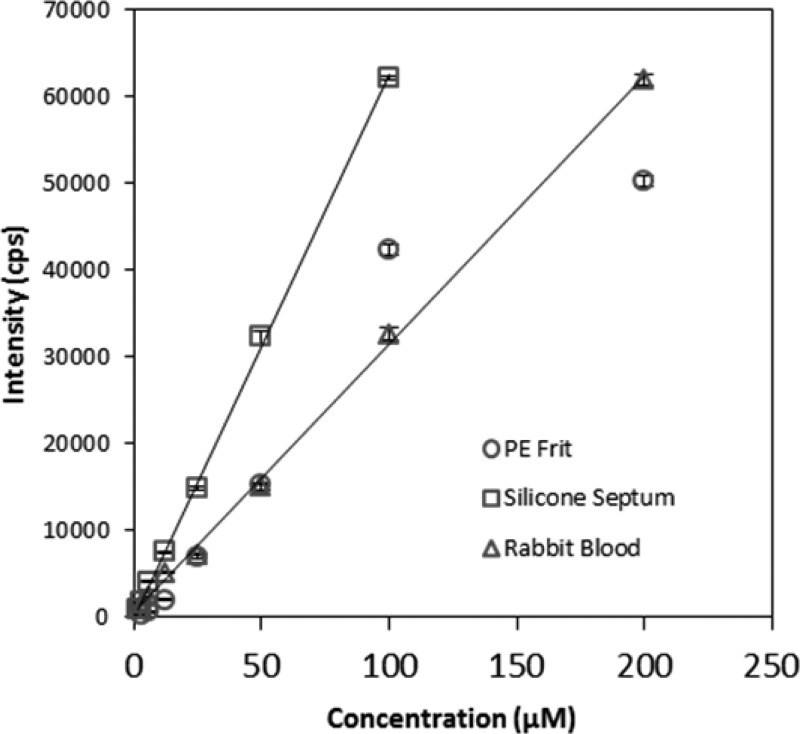
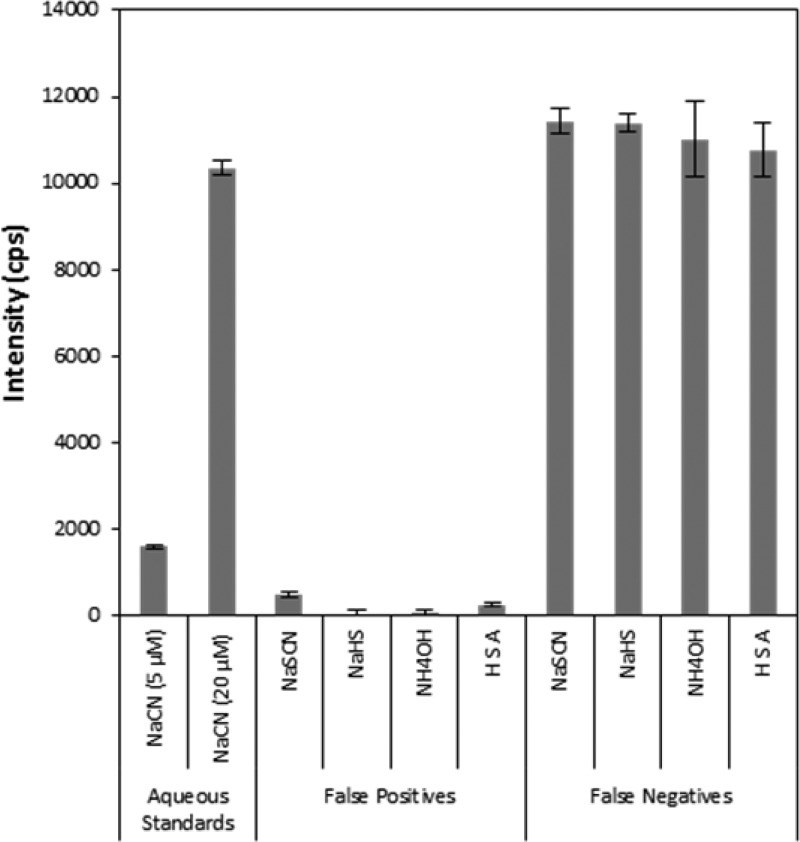
Although commonly known as a highly toxic chemical, cyanide is also an essential reagent for many industrial processes in areas such as mining, electroplating, and synthetic fiber production. The "heavy" use of cyanide in these industries, along with its necessary transportation, increases the possibility of human exposure. Because the onset of cyanide toxicity is fast, a rapid, sensitive, and accurate method for the diagnosis of cyanide exposure is necessary. Therefore, a field sensor for the diagnosis of cyanide exposure was developed based on the reaction of naphthalene dialdehyde, taurine, and cyanide, yielding a fluorescent β-isoindole. An integrated cyanide capture "apparatus", consisting of sample and cyanide capture chambers, allowed rapid separation of cyanide from blood samples. Rabbit whole blood was added to the sample chamber, acidified, and the HCN gas evolved was actively transferred through a stainless steel channel to the capture chamber containing a basic solution of naphthalene dialdehyde (NDA) and taurine. The overall analysis time (including the addition of the sample) was <3 min, the linear range was 3.13-200 μM, and the limit of detection was 0.78 μM. None of the potential interferents investigated (NaHS, NH4OH, NaSCN, and human serum albumin) produced a signal that could be interpreted as a false positive or a false negative for cyanide exposure. Most importantly, the sensor was 100% accurate in diagnosing cyanide poisoning for acutely exposed rabbits.
尽管氰化物通常被认为是一种剧毒化学品,但它也是采矿、电镀和合成纤维生产等领域许多工业过程中必不可少的试剂。这些行业中氰化物的“大量”使用及其必要的运输增加了人类接触的可能性。由于氰化物中毒发病迅速,因此需要一种快速、灵敏且准确的方法来诊断氰化物暴露。因此,基于萘二醛、牛磺酸和氰化物的反应开发了一种用于诊断氰化物暴露的现场传感器,该反应产生荧光β-异吲哚。一种由样品室和氰化物捕获室组成的集成氰化物捕获“装置”,能够快速从血样中分离出氰化物。将兔全血加入样品室,酸化后,产生的HCN气体通过不锈钢通道被主动转移到装有萘二醛(NDA)和牛磺酸碱性溶液的捕获室。总分析时间(包括添加样品)<3分钟,线性范围为3.13-200μM,检测限为0.78μM。所研究的潜在干扰物(NaHS、NH4OH、NaSCN和人血清白蛋白)均未产生可被解释为氰化物暴露假阳性或假阴性的信号。最重要的是,该传感器在诊断急性暴露兔子的氰化物中毒方面100%准确。