Laboratory of Cardiovascular Biochemistry, Institute of Clinical Physiology, Consiglio Nazionale delle Ricerche (CNR), Area della Ricerca, Via Moruzzi 1, 56100 Pisa, Italy.
Institute of Life Sciences, Scuola Superiore Sant'Anna, 56100 Pisa, Italy.
Mediators Inflamm. 2013;2013:498703. doi: 10.1155/2013/498703. Epub 2013 Dec 10.
Inflammation is a critical process contributing to heart failure (HF). We hypothesized that IL-33/ST2 pathway, a new mechanism regulated during cardiac stress, may be involved in the functional worsening of end-stage HF patients, candidates for left ventricular assist device (LVAD) implantation, and potentially responsible for their outcome.
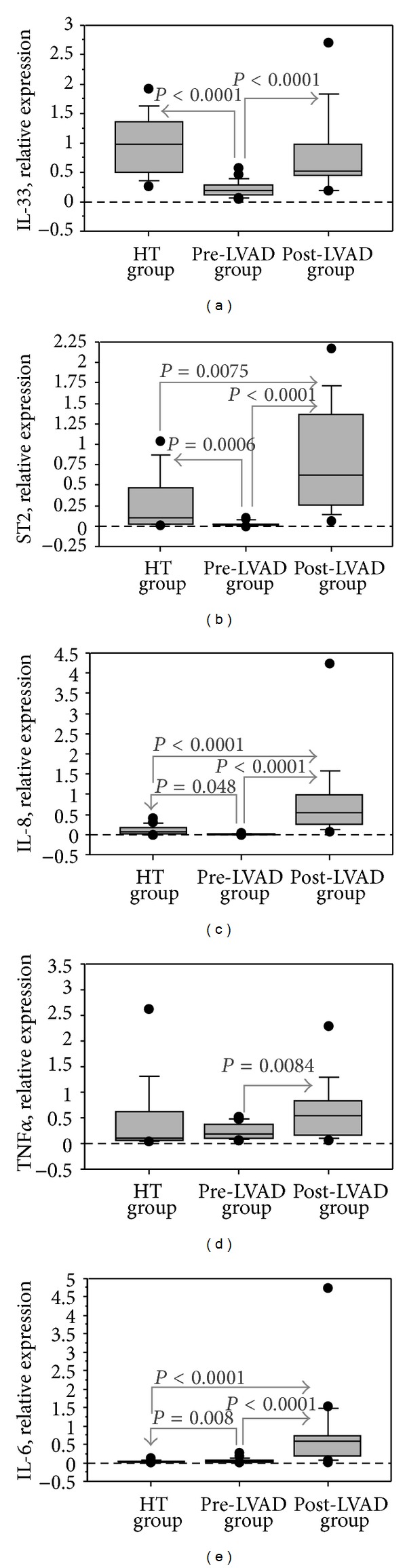
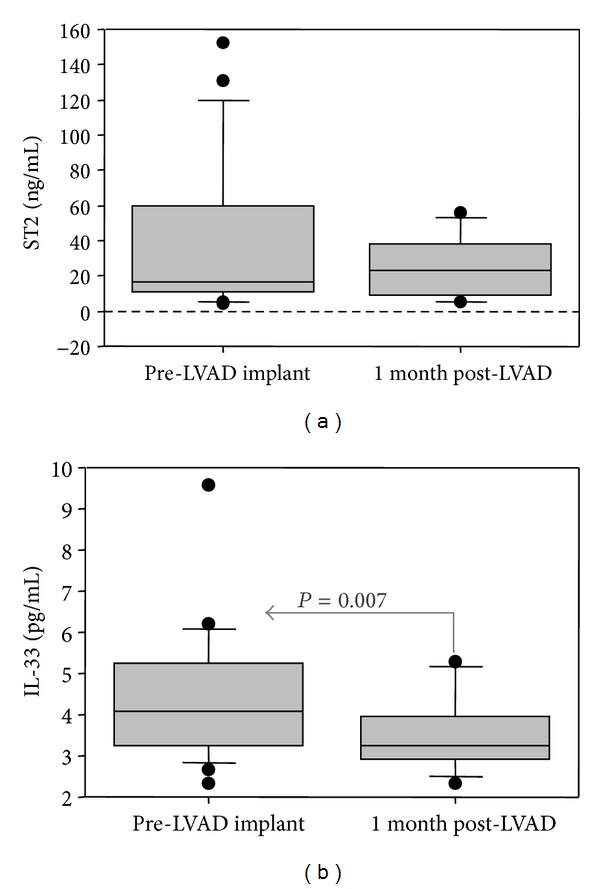
IL-33, ST2, and conventional cytokines (IL-6, IL-8, and TNF-α) were determined in cardiac biopsies and plasma of 22 patients submitted to LVAD implantation (pre-LVAD) and compared with (1) control stable chronic HF patients on medical therapy at the moment of heart transplantation without prior circulatory support (HT); (2) patients supported by LVAD at the moment of LVAD weaning (post-LVAD).
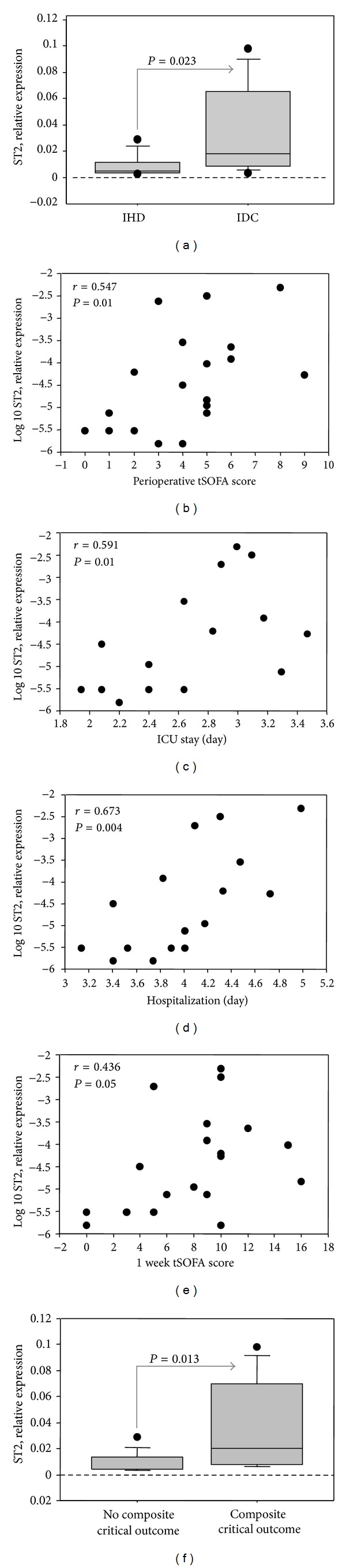
Cardiac expression of ST2/IL-33 and cytokines was lower in the pre-LVAD than in the HT group. LVAD determined an increase of inflammatory mediators comparable to levels of the HT group. Only ST2 correlated with outcome indices after LVAD implantation.
IL-33/ST2 and traditional cytokines were involved in decline of cardiac function of ESHF patients as well as in hemodynamic recovery induced by LVAD. IL-33/ST2 pathway was also associated to severity of clinical course. Thus, a better understanding of inflammation is the key to achieving more favorable outcome by new specific therapies.
炎症是导致心力衰竭(HF)的关键过程。我们假设,IL-33/ST2 通路是心脏应激过程中调节的一种新机制,可能与终末期 HF 患者(左心室辅助装置 [LVAD] 植入的候选者)的功能恶化有关,并可能对其结果负责。
在接受 LVAD 植入术(术前)的 22 名患者的心脏活检和血浆中测定了 IL-33、ST2 和常规细胞因子(IL-6、IL-8 和 TNF-α),并与(1)在心脏移植时接受药物治疗的稳定慢性 HF 患者(在没有先前循环支持的情况下)进行了比较;(2)LVAD 脱机时接受 LVAD 支持的患者(术后)。
与 HT 组相比,术前的心脏 ST2/IL-33 和细胞因子表达水平较低。LVAD 导致炎症介质的增加与 HT 组的水平相当。只有 ST2 与 LVAD 植入后的预后指标相关。
IL-33/ST2 和传统细胞因子参与了 ESHF 患者心脏功能的下降以及 LVAD 诱导的血液动力学恢复。IL-33/ST2 通路也与临床病程的严重程度有关。因此,更好地了解炎症是通过新的特异性治疗获得更有利结果的关键。