Centre de Recherche Entomologique de Cotonou (CREC), Cotonou, Benin.
Parasit Vectors. 2014 Jan 4;7:6. doi: 10.1186/1756-3305-7-6.
Following a mass distribution of long-lasting insecticidal nets (LLINs) in Benin, we used WHO guidelines to develop an assessment tool which is described in this report. It involved assessment of the three WHO indicators: survivorship, integrity and bio-efficacy.
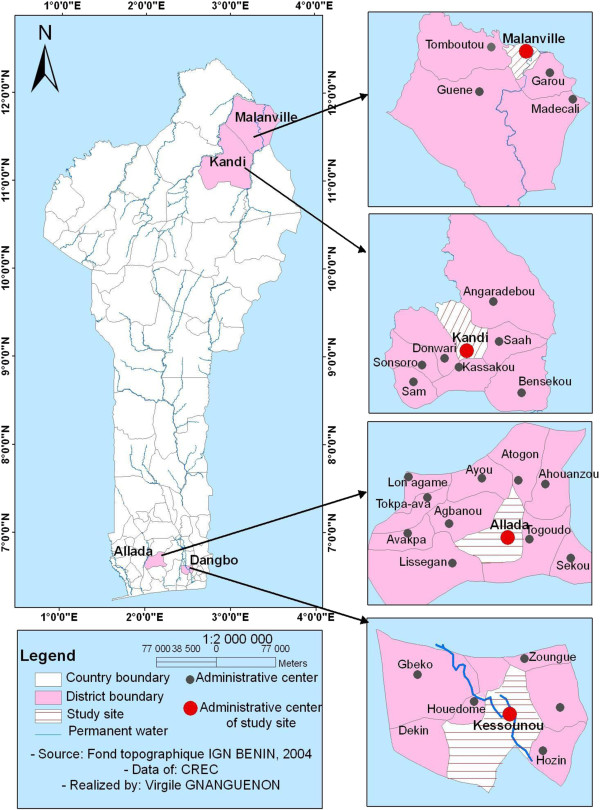
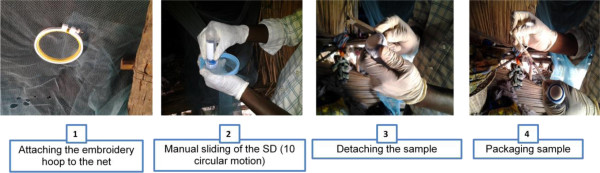
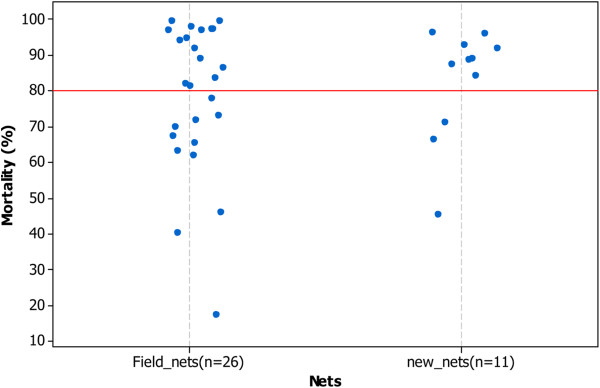
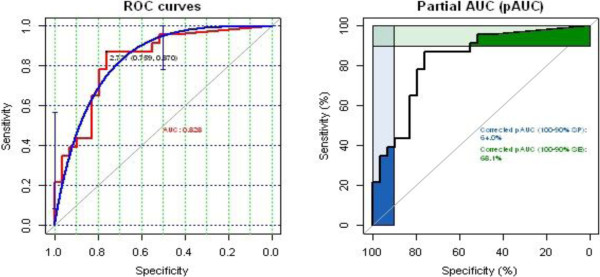
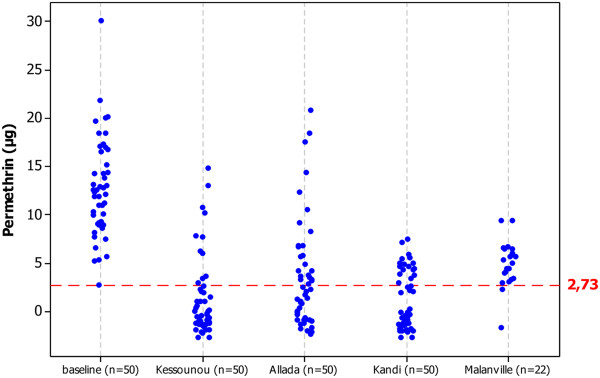
To evaluate the assessment tool, we selected four communities, two in the Southern part of the country, and two in the North. One of the two assessment communities in each geographic setting had ready access to water and a higher reported frequency of washing LLINs. It was assumed that nets in communities with greater washing frequencies would show greater loss of durability. If the tool was sensitive enough to detect such differences, the field testing would confirm its suitability for general use in different settings in Benin. While durability indicators of survival and fabric integrity were quantified using standard WHO methodology, bio-efficacy was assessed using a 'new' alternative (to the WHO bioassay test), involving gas chromatography. Additionally, data management used current internet technology for 'real time' analysis at a central monitoring location.
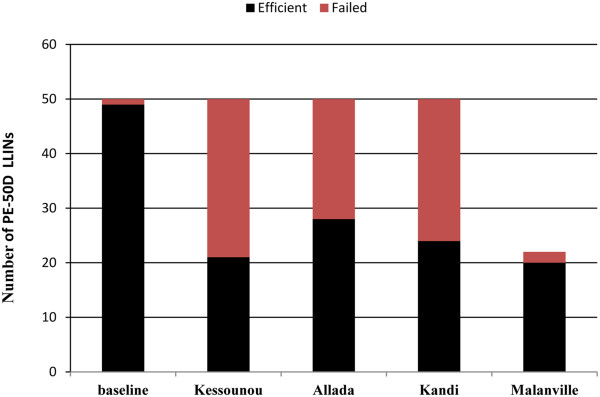
While no difference in survivorship was observed between sites with ready access to water for washing, both in the North and the South, there was a significant difference in integrity. In the South and in the North, nets from sites near water (Kessounou and Malanville) showed greater damage to integrity than did the nets from Allada and Kandi (sites far from water). As expected, LLIN integrity was significantly lower when a community was near water (p < 0.01). Bio-efficacy measurements, based on GC, were found to be so variable.
A rapid decrease of the LLINs fabric integrity was observed in areas near water for washing following the first 6 months post-distribution. Due to the way that the insecticide is incorporated into the LLIN fiber and its migration to the surface, confounding results were observed with the GC analysis suggesting that the WHO bio-efficacy method may also be similarly affected. The report of other assessments could help to better understand the durability of the LLINs.
贝宁大规模分发长效驱虫蚊帐(LLIN)后,我们根据世界卫生组织的指导方针制定了一种评估工具,本报告对此进行了描述。该工具涉及对世卫组织三项指标的评估:存活率、完整性和生物功效。
为了评估该评估工具,我们选择了四个社区,两个位于该国南部,两个位于北部。在每个地理区域中,两个评估社区之一都可以方便地获得水,并且报告的洗涤频率更高。据推测,洗涤频率更高的社区中的蚊帐会显示出更大的耐久性损失。如果该工具足够灵敏以检测到此类差异,则野外测试将确认其在贝宁不同环境中的普遍适用性。虽然使用标准世卫组织方法量化了生存和织物完整性的耐久性指标,但生物功效是使用涉及气相色谱的“新”替代方法(替代世卫组织生物测定测试)进行评估的。此外,数据管理使用当前的互联网技术在中央监测地点进行“实时”分析。
尽管在北部和南部,都可以方便地获得水进行洗涤的地点之间,存活率没有差异,但完整性存在显著差异。在南部和北部,来自靠近水源的地点(Kessounou 和 Malanville)的蚊帐比来自Allada 和 Kandi 的蚊帐(远离水源的地点)的完整性损坏更大。正如预期的那样,当社区靠近水源时,LLIN 的完整性显着降低(p<0.01)。基于 GC 的生物功效测量结果发现差异很大。
在分发后头 6 个月,靠近洗涤水源的地区观察到 LLIN 织物完整性迅速下降。由于杀虫剂掺入 LLIN 纤维的方式及其向表面的迁移,GC 分析得出了混乱的结果,这表明世卫组织生物功效方法也可能受到类似影响。其他评估报告的结果可能有助于更好地了解 LLIN 的耐久性。