Sonoda Yukihiko, Saito Ryuta, Kanamori Masayuki, Kumabe Toshihiro, Uenohara Hiroshi, Tominaga Teiji
Department of Neurosurgery, Tohoku University Graduate School of Medicine.
Neurol Med Chir (Tokyo). 2014;54(4):302-9. doi: 10.2176/nmc.oa.2013-0226. Epub 2013 Dec 27.
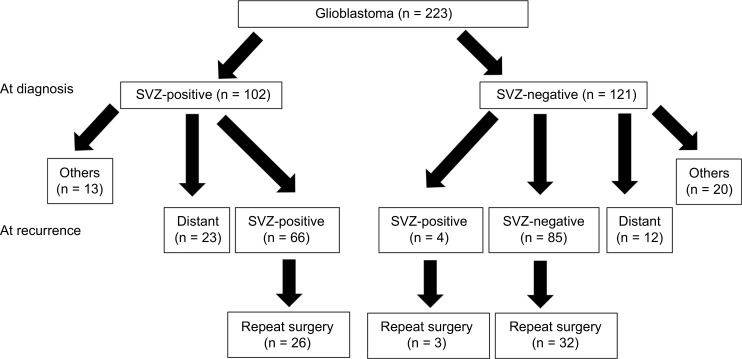
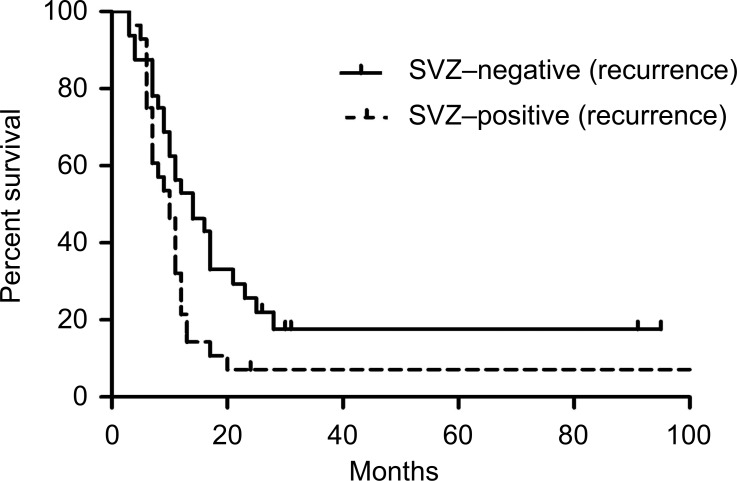
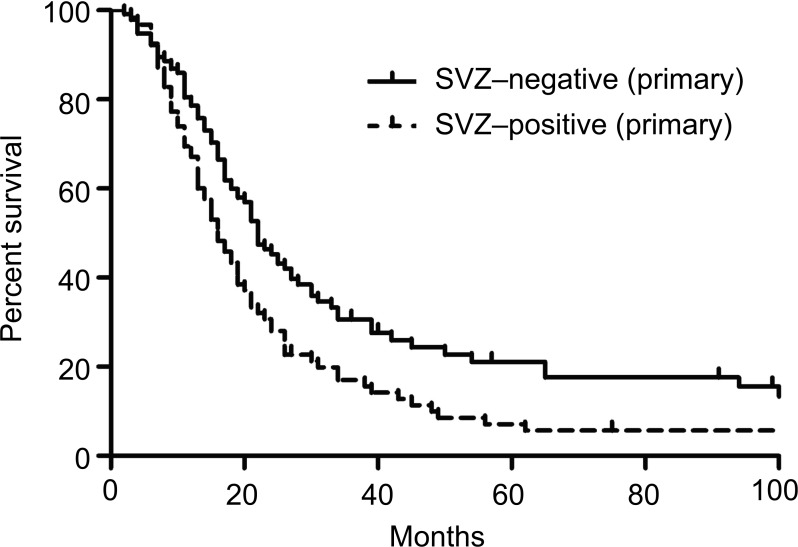
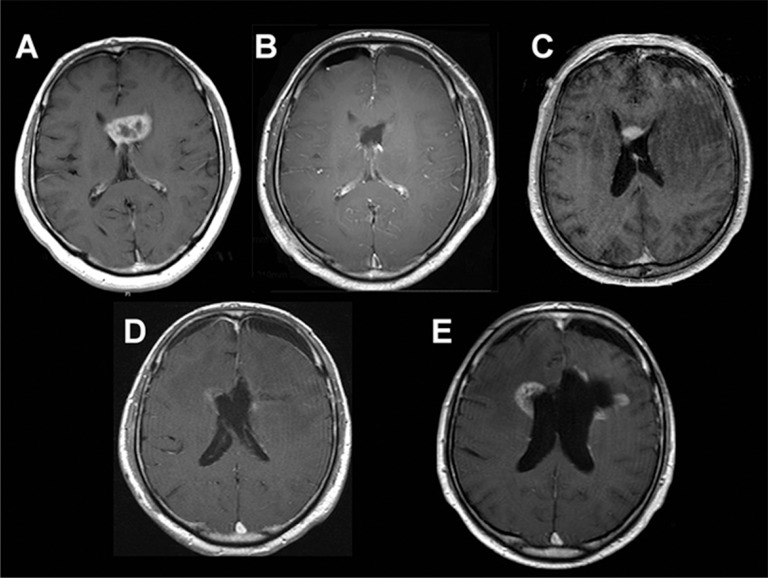
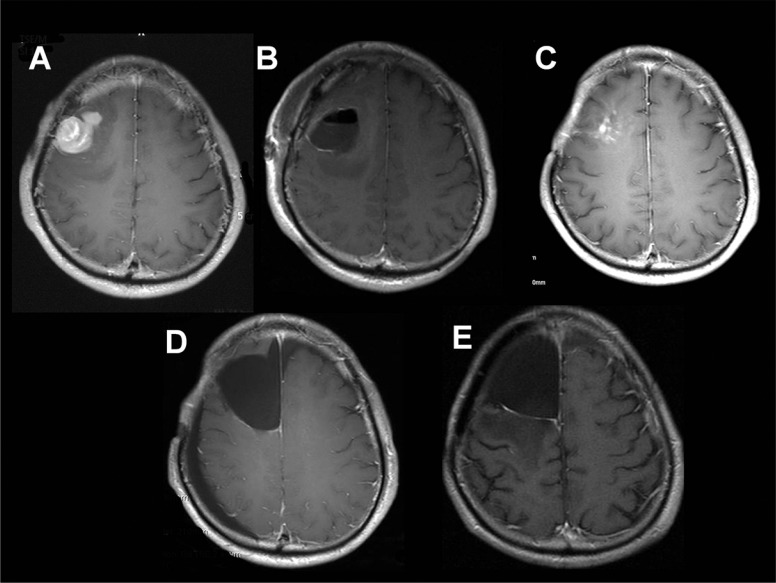
Surgical resection is identified as an important prognostic factor for survival in patients undergoing initial resection of glioblastoma (GBM). However, in patients with tumor recurrence, the benefits of repeat surgery remain unclear. Recent reports have stated that the association between initial surgery for GBM and subventricular zone (SVZ) influences survival. The current study examined the relationship of SVZ involvement in recurrent GBM to survival time after reoperation. We conducted a retrospective review of 61 consecutive patients who had undergone repeat surgery for recurrent GBM at our institution between 1997 and 2010. Survival after repeat surgery were compared between patients with (n = 29) and without (n = 32) SVZ involvement at recurrence using univariate analysis with known prognostic factors, including sex, age, Karnofsky Performance Status (KPS) score at recurrence, recurrent tumor size, initial SVZ involvement, and adjuvant therapy after repeat surgery, as variables. All 26 SVZ-positive tumors at initial diagnosis recurred as SVZ-positive tumors, while 32 of 35 SVZ-negative tumors at initial diagnosis remained SVZ-negative at recurrence; the remaining three were SVZ-positive at recurrence. Survival after repeat surgery was decreased in patients with recurrent GBM involving the SVZ at recurrence (p = 0.022). No other prognostic factors for survival after repeat surgery were identified in this study. This finding may have prognostic and therapeutic significance.
手术切除被认为是胶质母细胞瘤(GBM)初次切除患者生存的重要预后因素。然而,对于肿瘤复发的患者,再次手术的益处仍不明确。最近的报告指出,GBM初次手术与脑室下区(SVZ)之间的关联会影响生存。本研究探讨了复发性GBM中SVZ受累与再次手术后生存时间的关系。我们对1997年至2010年间在我院接受复发性GBM再次手术的61例连续患者进行了回顾性研究。使用已知的预后因素进行单因素分析,比较复发时伴有(n = 29)和不伴有(n = 32)SVZ受累的患者再次手术后的生存情况,这些因素包括性别、年龄、复发时的卡氏功能状态(KPS)评分、复发性肿瘤大小、初次SVZ受累情况以及再次手术后的辅助治疗作为变量。初次诊断时所有26例SVZ阳性肿瘤复发时仍为SVZ阳性肿瘤,而初次诊断时35例SVZ阴性肿瘤中的32例复发时仍为SVZ阴性;其余3例复发时为SVZ阳性。复发时累及SVZ的复发性GBM患者再次手术后的生存时间缩短(p = 0.022)。本研究未发现再次手术后生存的其他预后因素。这一发现可能具有预后和治疗意义。