Biomedical MRI/MoSAIC, Department of Imaging and Pathology, Biomedical Sciences Group, Katholieke Universiteit Leuven, Leuven, Belgium.
Biomedical MRI/MoSAIC, Department of Imaging and Pathology, Biomedical Sciences Group, Katholieke Universiteit Leuven, Leuven, Belgium ; Lab of Histology, Biomedical Research Institute, Hasselt University, Campus Diepenbeek, Agoralaan, Diepenbeek, Belgium.
Int J Nanomedicine. 2013;8:4577-91. doi: 10.2147/IJN.S51588. Epub 2013 Nov 29.
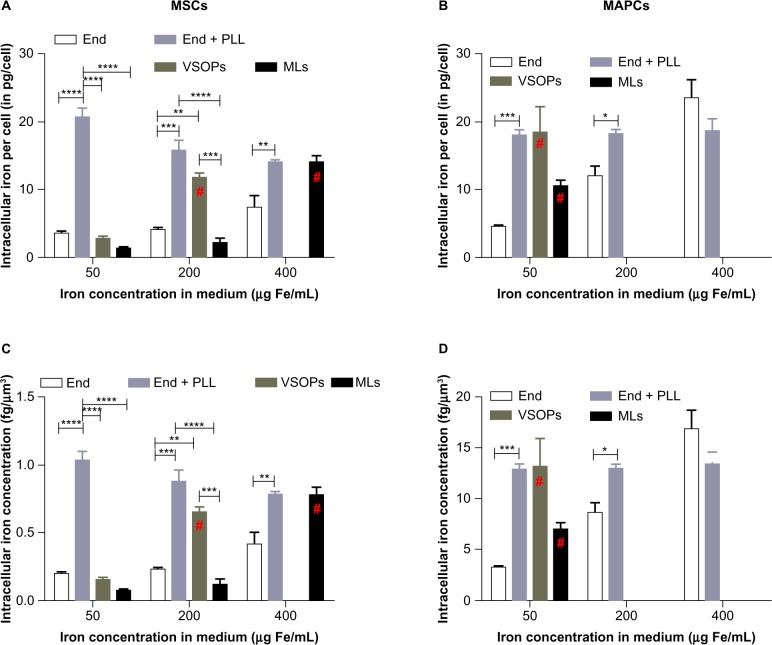
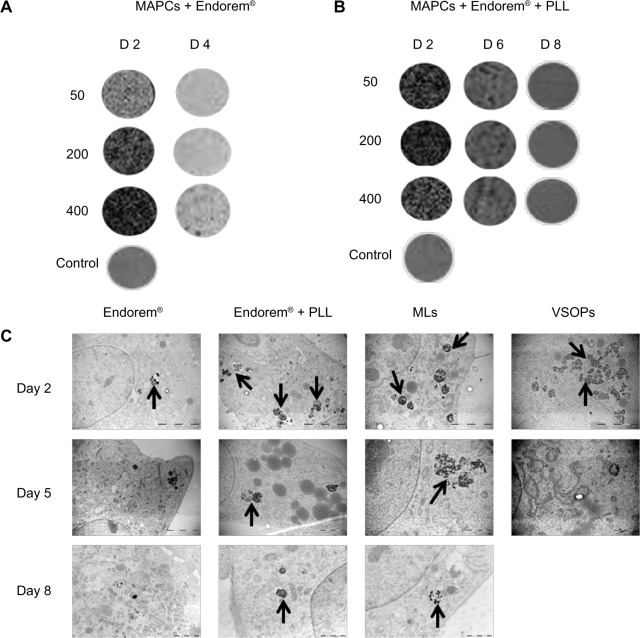
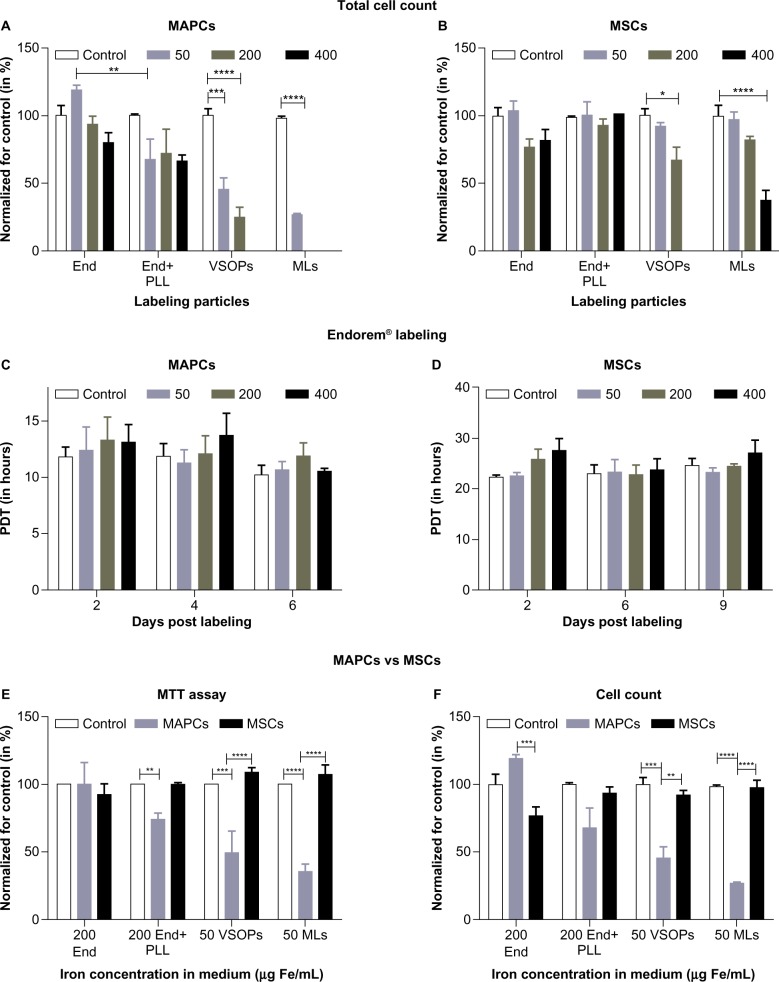
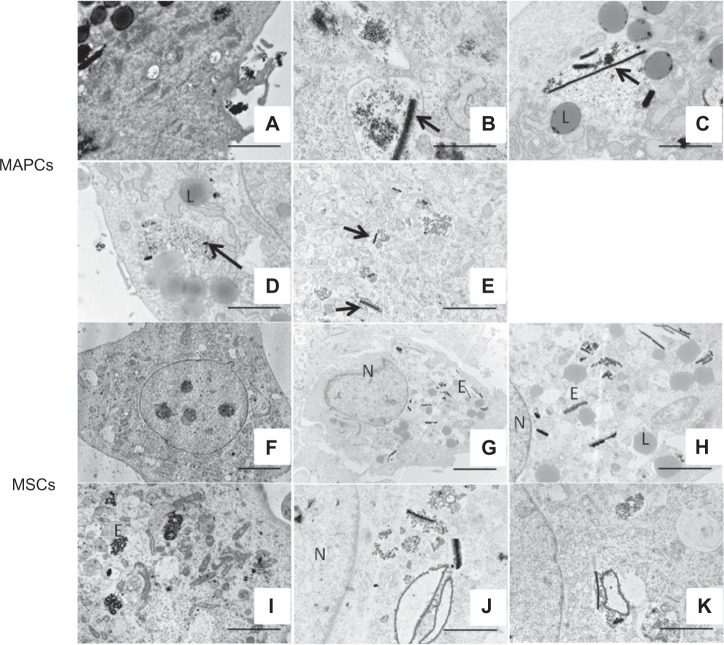
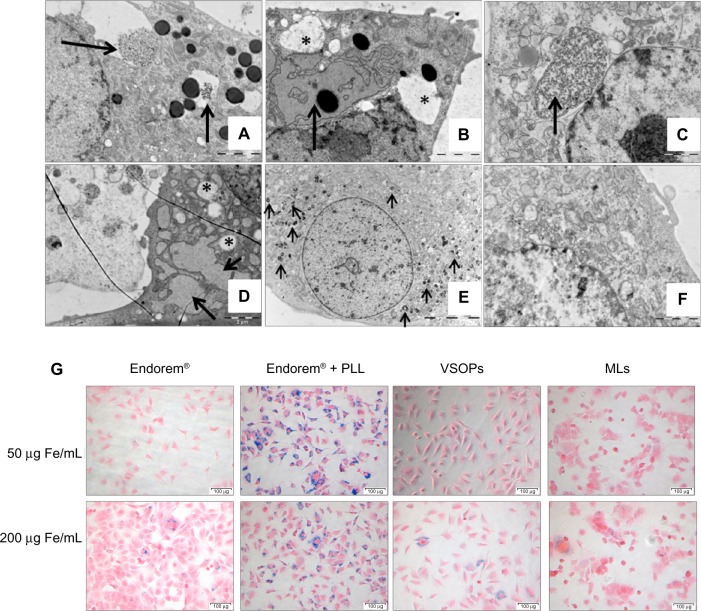
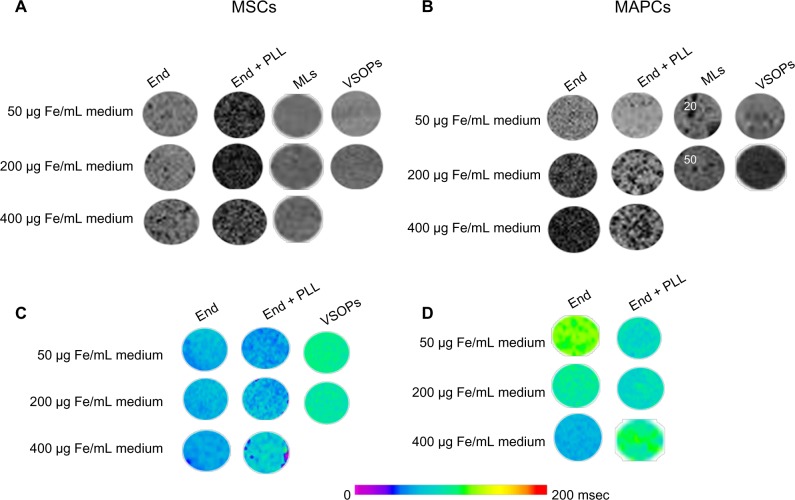
The need to track and evaluate the fate of transplanted cells is an important issue in regenerative medicine. In order to accomplish this, pre-labelling cells with magnetic resonance imaging (MRI) contrast agents is a well-established method. Uptake of MRI contrast agents by non-phagocytic stem cells, and factors such as cell homeostasis or the adverse effects of contrast agents on cell biology have been extensively studied, but in the context of nanoparticle (NP)-specific parameters. Here, we have studied three different types of NPs (Endorem®, magnetoliposomes [MLs], and citrate coated C-200) to label relatively larger, mesenchymal stem cells (MSCs) and, much smaller yet faster proliferating, multipotent adult progenitor cells (MAPCs). Both cell types are similar, as they are isolated from bone marrow and have substantial regenerative potential, which make them interesting candidates for comparative experiments. Using NPs with different surface coatings and sizes, we found that differences in the proliferative and morphological characteristics of the cells used in the study are mainly responsible for the fate of endocytosed iron, intracellular iron concentration, and cytotoxic responses. The quantitative analysis, using high-resolution electron microscopy images, demonstrated a strong relationship between cell volume/surface, uptake, and cytotoxicity. Interestingly, uptake and toxicity trends are reversed if intracellular concentrations, and not amounts, are considered. This indicates that more attention should be paid to cellular parameters such as cell size and proliferation rate in comparative cell-labeling studies.
追踪和评估移植细胞的命运是再生医学中的一个重要问题。为了实现这一目标,用磁共振成像(MRI)对比剂对细胞进行预标记是一种成熟的方法。非吞噬性干细胞对 MRI 对比剂的摄取,以及细胞内稳态或对比剂对细胞生物学的不良影响等因素,已经得到了广泛的研究,但都是在纳米颗粒(NP)的具体参数的背景下进行的。在这里,我们研究了三种不同类型的 NPs(钆塞酸二钠、磁脂体[MLs]和柠檬酸涂层 C-200)来标记相对较大的间充质干细胞(MSCs)和更小但增殖更快的多能成体祖细胞(MAPCs)。这两种细胞类型相似,因为它们都从骨髓中分离出来,具有很大的再生潜力,这使它们成为比较实验的有趣候选者。使用具有不同表面涂层和大小的 NPs,我们发现研究中使用的细胞的增殖和形态特征的差异主要是内吞铁的命运、细胞内铁浓度和细胞毒性反应的原因。使用高分辨率电子显微镜图像进行的定量分析表明,细胞体积/表面积、摄取和细胞毒性之间存在很强的关系。有趣的是,如果考虑细胞内浓度而不是数量,摄取和毒性趋势就会发生逆转。这表明,在比较细胞标记研究中,应该更加关注细胞大小和增殖率等细胞参数。