Ren Jihui, Pei-Chen Lin Coney, Pathak Manish C, Temple Brenda R S, Nile Aaron H, Mousley Carl J, Duncan Mara C, Eckert Debra M, Leiker Thomas J, Ivanova Pavlina T, Myers David S, Murphy Robert C, Brown H Alex, Verdaasdonk Jolien, Bloom Kerry S, Ortlund Eric A, Neiman Aaron M, Bankaitis Vytas A
Lineberger Comprehensive Cancer Center, School of Medicine, University of North Carolina at Chapel Hill, Chapel Hill, NC 27599-7090 Department of Molecular and Cellular Medicine, Department of Biochemistry and Biophysics, Texas A&M University, College Station, TX 77843-1114 Department of Biochemistry and Cell Biology, Stony Brook University, Stony Brook, NY 11794-5215 Department of Biochemistry, Emory University School of Medicine, Atlanta, GA 30322-4250 R. L. Juliano Structural Bioinformatics Core, University of North Carolina at Chapel Hill, Chapel Hill, NC 27599-7260 Department of Biology, University of North Carolina at Chapel Hill, Chapel Hill, NC 27599-3280 Department of Biochemistry, University of Utah School of Medicine, Salt Lake City, UT 84112-5650 Department of Pharmacology, University of Colorado Health Sciences Center, Denver, CO 80045-0511 Department of Pharmacology, Vanderbilt University School of Medicine, Nashville, TN 37232-6600.
Mol Biol Cell. 2014 Mar;25(5):712-27. doi: 10.1091/mbc.E13-11-0634. Epub 2014 Jan 8.
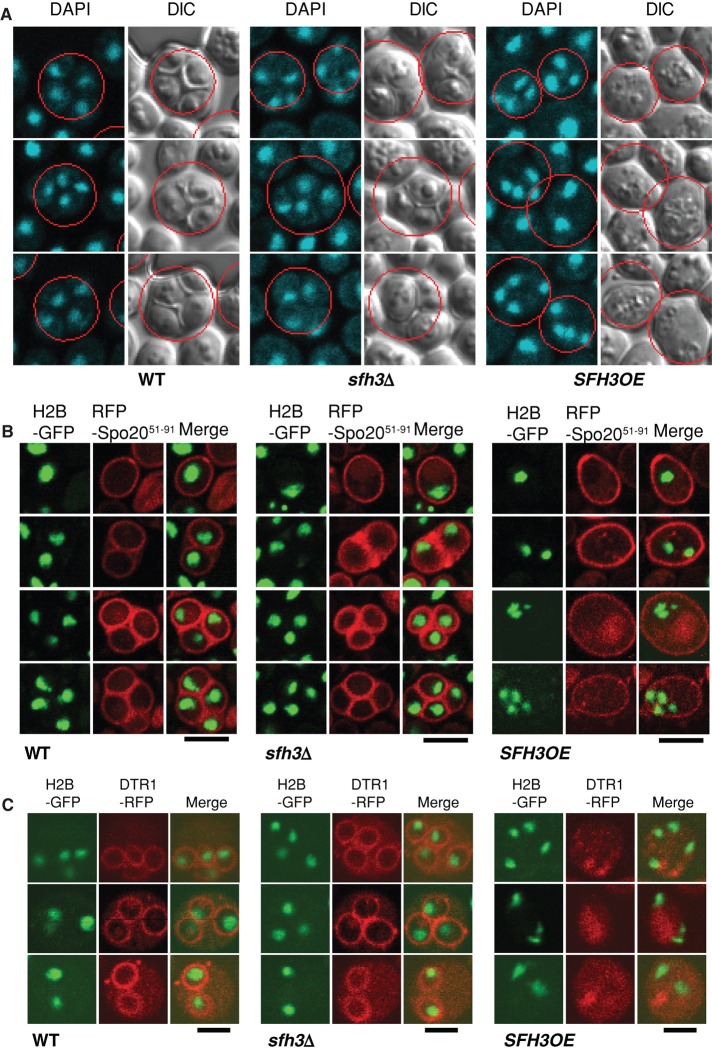
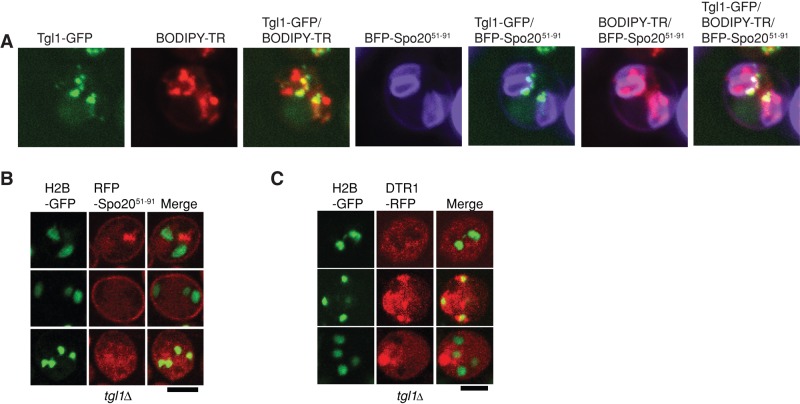
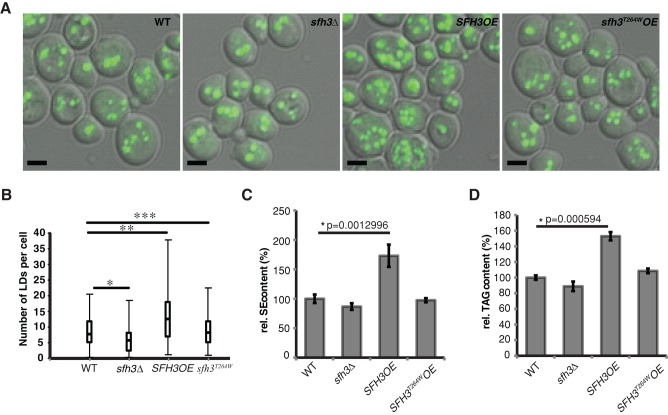
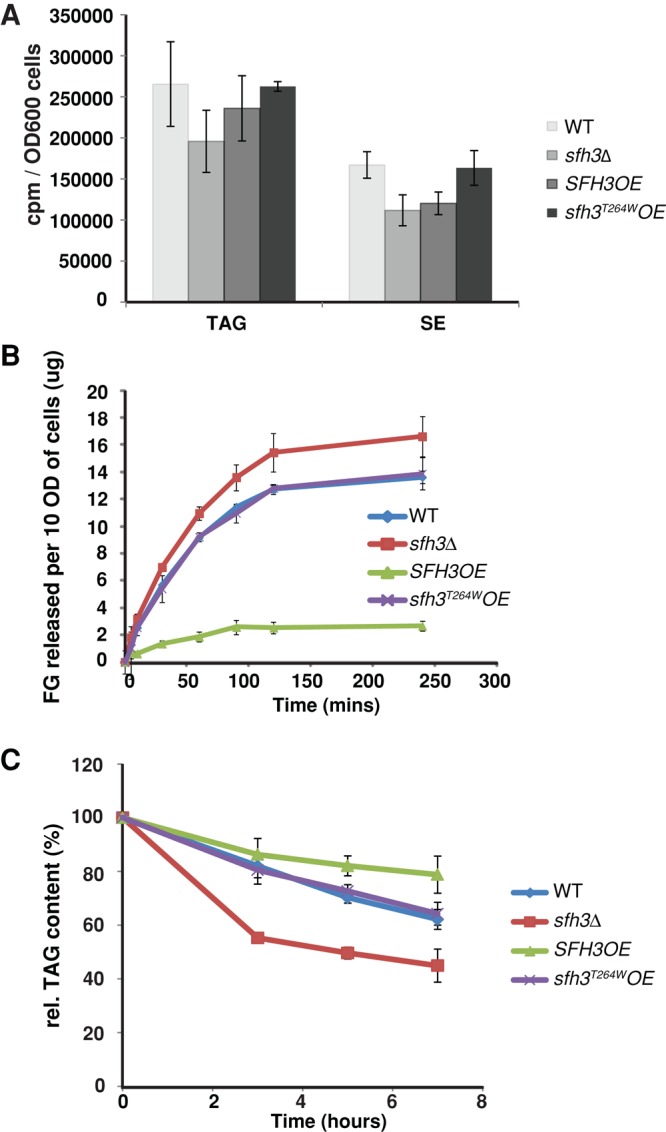
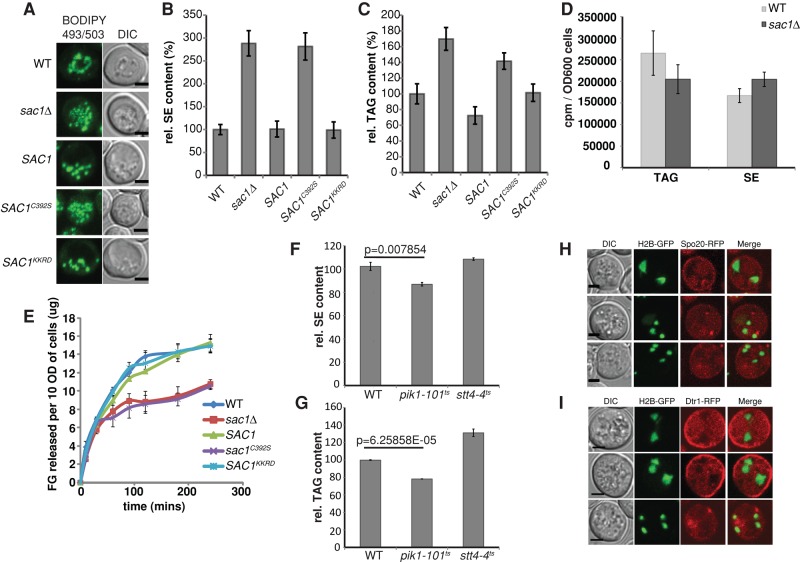
Lipid droplet (LD) utilization is an important cellular activity that regulates energy balance and release of lipid second messengers. Because fatty acids exhibit both beneficial and toxic properties, their release from LDs must be controlled. Here we demonstrate that yeast Sfh3, an unusual Sec14-like phosphatidylinositol transfer protein, is an LD-associated protein that inhibits lipid mobilization from these particles. We further document a complex biochemical diversification of LDs during sporulation in which Sfh3 and select other LD proteins redistribute into discrete LD subpopulations. The data show that Sfh3 modulates the efficiency with which a neutral lipid hydrolase-rich LD subclass is consumed during biogenesis of specialized membrane envelopes that package replicated haploid meiotic genomes. These results present novel insights into the interface between phosphoinositide signaling and developmental regulation of LD metabolism and unveil meiosis-specific aspects of Sfh3 (and phosphoinositide) biology that are invisible to contemporary haploid-centric cell biological, proteomic, and functional genomics approaches.
脂滴(LD)的利用是一种重要的细胞活动,可调节能量平衡和脂质第二信使的释放。由于脂肪酸兼具有益和有毒特性,因此必须控制其从脂滴中的释放。在此,我们证明酵母Sfh3是一种不同寻常的类Sec14磷脂酰肌醇转移蛋白,它是一种与脂滴相关的蛋白,可抑制脂质从这些颗粒中的动员。我们进一步记录了孢子形成过程中脂滴复杂的生化多样性,其中Sfh3和其他一些选定的脂滴蛋白重新分布到离散的脂滴亚群中。数据表明,Sfh3调节在包装复制的单倍体减数分裂基因组的特殊膜包膜生物发生过程中富含中性脂质水解酶的脂滴亚类的消耗效率。这些结果为磷脂酰肌醇信号传导与脂滴代谢的发育调节之间的界面提供了新的见解,并揭示了Sfh3(和磷脂酰肌醇)生物学中减数分裂特异性的方面,而这些方面在当代以单倍体为中心的细胞生物学、蛋白质组学和功能基因组学方法中是看不见的。