Division of Gastroenterology, Departments of Medicine and Microbiology and Immunology, University of Miami, Miami, Florida.
Division of Gastroenterology, Departments of Medicine and Cancer Biology, Vanderbilt University, Nashville, Tennessee.
Gastroenterology. 2014 May;146(6):1534-1546.e3. doi: 10.1053/j.gastro.2014.01.001. Epub 2014 Jan 7.
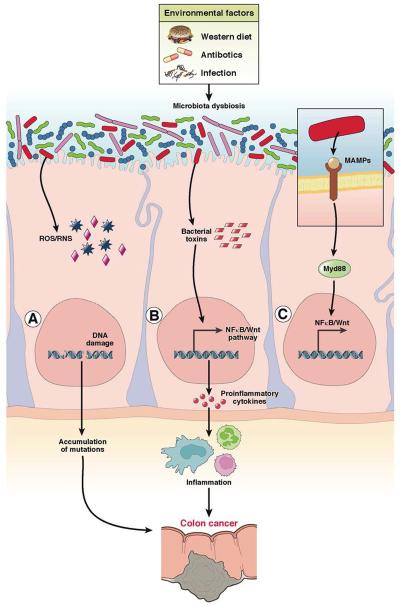
Microbial species participate in the genesis of a substantial number of malignancies-in conservative estimates, at least 15% of all cancer cases are attributable to infectious agents. Little is known about the contribution of the gastrointestinal microbiome to the development of malignancies. Resident microbes can promote carcinogenesis by inducing inflammation, increasing cell proliferation, altering stem cell dynamics, and producing metabolites such as butyrate, which affect DNA integrity and immune regulation. Studies in human beings and rodent models of cancer have identified effector species and relationships among members of the microbial community in the stomach and colon that increase the risk for malignancy. Strategies to manipulate the microbiome, or the immune response to such bacteria, could be developed to prevent or treat certain gastrointestinal cancers.
微生物物种参与了大量恶性肿瘤的发生——保守估计,至少有 15%的癌症病例归因于感染因子。人们对胃肠道微生物组在恶性肿瘤发展中的作用知之甚少。常驻微生物可以通过诱导炎症、增加细胞增殖、改变干细胞动力学以及产生影响 DNA 完整性和免疫调节的代谢物(如丁酸盐)来促进致癌作用。在人类和癌症的啮齿动物模型中,已经确定了胃和结肠中微生物群落的效应物种及其成员之间的关系,这些关系增加了恶性肿瘤的风险。开发操纵微生物组或对这些细菌的免疫反应的策略,可能有助于预防或治疗某些胃肠道癌症。