• 文献检索
  • 文档翻译
  • 深度研究
  • 学术资讯
  • Suppr Zotero 插件Zotero 插件
  • 邀请有礼
  • 套餐&价格
  • 历史记录
应用&插件
Suppr Zotero 插件Zotero 插件浏览器插件Mac 客户端Windows 客户端微信小程序
定价
高级版会员购买积分包购买API积分包
服务
文献检索文档翻译深度研究API 文档MCP 服务
关于我们
关于 Suppr公司介绍联系我们用户协议隐私条款
关注我们

Suppr 超能文献

核心技术专利:CN118964589B侵权必究
粤ICP备2023148730 号-1Suppr @ 2026

文献检索

告别复杂PubMed语法,用中文像聊天一样搜索,搜遍4000万医学文献。AI智能推荐,让科研检索更轻松。

立即免费搜索

文件翻译

保留排版,准确专业,支持PDF/Word/PPT等文件格式,支持 12+语言互译。

免费翻译文档

深度研究

AI帮你快速写综述,25分钟生成高质量综述,智能提取关键信息,辅助科研写作。

立即免费体验

南美洲西北部的民族植物学知识记录极为不足。

Ethnobotanical knowledge is vastly under-documented in northwestern South America.

作者信息

Cámara-Leret Rodrigo, Paniagua-Zambrana Narel, Balslev Henrik, Macía Manuel J

机构信息

Departamento de Biología, Universidad Autónoma de Madrid, Madrid, Spain.

Departamento de Biología, Universidad Autónoma de Madrid, Madrid, Spain ; Herbario Nacional de Bolivia, Universidad Mayor de San Andrés, La Paz, Bolivia.

出版信息

PLoS One. 2014 Jan 9;9(1):e85794. doi: 10.1371/journal.pone.0085794. eCollection 2014.

DOI:10.1371/journal.pone.0085794
PMID:24416449
原文链接:https://pmc.ncbi.nlm.nih.gov/articles/PMC3887111/
Abstract

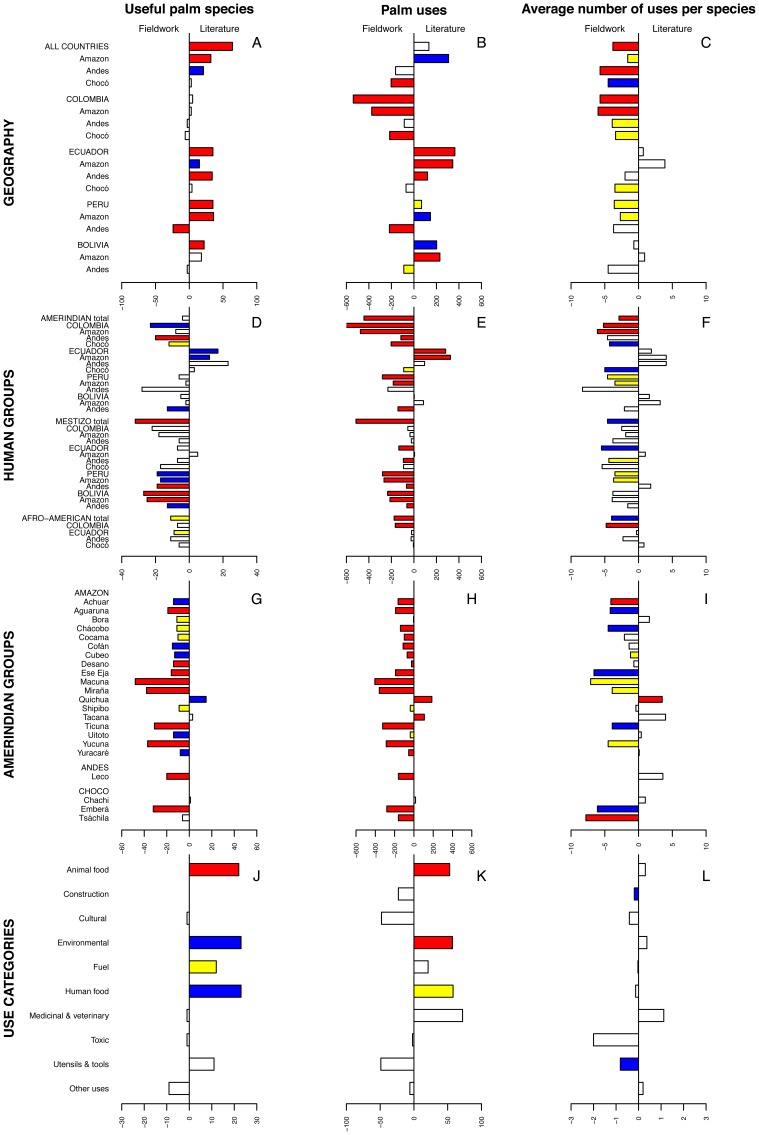
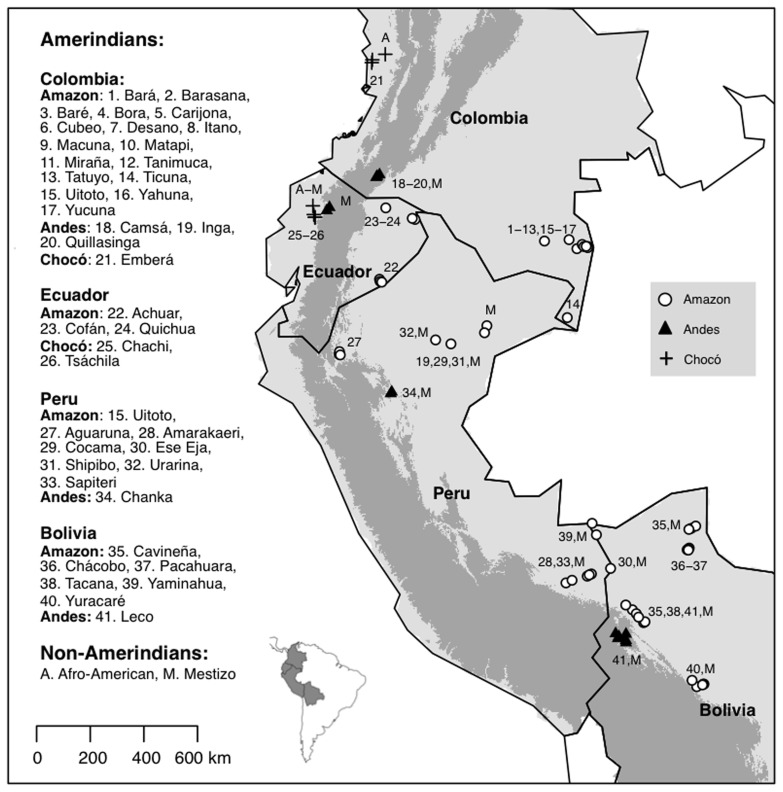
A main objective of ethnobotany is to document traditional knowledge about plants before it disappears. However, little is known about the coverage of past ethnobotanical studies and thus about how well the existing literature covers the overall traditional knowledge of different human groups. To bridge this gap, we investigated ethnobotanical data-collecting efforts across four countries (Colombia, Ecuador, Peru, Bolivia), three ecoregions (Amazon, Andes, Chocó), and several human groups (including Amerindians, mestizos, and Afro-Americans). We used palms (Arecaceae) as our model group because of their usefulness and pervasiveness in the ethnobotanical literature. We carried out a large number of field interviews (n = 2201) to determine the coverage and quality of palm ethnobotanical data in the existing ethnobotanical literature (n = 255) published over the past 60 years. In our fieldwork in 68 communities, we collected 87,886 use reports and documented 2262 different palm uses and 140 useful palm species. We demonstrate that traditional knowledge on palm uses is vastly under-documented across ecoregions, countries, and human groups. We suggest that the use of standardized data-collecting protocols in wide-ranging ethnobotanical fieldwork is a promising approach for filling critical information gaps. Our work contributes to the Aichi Biodiversity Targets and emphasizes the need for signatory nations to the Convention on Biological Diversity to respond to these information gaps. Given our findings, we hope to stimulate the formulation of clear plans to systematically document ethnobotanical knowledge in northwestern South America and elsewhere before it vanishes.

摘要

民族植物学的一个主要目标是在传统植物知识消失之前将其记录下来。然而,对于过去民族植物学研究的覆盖范围,以及现有文献对不同人类群体整体传统知识的覆盖程度,我们知之甚少。为了填补这一空白,我们调查了四个国家(哥伦比亚、厄瓜多尔、秘鲁、玻利维亚)、三个生态区(亚马逊、安第斯、乔科)以及几个人类群体(包括美洲印第安人、混血儿和非裔美国人)的民族植物学数据收集工作。我们选择棕榈科植物作为我们的模型组,因为它们在民族植物学文献中很有用且分布广泛。我们进行了大量的实地访谈(n = 2201),以确定过去60年发表的现有民族植物学文献(n = 255)中棕榈民族植物学数据的覆盖范围和质量。在我们对68个社区的实地调查中,我们收集了87886份使用报告,记录了2262种不同的棕榈用途和140种有用的棕榈物种。我们证明,关于棕榈用途的传统知识在各生态区、国家和人类群体中记录严重不足。我们建议在广泛的民族植物学实地工作中使用标准化的数据收集方案是填补关键信息空白的一种有前景的方法。我们的工作有助于实现爱知生物多样性目标,并强调《生物多样性公约》签署国需要应对这些信息空白。鉴于我们的研究结果,我们希望激发制定明确的计划,以便在南美洲西北部和其他地区的民族植物学知识消失之前,系统地对其进行记录。
https://cdn.ncbi.nlm.nih.gov/pmc/blobs/e71e/3887111/7e254d93167b/pone.0085794.g002.jpg
https://cdn.ncbi.nlm.nih.gov/pmc/blobs/e71e/3887111/0e85e2174e9f/pone.0085794.g001.jpg
https://cdn.ncbi.nlm.nih.gov/pmc/blobs/e71e/3887111/7e254d93167b/pone.0085794.g002.jpg
https://cdn.ncbi.nlm.nih.gov/pmc/blobs/e71e/3887111/0e85e2174e9f/pone.0085794.g001.jpg
https://cdn.ncbi.nlm.nih.gov/pmc/blobs/e71e/3887111/7e254d93167b/pone.0085794.g002.jpg

相似文献

1
Ethnobotanical knowledge is vastly under-documented in northwestern South America.南美洲西北部的民族植物学知识记录极为不足。
PLoS One. 2014 Jan 9;9(1):e85794. doi: 10.1371/journal.pone.0085794. eCollection 2014.
2
Geospatial patterns in traditional knowledge serve in assessing intellectual property rights and benefit-sharing in northwest South America.传统知识中的地理空间模式有助于评估南美洲西北部的知识产权和利益分享情况。
J Ethnopharmacol. 2014 Dec 2;158 Pt A:58-65. doi: 10.1016/j.jep.2014.10.009. Epub 2014 Oct 23.
3
Use and diversity of palm (Arecaceae) resources in Central Western Brazil.巴西中西部棕榈科植物资源的利用与多样性
ScientificWorldJournal. 2014 Jan 2;2014:942043. doi: 10.1155/2014/942043. eCollection 2014.
4
American palm ethnomedicine: a meta-analysis.美洲棕族植物的民族医学:一项荟萃分析。
J Ethnobiol Ethnomed. 2009 Dec 24;5:43. doi: 10.1186/1746-4269-5-43.
5
Ethnobotany of Indigenous Saraguros: Medicinal Plants Used by Community Healers "Hampiyachakkuna" in the San Lucas Parish, Southern Ecuador.萨拉古罗原住民的民族植物学:厄瓜多尔南部圣卢卡斯教区社区治疗师“汉皮雅查库纳”使用的药用植物
Biomed Res Int. 2017;2017:9343724. doi: 10.1155/2017/9343724. Epub 2017 Jul 4.
6
Asháninka Palm Management and Domestication in the Peruvian Amazon.秘鲁亚马逊地区阿沙宁卡人的棕榈管理与驯化
Hum Ecol Interdiscip J. 2015;43(3):451-466. doi: 10.1007/s10745-015-9745-1.
7
Cultural significance of the flora of a tropical dry forest in the Doche vereda (Villavieja, Huila, Colombia).热带干旱森林植物群的文化意义——以哥伦比亚韦利亚耶哈的多切韦德拉为例。
J Ethnobiol Ethnomed. 2018 Mar 22;14(1):22. doi: 10.1186/s13002-018-0220-0.
8
Monpa, memory, and change: an ethnobotanical study of plant use in Mêdog County, South-east Tibet, China.门巴、记忆与变迁:中国西藏东南部墨脱县植物利用的民族植物学研究。
J Ethnobiol Ethnomed. 2020 Jan 30;16(1):5. doi: 10.1186/s13002-020-0355-7.
9
Fundamental species traits explain provisioning services of tropical American palms.基础物种特征解释了热带美洲棕榈提供的服务。
Nat Plants. 2017 Jan 23;3:16220. doi: 10.1038/nplants.2016.220.
10
Ethnobotanical study on plants used for traditional beekeeping by Dulong people in Yunnan, China.中国云南独龙族传统养蜂相关植物的民族植物学研究。
J Ethnobiol Ethnomed. 2020 Oct 14;16(1):61. doi: 10.1186/s13002-020-00414-z.

引用本文的文献

1
What affects the sustainability of a non-timber forest product value chain? A case study of an endemic palm harvested by local communities in Brazil.是什么影响了非木材森林产品价值链的可持续性?以巴西当地社区采摘的一种特有棕榈树为例的研究。
J Ethnobiol Ethnomed. 2025 Aug 20;21(1):56. doi: 10.1186/s13002-025-00800-5.
2
Pervasive Indigenous and local knowledge of tropical wild species.对热带野生物种广泛的本土和地方知识。
Ambio. 2025 Apr;54(4):680-695. doi: 10.1007/s13280-024-02100-w. Epub 2024 Dec 14.
3
The global relevance of locally grounded ethnobiology.

本文引用的文献

1
The current status of ethnobiological research in Latin America: gaps and perspectives.拉丁美洲民族生物学研究的现状:差距与展望。
J Ethnobiol Ethnomed. 2013 Oct 16;9:72. doi: 10.1186/1746-4269-9-72.
2
Tropical rain forest evolution: palms as a model group.热带雨林的演化:以棕榈科植物作为一个模式类群
BMC Biol. 2013 Apr 15;11:48. doi: 10.1186/1741-7007-11-48.
3
American palm ethnomedicine: a meta-analysis.美洲棕族植物的民族医学:一项荟萃分析。
本土扎根的民族生物学的全球相关性。
J Ethnobiol Ethnomed. 2024 May 18;20(1):53. doi: 10.1186/s13002-024-00693-w.
4
Prioritizing Colombian plant genetic resources for investment in research using indicators about the geographic origin, vulnerability status, economic benefits, and food security importance.利用有关地理起源、脆弱性状况、经济效益和粮食安全重要性的指标,确定哥伦比亚植物遗传资源的优先次序,以便对研究进行投资。
Biodivers Conserv. 2023;32(7):2221-2261. doi: 10.1007/s10531-023-02599-7. Epub 2023 May 19.
5
Diversity of Useful Plants in Cabo Verde Islands: A Biogeographic and Conservation Perspective.佛得角群岛有用植物的多样性:生物地理学与保护视角
Plants (Basel). 2022 May 15;11(10):1313. doi: 10.3390/plants11101313.
6
Eighty-four per cent of all Amazonian arboreal plant individuals are useful to humans.所有亚马逊树栖植物个体中有 84%对人类有用。
PLoS One. 2021 Oct 1;16(10):e0257875. doi: 10.1371/journal.pone.0257875. eCollection 2021.
7
Traditional medicinal knowledge and practices among the tribal communities of Thakht-e-Sulaiman Hills, Pakistan.巴基斯坦塔赫特-苏莱曼山区部落社区的传统医学知识和实践。
BMC Complement Med Ther. 2021 Sep 13;21(1):230. doi: 10.1186/s12906-021-03403-1.
8
Colombia's bioregions as a source of useful plants.哥伦比亚的生物区域作为有用植物的来源。
PLoS One. 2021 Aug 27;16(8):e0256457. doi: 10.1371/journal.pone.0256457. eCollection 2021.
9
Language extinction triggers the loss of unique medicinal knowledge.语言灭绝会引发独特医学知识的丧失。
Proc Natl Acad Sci U S A. 2021 Jun 15;118(24). doi: 10.1073/pnas.2103683118.
10
Afrocolombian Struggles for Food, Land, and Culture: The Case of El Tiple.非裔哥伦比亚人对食物、土地和文化的抗争:以埃尔蒂普莱为例。
Environ Eng Sci. 2021 May 1;38(5):340-354. doi: 10.1089/ees.2020.0282. Epub 2021 May 24.
J Ethnobiol Ethnomed. 2009 Dec 24;5:43. doi: 10.1186/1746-4269-5-43.
4
Cultural erosion and biodiversity: canoe-making knowledge in Pohnpei, Micronesia.文化侵蚀与生物多样性:密克罗尼西亚波纳佩岛的独木舟制作知识
Conserv Biol. 2007 Jun;21(3):875-9. doi: 10.1111/j.1523-1739.2007.00654.x.
5
Medicinal uses of South American palms.南美洲棕榈树的药用价值。
J Ethnopharmacol. 1984 Apr;10(2):157-79. doi: 10.1016/0378-8741(84)90001-1.