Universidad de Ciencias Aplicadas y Ambientales, 222 St. 55-37, E-111166, Bogotá, Colombia.
Asociación Etnobiológica Mexicana A.C., Calle Profesor Felipe W. Mijangos, Colonia 12 de Junio, E-29243, San Cristóbal de Las Casas, Chiapas, Mexico.
J Ethnobiol Ethnomed. 2018 Mar 22;14(1):22. doi: 10.1186/s13002-018-0220-0.
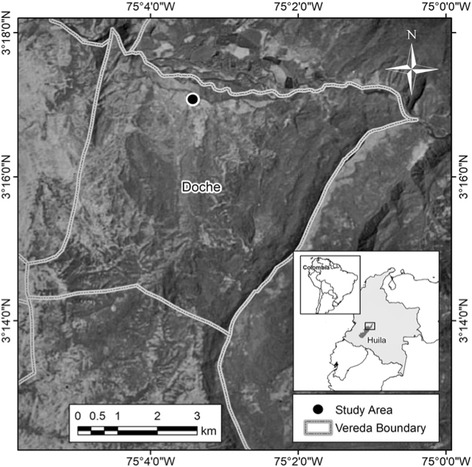
In Colombia, ethnobotanical studies regarding plant cultural significance (CS) in tropical dry forests are scarce and mainly focused on the Caribbean region. Different authors have indicated that the plants with the most uses are those of greater cultural importance. Additionally, gender differences in knowledge and interest in natural resources has been widely recorded. This study evaluated the cultural significance of plants in the Doche community, in the Department of Huila. Furthermore, it evaluates the richness of plant knowledge among local inhabitants, looking for testing the hypothesis that the CS of plants positively correlates to the number of uses people inform about, and that there are significant differences on the richness of ethnobotanical knowledge between men and women in this community.
The ethnobotanical categories: "food," "condiment," "economy," "fodder," "firewood," "timber", "medicine," and "others" were established to carry out semi-structured interviews, social cartography, and ethnobotanical walks. The frequency of mention was calculated as a measure of CS. The richness of knowledge of each collaborator was obtained. Non-parametric tests were performed to determine whether differences between the numbers of mentioned species existed between genders and ethnobotanical categories. Finally, Pearson correlation tests determined the relationship between CS and the number of ethnobotanical categories.
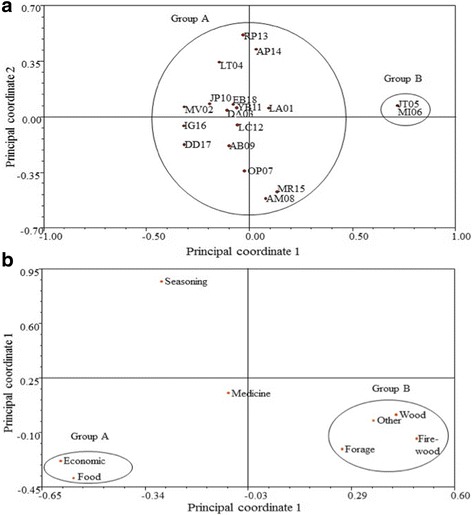
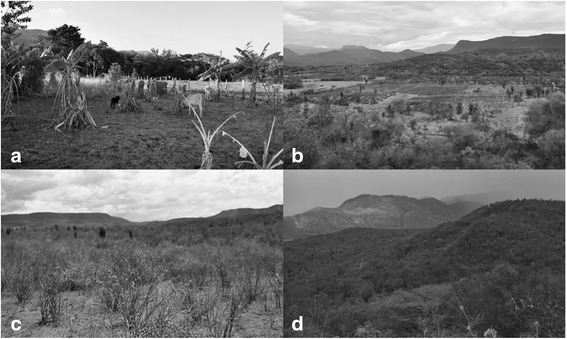
A hundred useful species were registered in crops and forests. The most abundant categories were medicinal (45 species), firewood (30), and fodder (28). The most culturally significant species according to frequency of mention were Pseudosamanea guachapele, Guazuma ulmifolia, Manihot esculenta, and Musa balbisiana. The species with the most registered uses (five) were Guazuma ulmifolia and Gliricidia sepium. We found a correlation between CS and the number of uses per ethnobotanical category, but no significant difference between genders regarding ethnobotanical knowledge.
Frequency of mention provides relevant information about the CS of species. Furthermore, it aids to establish sustainable use of tropical dry forests without loss of resources parting from strategies designed from within the Doche community and based on their ethnobotanical knowledge. We found that the number of uses of a plant is correlated with its degree of cultural importance. On the other hand, no significant differences were found between genders regarding ethnobotanical knowledge; that is, both men and women have similar roles in the community, which allows them to recognize the same uses per species.
在哥伦比亚,关于热带干旱森林中植物文化意义(CS)的民族植物学研究很少,主要集中在加勒比地区。不同的作者指出,用途最多的植物是那些具有更高文化意义的植物。此外,人们广泛记录了在自然资源方面的知识和兴趣方面存在的性别差异。本研究评估了在 Huila 省的 Doche 社区中植物的文化意义,还评估了当地居民对植物知识的丰富程度,以检验以下假设:植物的 CS 与其被报道的用途数量呈正相关,并且在该社区中,男性和女性在民族植物学知识的丰富程度上存在显著差异。
确定了“食物”、“调味料”、“经济”、“饲料”、“薪材”、“木材”、“药物”和“其他”等民族植物学类别,以进行半结构化访谈、社会制图和民族植物学漫步。以出现频率作为 CS 的衡量标准。获得每位合作者的知识丰富程度。采用非参数检验来确定性别和民族植物学类别之间的被报道物种数量是否存在差异。最后,皮尔逊相关检验确定 CS 与民族植物学类别数量之间的关系。
在作物和森林中记录了一百种有用的物种。最丰富的类别是药用(45 种)、薪材(30 种)和饲料(28 种)。根据出现频率,最具文化意义的物种是 Pseudosamanea guachapele、Guazuma ulmifolia、Manihot esculenta 和 Musa balbisiana。注册用途最多的物种(五种)是 Guazuma ulmifolia 和 Gliricidia sepium。我们发现 CS 与每个民族植物学类别中的用途数量之间存在相关性,但在民族植物学知识方面,性别之间没有显著差异。
出现频率为物种的 CS 提供了相关信息。此外,它有助于在不损失资源的情况下,从 Doche 社区内部制定的基于其民族植物学知识的可持续利用热带干旱森林的策略。我们发现,植物的用途数量与其文化重要性程度相关。另一方面,在民族植物学知识方面,性别之间没有发现显著差异;也就是说,男性和女性在社区中扮演着相同的角色,这使得他们能够识别出每个物种的相同用途。