Liu Xian-Wei, Chen Jie-Jie, Huang Yu-Xi, Sun Xue-Fei, Sheng Guo-Ping, Li Dao-Bo, Xiong Lu, Zhang Yuan-Yuan, Zhao Feng, Yu Han-Qing
1] Department of Chemistry, University of Science & Technology of China, Hefei, 230026, China [2] Collaborative Innovation Center of Suzhou Nano Science and Technology, University of Science & Technology of China, Hefei, 230026, China [3].
1] Department of Chemistry, University of Science & Technology of China, Hefei, 230026, China [2].
Sci Rep. 2014 Jan 16;4:3732. doi: 10.1038/srep03732.
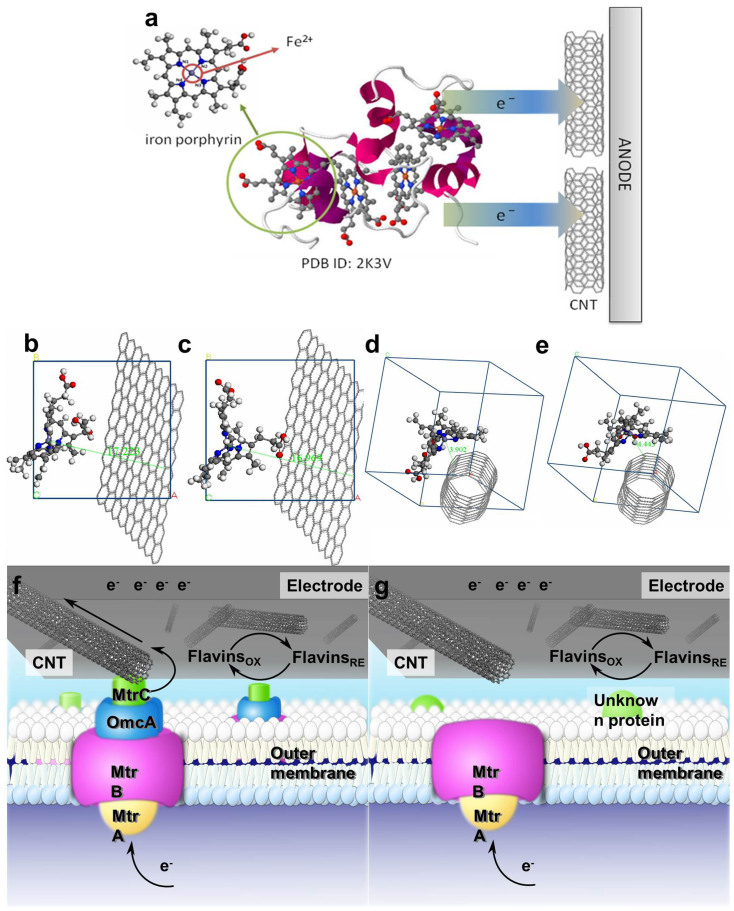
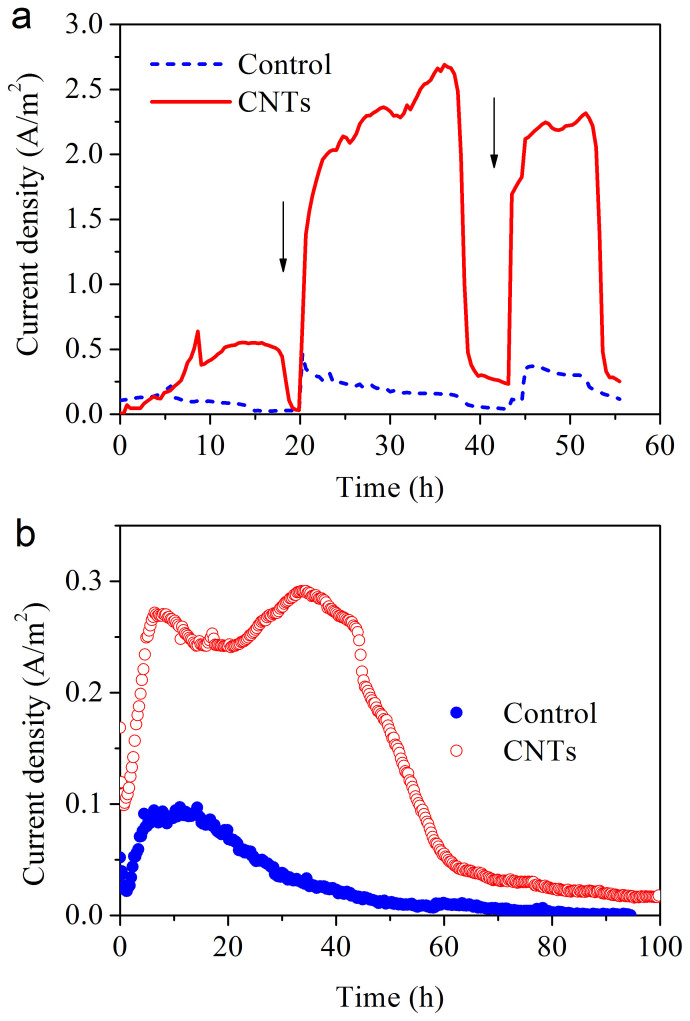
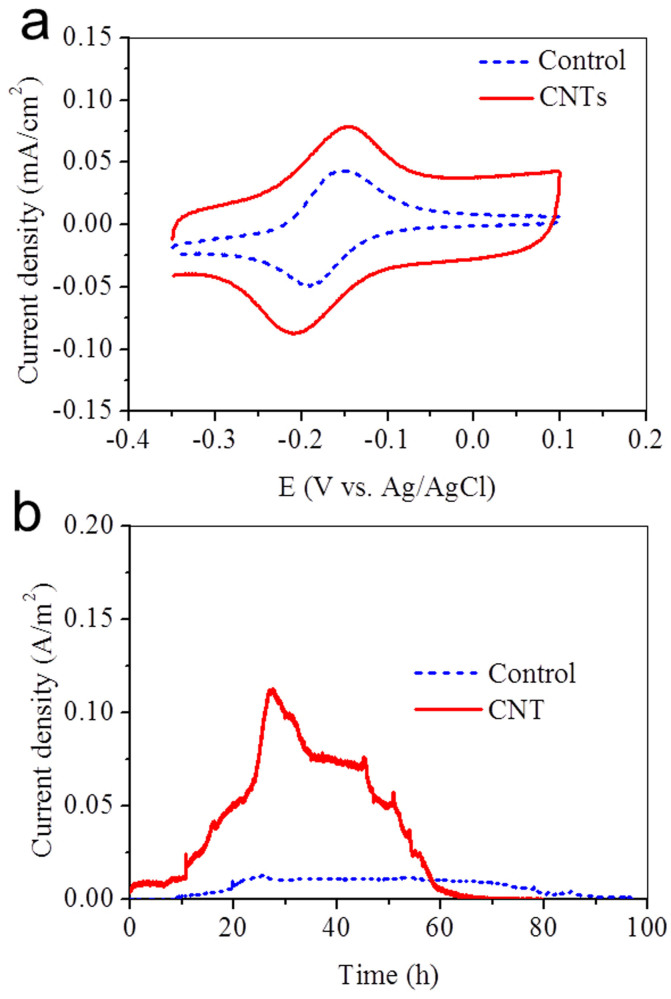
Bioelectrochemical systems (BESs) share the principle of the microbially catalyzed anodic substrate oxidation. Creating an electrode interface to promote extracellular electron transfer from microbes to electrode and understanding such mechanisms are crucial for engineering BESs. In this study, significantly promoted electron transfer and a 10-times increase in current generation in a BES were achieved by the utilization of carbon nanotube (CNT) network, compared with carbon paper. The mechanisms for the enhanced current generation with the CNT network were elucidated with both experimental approach and molecular dynamic simulations. The fabricated CNT network was found to be able to substantially enhance the interaction between the c-type cytochromes and solid electron acceptor, indicating that the direct electron transfer from outer-membrane decaheme c-type cytochromes to electrode might occur. The results obtained in this study will benefit for the optimized design of new materials to target the outer membrane proteins for enhanced electron exchanges.
生物电化学系统(BESs)具有微生物催化阳极底物氧化的原理。创建一个电极界面以促进微生物向电极的细胞外电子转移并理解此类机制对于构建BESs至关重要。在本研究中,与碳纸相比,通过利用碳纳米管(CNT)网络,在BES中实现了显著促进的电子转移以及电流产生增加了10倍。通过实验方法和分子动力学模拟阐明了CNT网络增强电流产生的机制。发现所制备的CNT网络能够显著增强c型细胞色素与固体电子受体之间的相互作用,这表明可能发生从外膜十聚体c型细胞色素到电极的直接电子转移。本研究获得的结果将有助于优化设计针对外膜蛋白以增强电子交换的新材料。