Xenologiq, Canterbury, Kent, UK.
Institute for Systems Biology, Moscow, Russia.
CPT Pharmacometrics Syst Pharmacol. 2014 Jan 15;3(1):e91. doi: 10.1038/psp.2013.72.
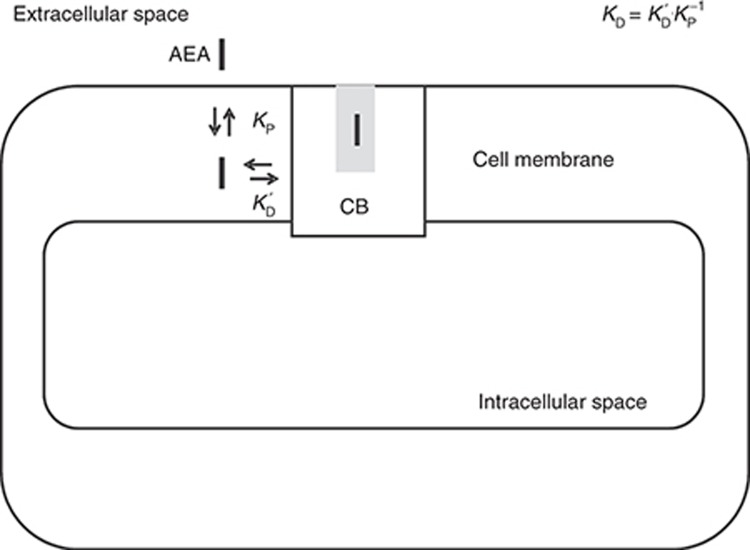
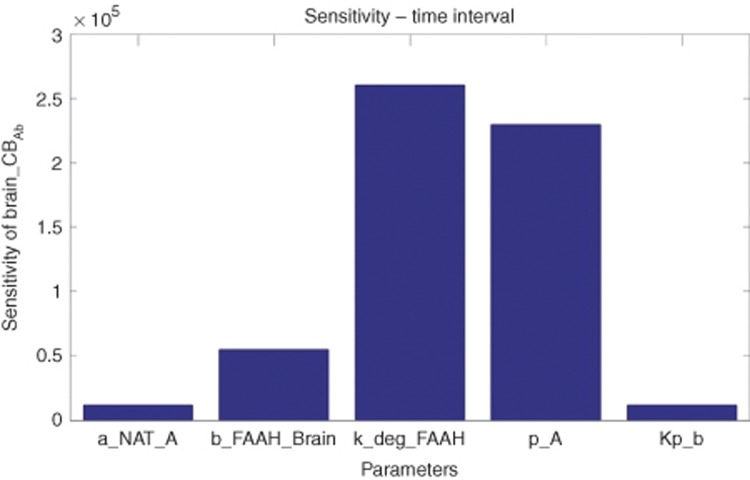
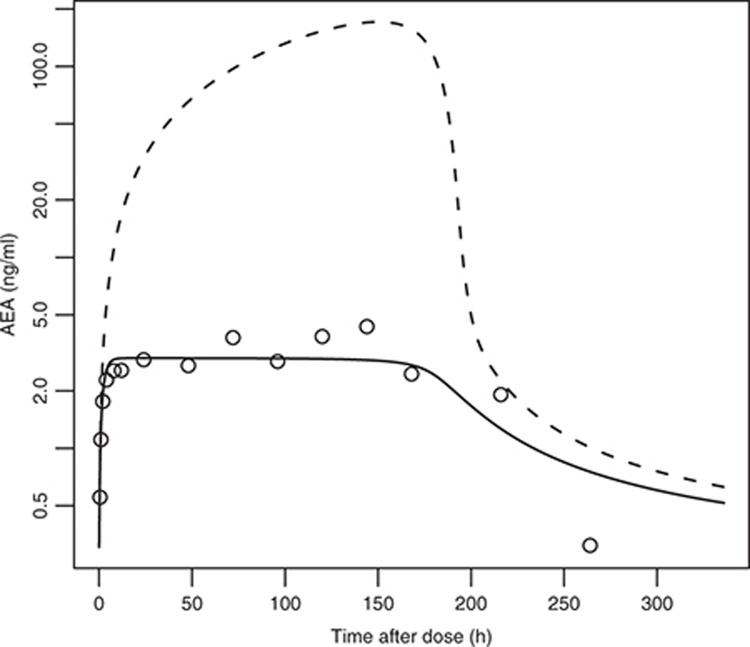
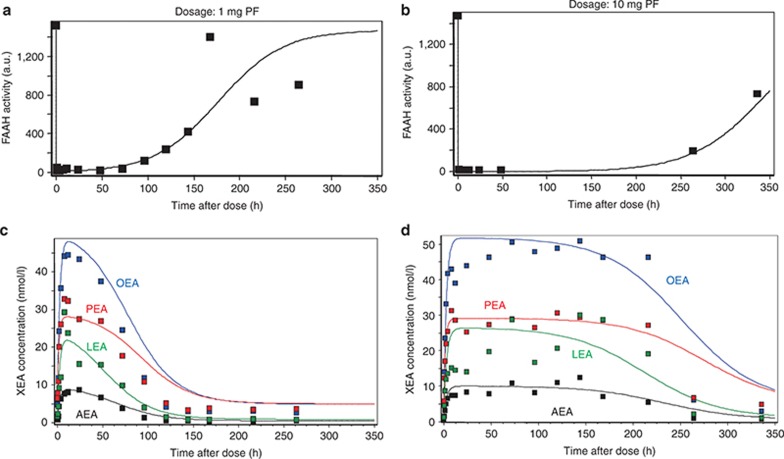
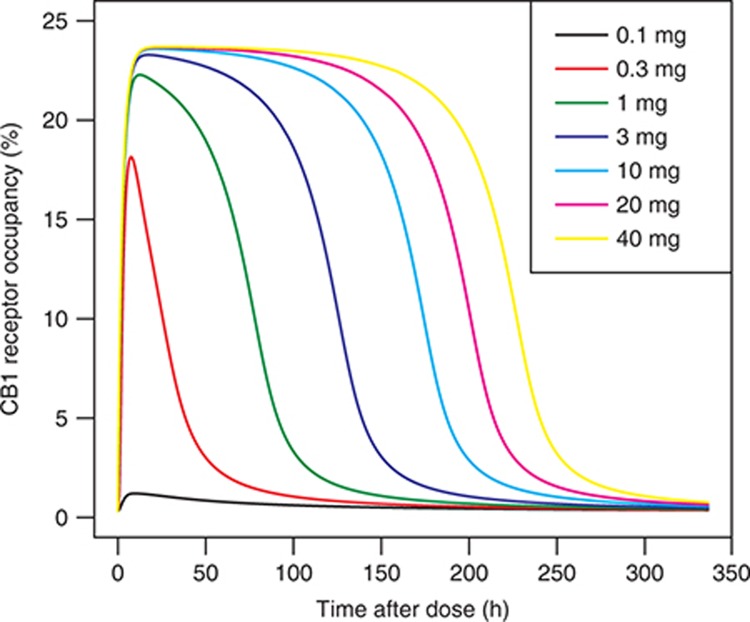
The level of the endocannabinoid anandamide is controlled by fatty acid amide hydrolase (FAAH). In 2011, PF-04457845, an irreversible inhibitor of FAAH, was progressed to phase II clinical trials for osteoarthritic pain. This article discusses a prospective, integrated systems pharmacology model evaluation of FAAH as a target for pain in humans, using physiologically based pharmacokinetic and systems biology approaches. The model integrated physiological compartments; endocannabinoid production, degradation, and disposition data; PF-04457845 pharmacokinetics and pharmacodynamics, and cannabinoid receptor CB1-binding kinetics. The modeling identified clear gaps in our understanding and highlighted key risks going forward, in particular relating to whether methods are in place to demonstrate target engagement and pharmacological effect. The value of this modeling exercise will be discussed in detail and in the context of the clinical phase II data, together with recommendations to enable optimal future evaluation of FAAH inhibitors.CPT: Pharmacometrics Systems Pharmacology (2014) 3, e91; doi:10.1038/psp.2013.72; published online 15 January 2014.
内源性大麻素大麻酰胺的水平受脂肪酸酰胺水解酶(FAAH)控制。2011 年,不可逆的 FAAH 抑制剂 PF-04457845 进入骨关节炎疼痛的 II 期临床试验。本文使用基于生理学的药代动力学和系统生物学方法,讨论了 FAAH 作为人类疼痛靶点的前瞻性综合系统药理学模型评估。该模型综合了生理隔室;内源性大麻素的产生、降解和分布数据;PF-04457845 的药代动力学和药效学,以及大麻素受体 CB1 结合动力学。模型识别出我们理解中的明显差距,并强调了未来的关键风险,特别是是否有方法来证明靶标结合和药理作用。将详细讨论这一建模工作的价值,并结合 II 期临床数据提出建议,以实现 FAAH 抑制剂的最佳未来评估。CPT:药效动力学系统药理学(2014 年)3,e91;doi:10.1038/psp.2013.72;在线发表于 2014 年 1 月 15 日。