German Institute of Human Nutrition in Potsdam-Rehbruecke (DIfE), Arthur-Scheunert-Allee 114-116, Nuthetal 14558, Germany.
Int J Mol Sci. 2014 Jan 20;15(1):1374-91. doi: 10.3390/ijms15011374.
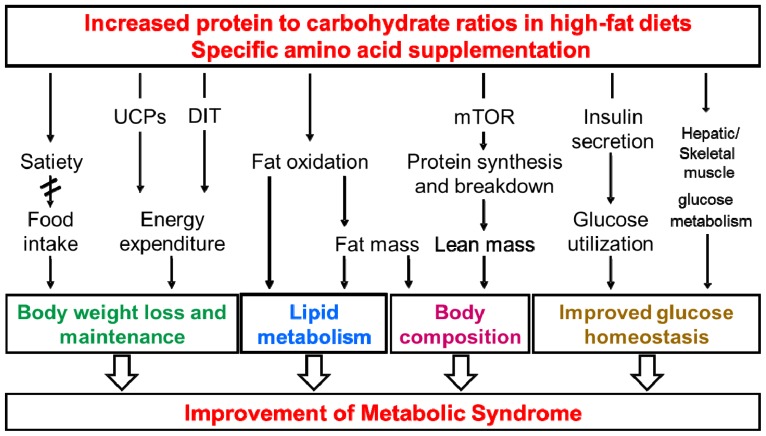
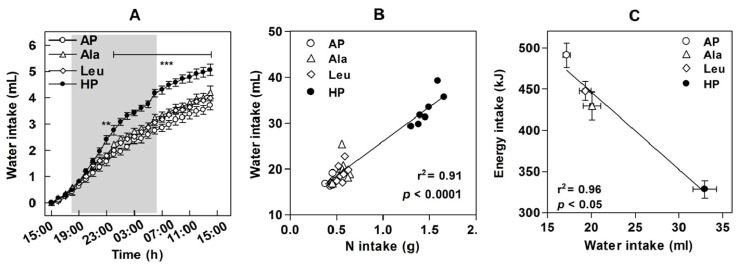
High-protein diets have been shown to prevent the development of diet-induced obesity and can improve associated metabolic disorders in mice. Dietary leucine supplementation can partially mimic this effect. However, the molecular mechanisms triggering these preventive effects remain to be satisfactorily explained. Here we review studies showing a connection between high protein or total amino nitrogen intake and obligatory water intake. High amino nitrogen intake may possibly lower lipid storage, and prevent insulin resistance. Suggestions are made for further systematical studies to explore the relationship between water consumption, satiety, and energy expenditure. Moreover, these examinations should better distinguish between leucine-specific and unspecific effects. Research in this field can provide important information to justify dietary recommendations and strategies in promoting long-term weight loss and may help to reduce health problems associated with the comorbidities of obesity.
高蛋白饮食已被证明可预防饮食诱导的肥胖,并能改善小鼠相关的代谢紊乱,膳食亮氨酸补充可以部分模拟这种效果。然而,触发这些预防作用的分子机制仍有待令人满意地解释。在这里,我们回顾了一些研究,这些研究表明高蛋白或总氨基酸氮摄入与必需水摄入之间存在联系。高氨基酸氮摄入可能降低脂肪储存,预防胰岛素抵抗。建议进一步进行系统研究,以探讨水的消耗、饱腹感和能量消耗之间的关系。此外,这些检查应该更好地区分亮氨酸特异性和非特异性作用。该领域的研究可以提供重要信息,为促进长期减肥的饮食建议和策略提供依据,并有助于减少与肥胖合并症相关的健康问题。