Zeekpudsa Ponsilp, Kukongviriyapan Veerapol, Senggunprai Laddawan, Sripa Banchob, Prawan Auemduan
Department of Pharmacology, Faculty of Medicine, Khon Kaen University, Khon Kaen 40002, Thailand.
J Exp Clin Cancer Res. 2014 Jan 24;33(1):11. doi: 10.1186/1756-9966-33-11.
Cholangiocarcinoma (CCA) is highly resistant to most of the known chemotherapeutic treatments. NAD(P)H-quinone oxidoreductase 1 (NQO1) is an antioxidant/detoxifying enzyme recently recognized as an important contributor to chemoresistance in some human cancers. However, the contribution of NQO1 to chemotherapy resistance in CCA is unknown.
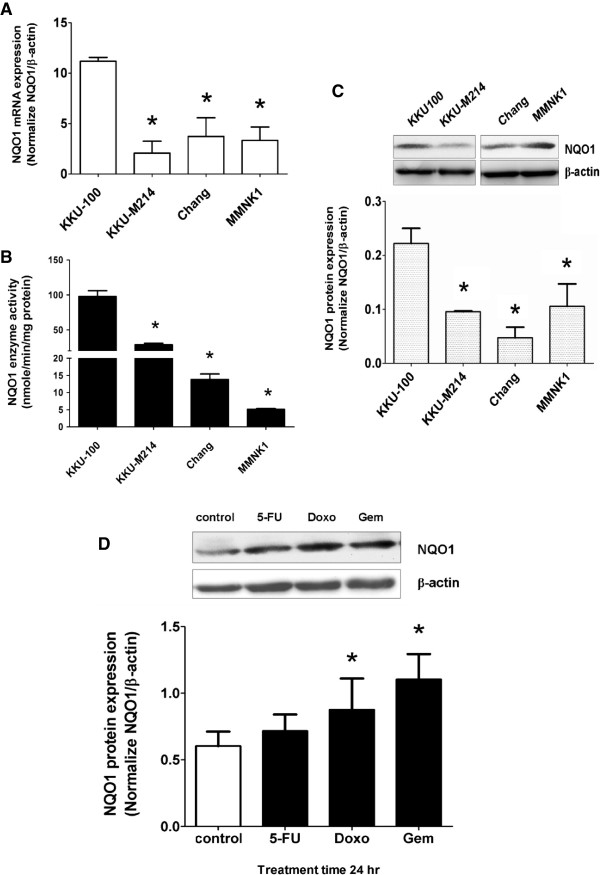
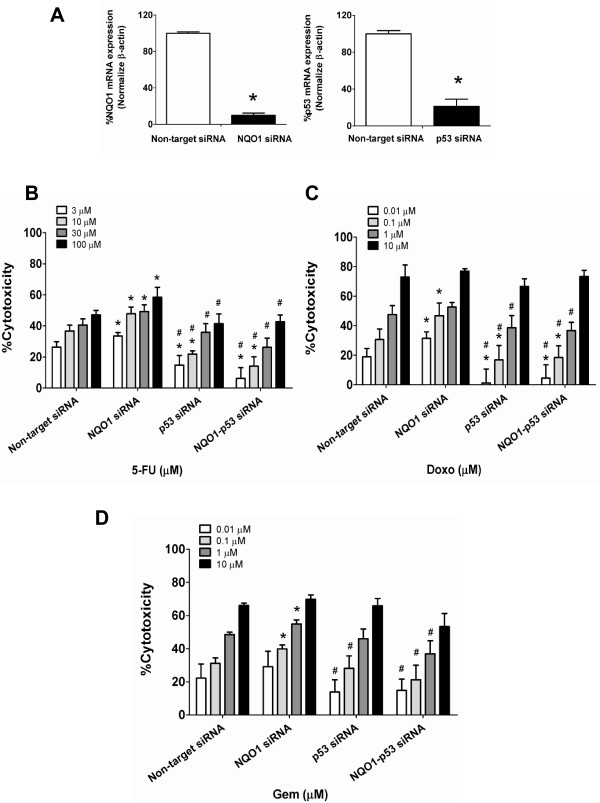
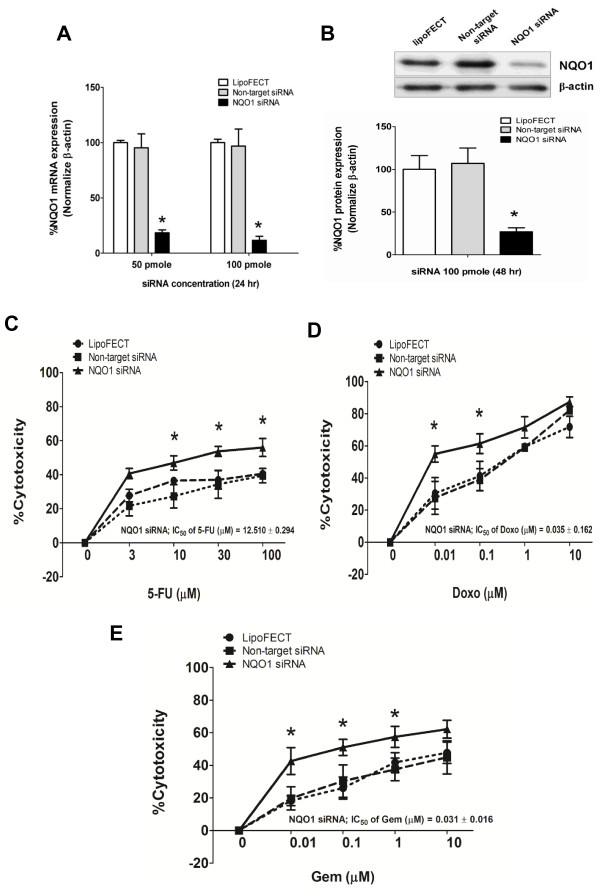
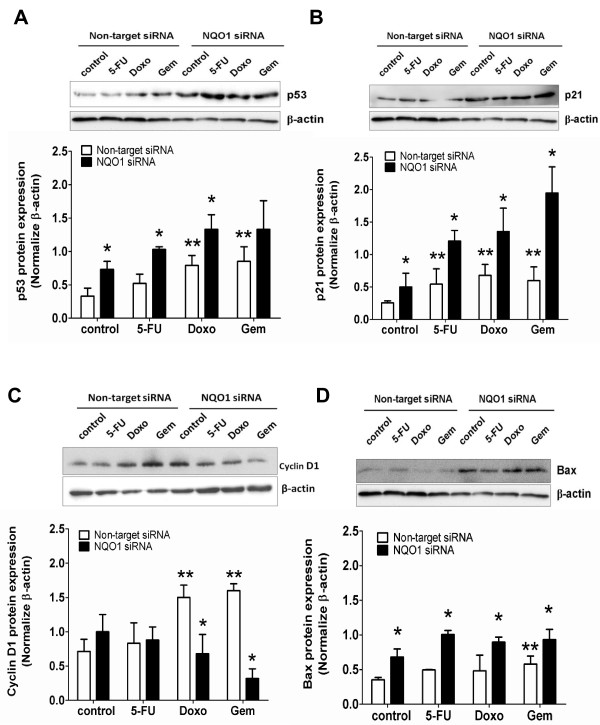
Two CCA cell lines, KKU-100 and KKU-M214, with high and low NQO1 expression levels, respectively, were used to evaluate the sensitivity to chemotherapeutic agents; 5-fluorouracil (5-FU), doxorubicin (Doxo), and gemcitabine (Gem). NQO1 and/or p53 expression in KKU-100 cells were knocked down by siRNA. NQO1 was over-expressed in KKU-M214 cells by transfection with pCMV6-XL5-NQO1 expression vector. CCA cells with modulated NQO1 and/or p53 expression were treated with chemotherapeutic agents, and the cytotoxicity was assessed by SRB assay. The mechanism of enhanced chemosensitivity was evaluated by Western blot analysis.
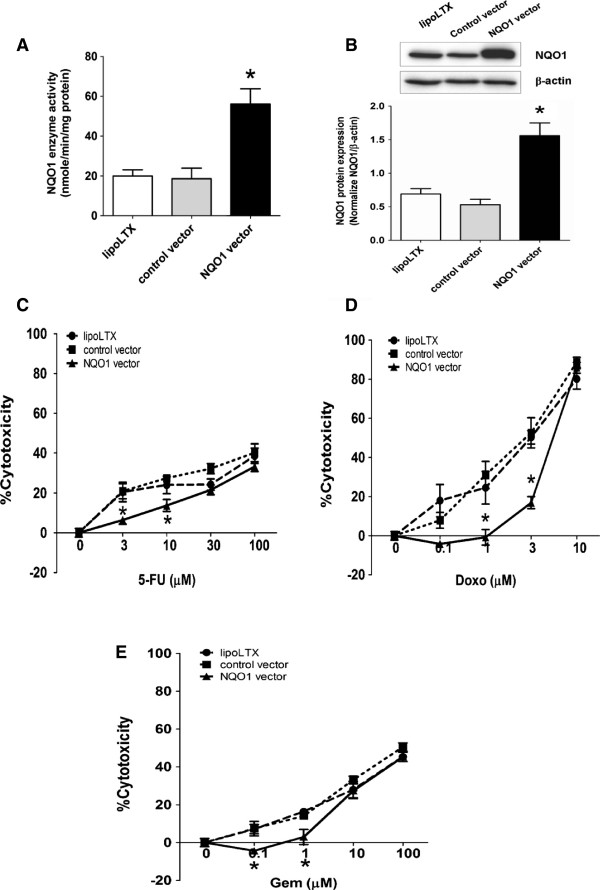
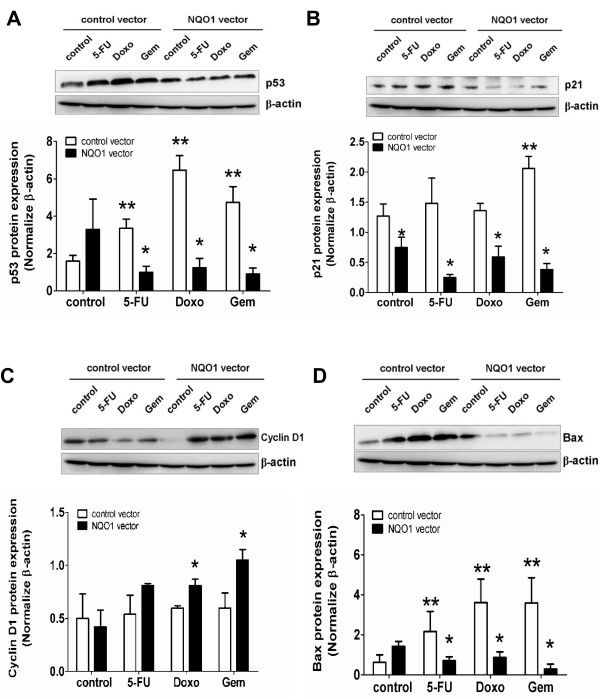
When NQO1 was knocked down, KKU-100 cells became more susceptible to all chemotherapeutic agents. Conversely, with over-expression of NQO1 made KKU-M214 cells more resistant to chemotherapeutic agents. Western blot analysis suggested that enhanced chemosensitivity was probably due to the activation of p53-mediated cell death. Enhanced susceptibility to chemotherapeutic agents by NQO1 silencing was abolished by knockdown of p53.
These results suggest that inhibition of NQO1 could enhance the susceptibility of CCA to an array of chemotherapeutic agents.
胆管癌(CCA)对大多数已知的化疗治疗具有高度抗性。NAD(P)H-醌氧化还原酶1(NQO1)是一种抗氧化/解毒酶,最近被认为是某些人类癌症化疗抗性的重要促成因素。然而,NQO1对CCA化疗抗性的作用尚不清楚。
使用两种分别具有高和低NQO1表达水平的CCA细胞系KKU-100和KKU-M214来评估对化疗药物的敏感性;5-氟尿嘧啶(5-FU)、阿霉素(Doxo)和吉西他滨(Gem)。通过小干扰RNA(siRNA)敲低KKU-100细胞中的NQO1和/或p53表达。通过用pCMV6-XL5-NQO1表达载体转染,使NQO1在KKU-M214细胞中过表达。用化疗药物处理NQO1和/或p53表达被调节的CCA细胞,并通过磺酰罗丹明B(SRB)测定评估细胞毒性。通过蛋白质印迹分析评估增强化学敏感性的机制。
当NQO1被敲低时,KKU-100细胞对所有化疗药物变得更敏感。相反,NQO1的过表达使KKU-M214细胞对化疗药物更具抗性。蛋白质印迹分析表明,增强的化学敏感性可能是由于p53介导的细胞死亡的激活。p53的敲低消除了NQO1沉默导致的对化疗药物敏感性的增强。
这些结果表明,抑制NQO1可增强CCA对一系列化疗药物的敏感性。