Singh Virender, Rai Ratan Kumar, Arora Ashish, Sinha Neeraj, Thakur Ashwani Kumar
Department of Biological Sciences and Bioengineering, Indian Institute of Technology Kanpur 208016, Uttar Pradesh, India.
Centre of Biomedical Research, SGPGIMS Campus, Raibarelly Road, Lucknow 226014, Uttar Pradesh, India.
Sci Rep. 2014 Jan 27;4:3875. doi: 10.1038/srep03875.
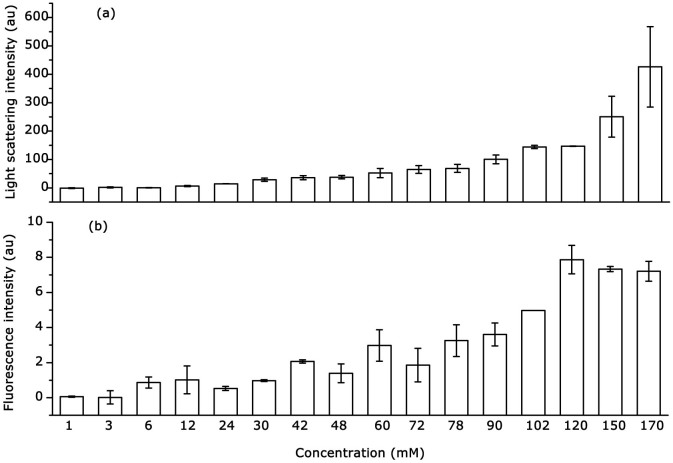
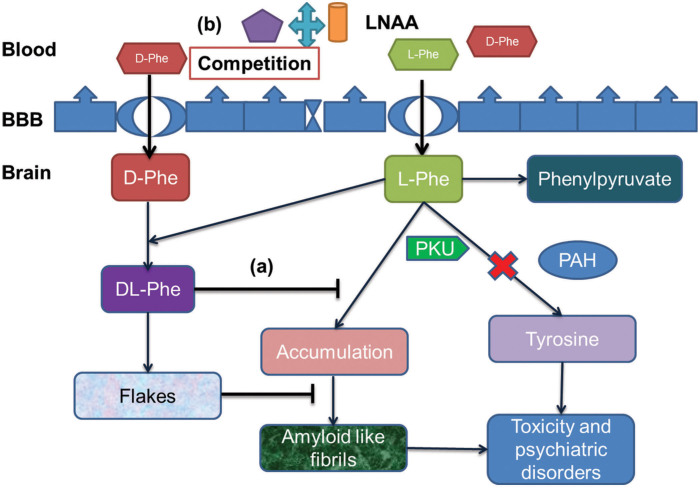
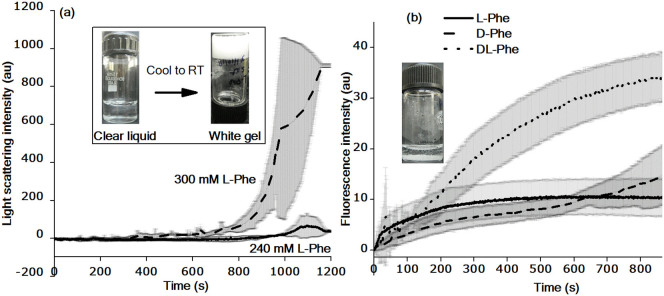
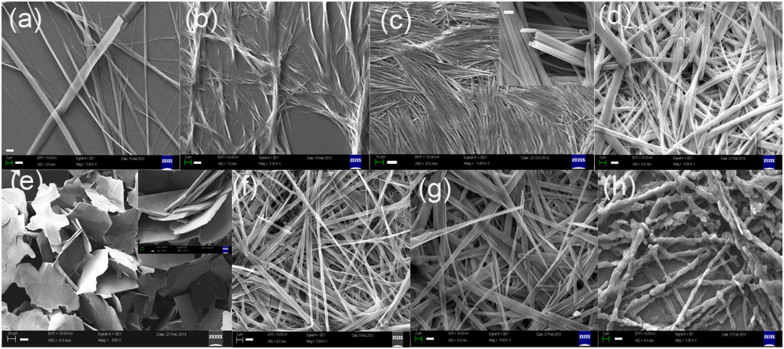
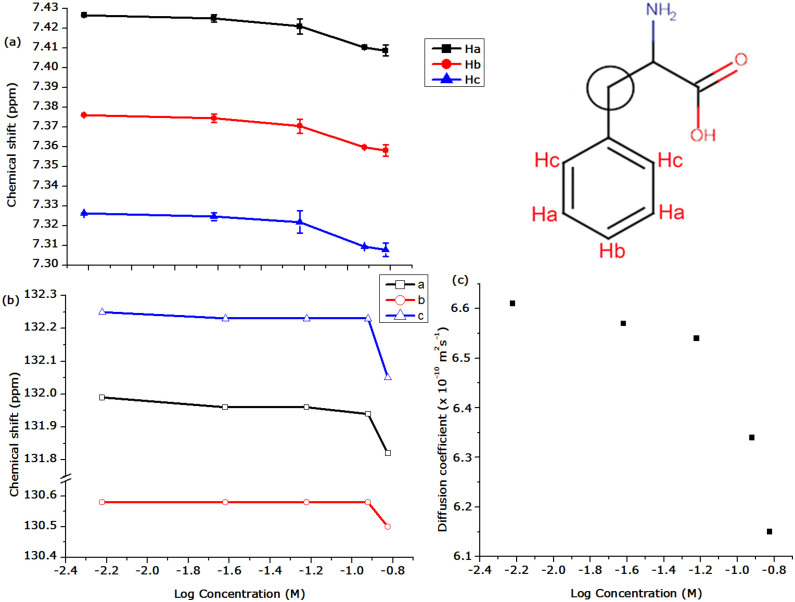
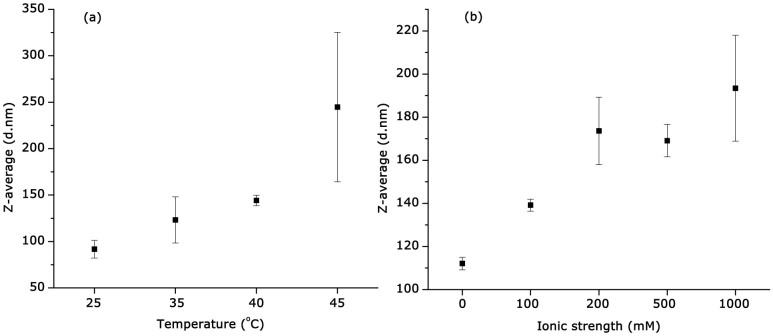
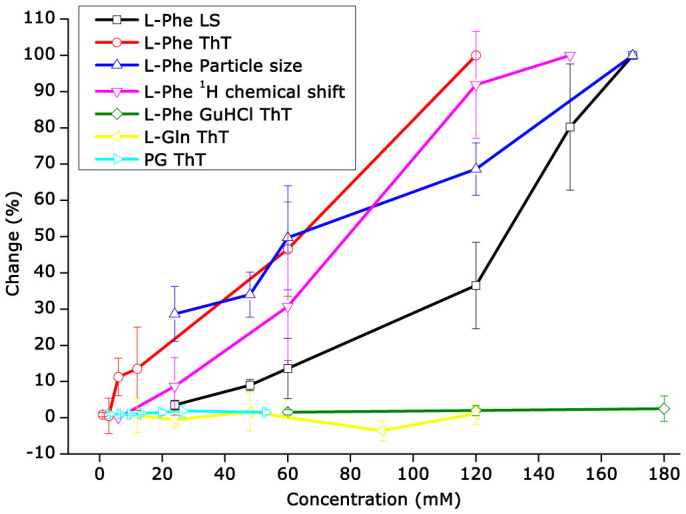
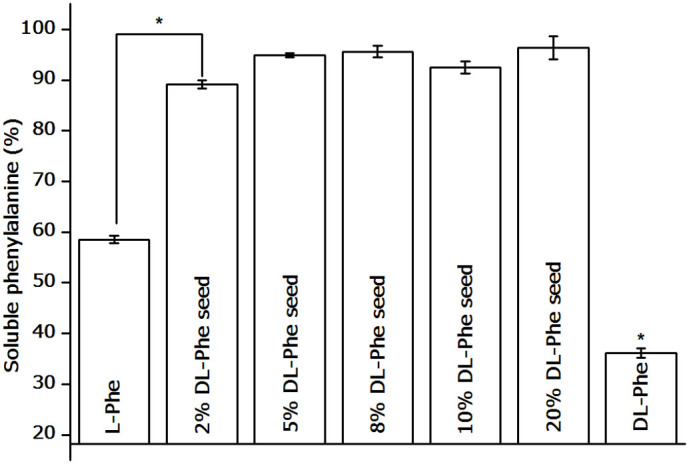
Self-assembly of phenylalanine is linked to amyloid formation toxicity in phenylketonuria disease. We are demonstrating that L-phenylalanine self-assembles to amyloid fibrils at varying experimental conditions and transforms to a gel state at saturated concentration. Biophysical methods including nuclear magnetic resonance, resistance by alpha-phenylglycine to fibril formation and preference of protected phenylalanine to self-assemble show that this behaviour of L-phenylalanine is governed mainly by hydrophobic interactions. Interestingly, D-phenylalanine arrests the fibre formation by L-phenylalanine and gives rise to flakes. These flakes do not propagate further and prevent fibre formation by L-phenylalanine. This suggests the use of D-phenylalanine as modulator of L-phenylalanine amyloid formation and may qualify as a therapeutic molecule in phenylketonuria.
苯丙氨酸的自组装与苯丙酮尿症中的淀粉样蛋白形成毒性有关。我们证明,L-苯丙氨酸在不同的实验条件下自组装成淀粉样纤维,并在饱和浓度下转变为凝胶状态。包括核磁共振、α-苯甘氨酸对纤维形成的抗性以及受保护苯丙氨酸自组装的偏好等生物物理方法表明,L-苯丙氨酸的这种行为主要受疏水相互作用支配。有趣的是,D-苯丙氨酸会阻止L-苯丙氨酸形成纤维,并产生薄片。这些薄片不会进一步扩散,并阻止L-苯丙氨酸形成纤维。这表明D-苯丙氨酸可作为L-苯丙氨酸淀粉样蛋白形成的调节剂,并可能成为苯丙酮尿症的治疗分子。