Blasiak Leah C, Schmidt Alex W, Andriamiarinoro Honoré, Mulaw Temesgen, Rasolomampianina Rado, Applequist Wendy L, Birkinshaw Chris, Rejo-Fienena Félicitée, Lowry Porter P, Schmidt Thomas M, Hill Russell T
Institute of Marine and Environmental Technology, University of Maryland Center for Environmental Science, Baltimore, Maryland, United States of America.
The Center for Microbial Sciences, University of Michigan, Ann Arbor, Michigan, United States of America.
PLoS One. 2014 Jan 20;9(1):e85097. doi: 10.1371/journal.pone.0085097. eCollection 2014.
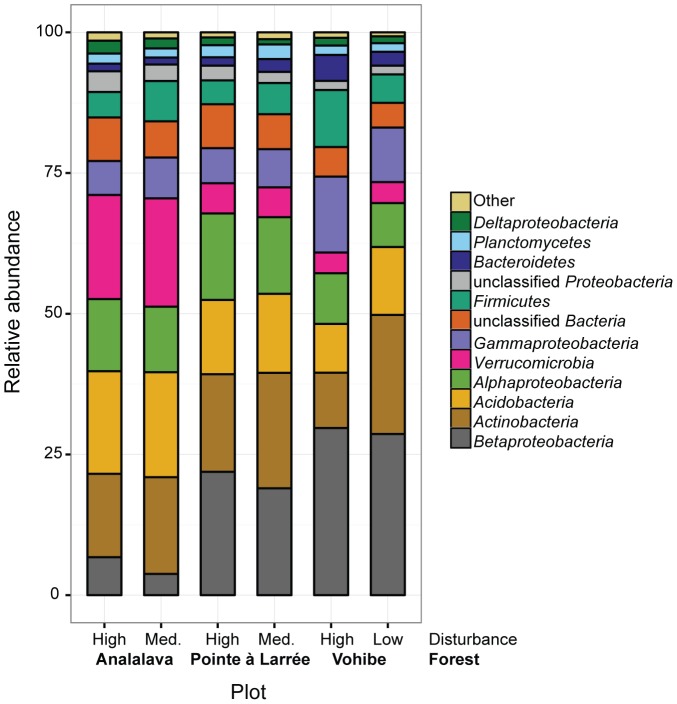
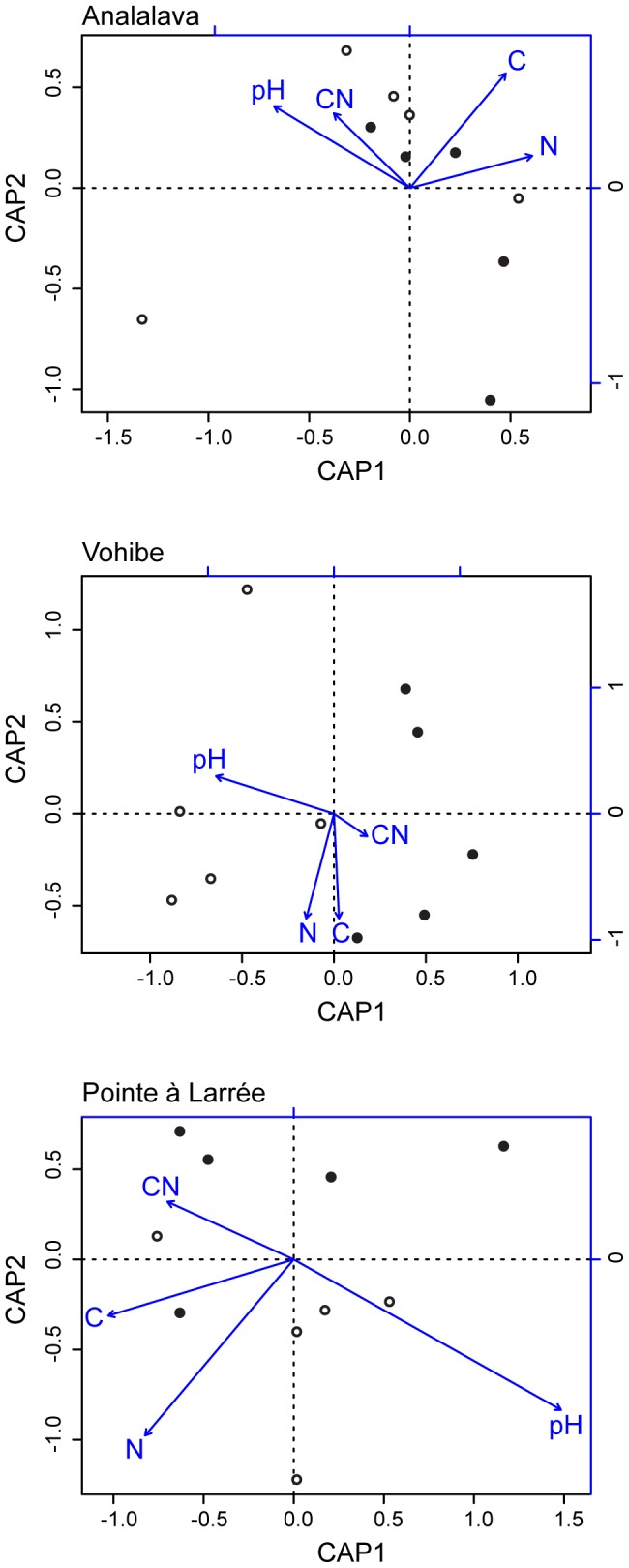
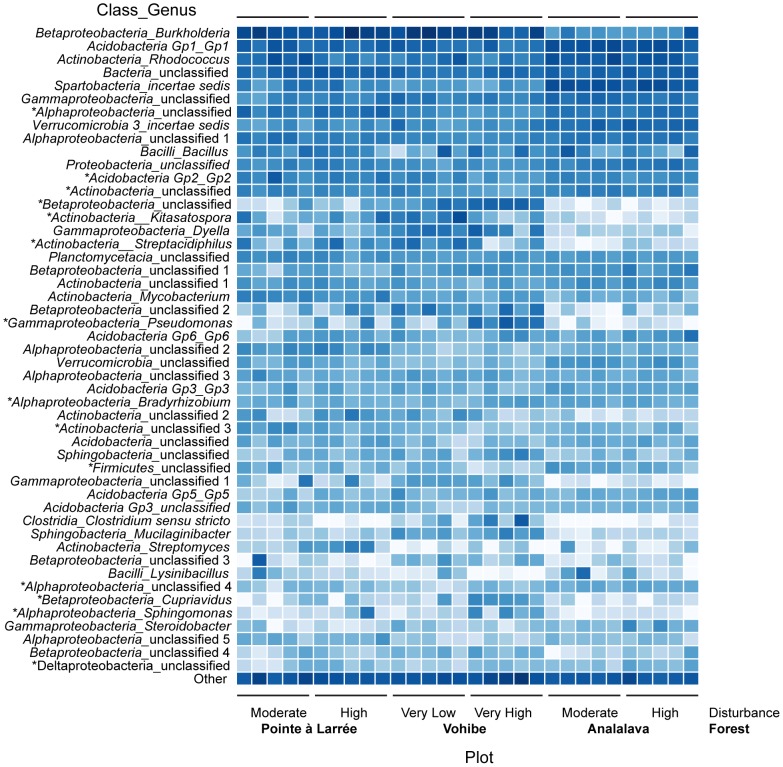
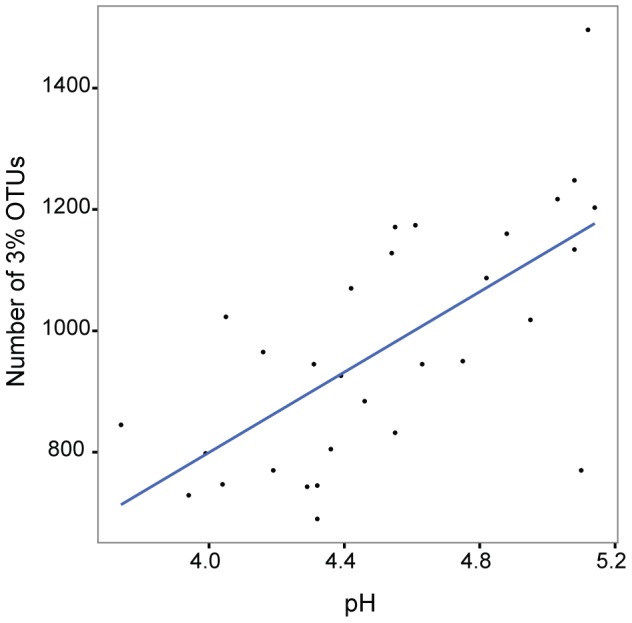
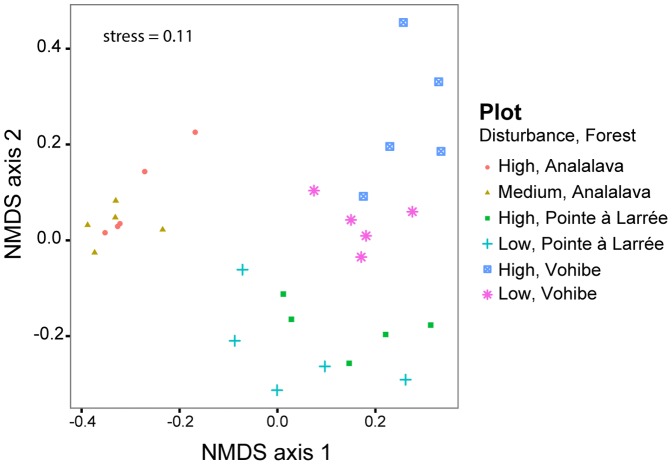
Madagascar is well-known for the exceptional biodiversity of its macro-flora and fauna, but the biodiversity of Malagasy microbial communities remains relatively unexplored. Understanding patterns of bacterial diversity in soil and their correlations with above-ground botanical diversity could influence conservation planning as well as sampling strategies to maximize access to bacterially derived natural products. We present the first detailed description of Malagasy soil bacterial communities from a targeted 16S rRNA gene survey of greater than 290,000 sequences generated using 454 pyrosequencing. Two sampling plots in each of three forest conservation areas were established to represent different levels of disturbance resulting from human impact through agriculture and selective exploitation of trees, as well as from natural impacts of cyclones. In parallel, we performed an in-depth characterization of the total vascular plant morphospecies richness within each plot. The plots representing different levels of disturbance within each forest did not differ significantly in bacterial diversity or richness. Changes in bacterial community composition were largest between forests rather than between different levels of impact within a forest. The largest difference in bacterial community composition with disturbance was observed at the Vohibe forest conservation area, and this difference was correlated with changes in both vascular plant richness and soil pH. These results provide the first survey of Malagasy soil bacterial diversity and establish a baseline of botanical diversity within important conservation areas.
马达加斯加以其丰富多样的大型动植物而闻名,但马达加斯加微生物群落的生物多样性仍相对未被探索。了解土壤中细菌多样性的模式及其与地上植物多样性的相关性,可能会影响保护规划以及采样策略,以最大限度地获取细菌来源的天然产物。我们通过对使用454焦磷酸测序产生的超过290,000个序列进行靶向16S rRNA基因调查,首次详细描述了马达加斯加土壤细菌群落。在三个森林保护区中,每个保护区都设立了两个采样区,以代表因农业和树木选择性采伐造成的人为影响以及气旋的自然影响而产生的不同干扰水平。同时,我们对每个采样区内维管束植物形态物种的总丰富度进行了深入表征。每个森林中代表不同干扰水平的采样区在细菌多样性或丰富度上没有显著差异。细菌群落组成的变化在不同森林之间比在森林内不同影响水平之间更大。在沃希贝森林保护区观察到细菌群落组成随干扰的最大差异,这种差异与维管束植物丰富度和土壤pH值的变化相关。这些结果首次对马达加斯加土壤细菌多样性进行了调查,并在重要保护区内建立了植物多样性基线。