Narendrula-Kotha Ramya, Nkongolo Kabwe K
Biomolecular Sciences Program, Laurentian University, Sudbury, Ontario, Canada.
Department of Biology, Laurentian University, Sudbury, Ontario, Canada.
PLoS One. 2017 Jan 4;12(1):e0168497. doi: 10.1371/journal.pone.0168497. eCollection 2017.
To assess the effects of dolomitic limestone applications on soil microbial communities' dynamics and bacterial and fungal biomass, relative abundance, and diversity in metal reclaimed regions.
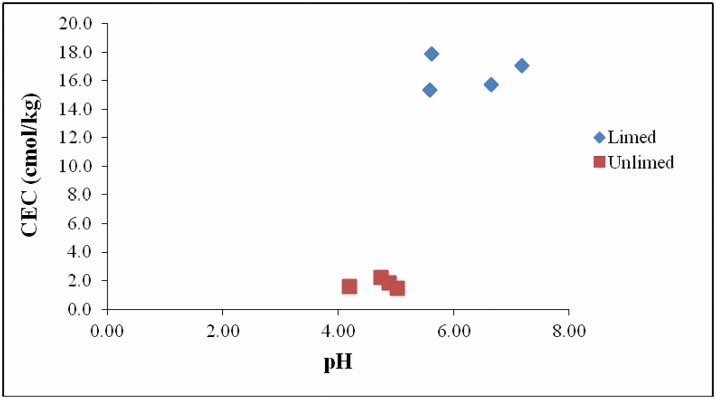
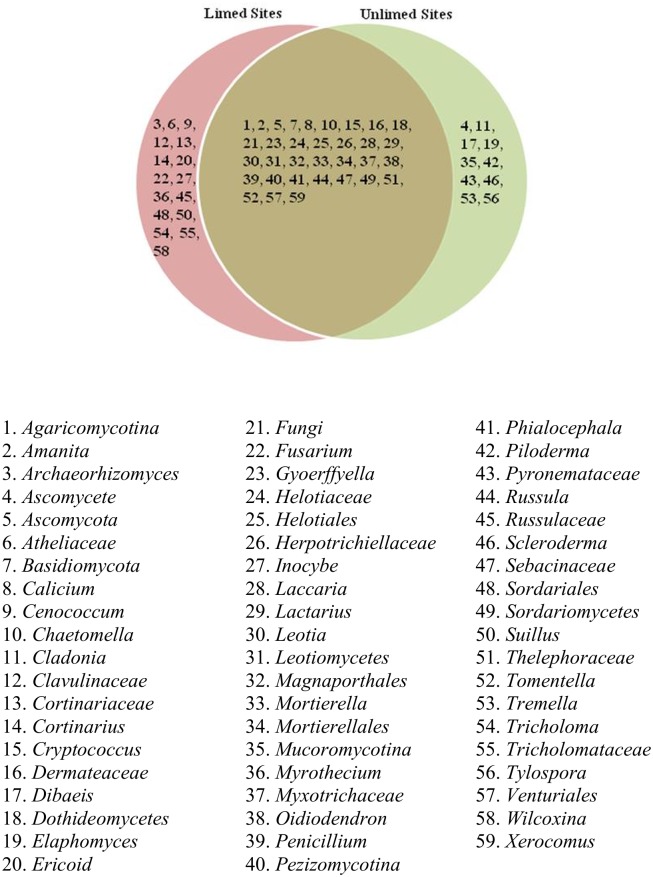
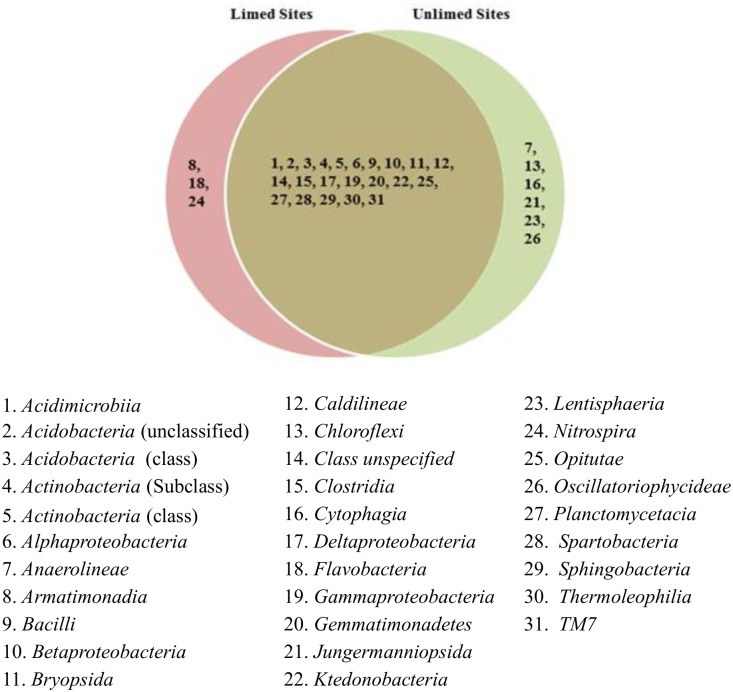
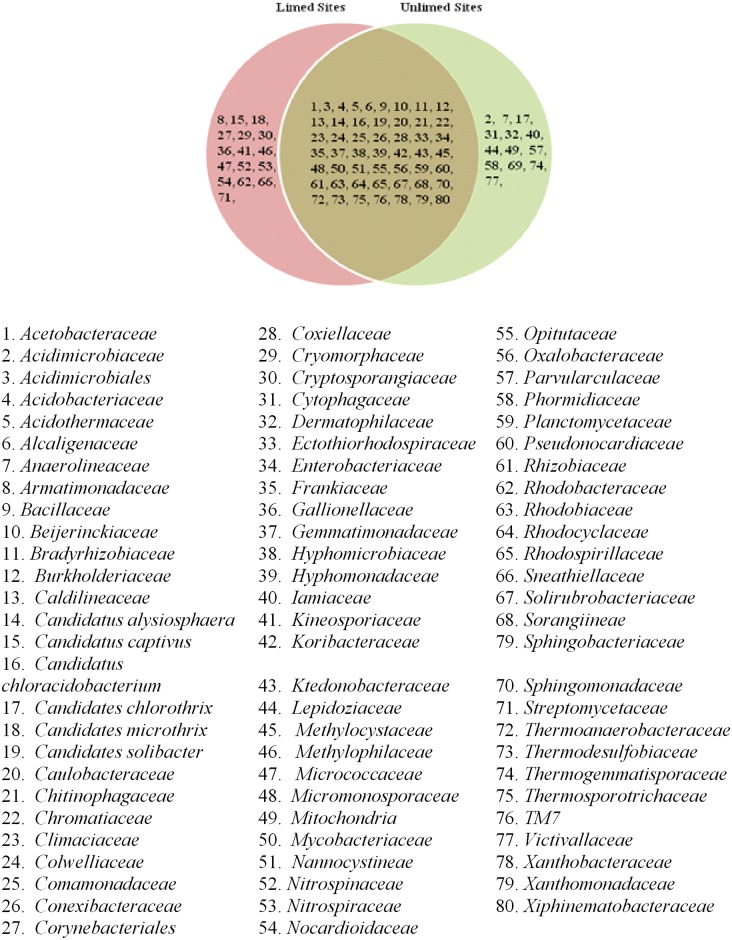
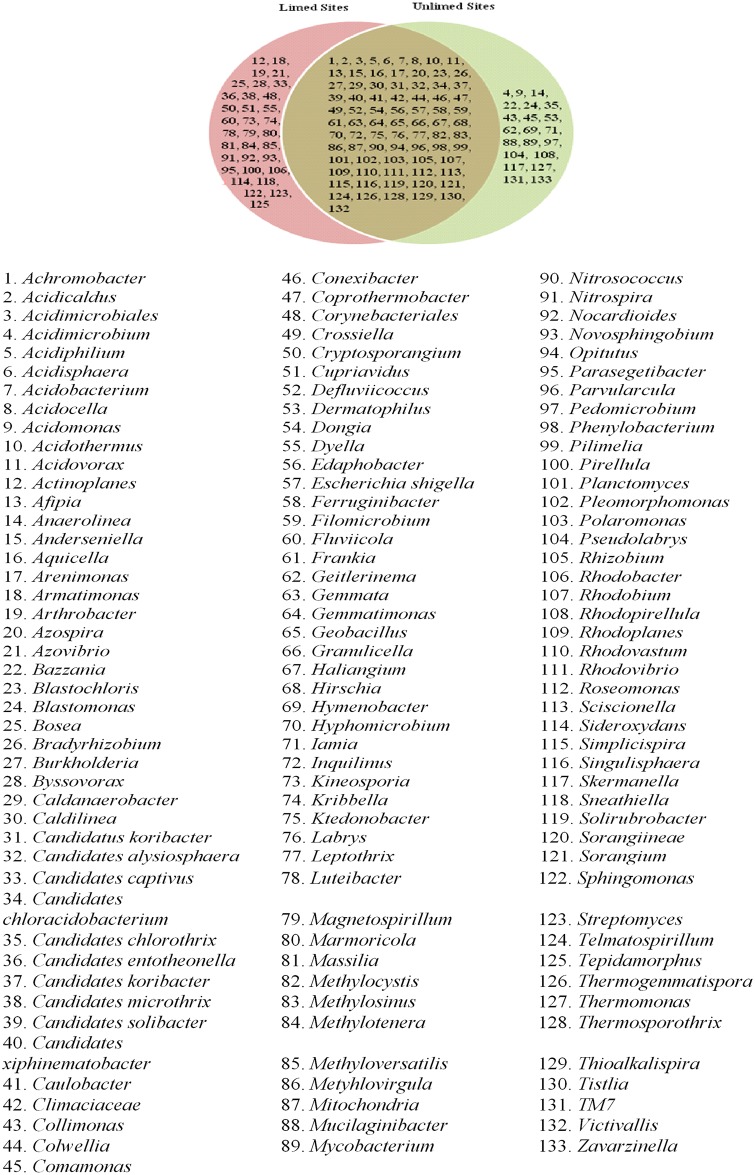
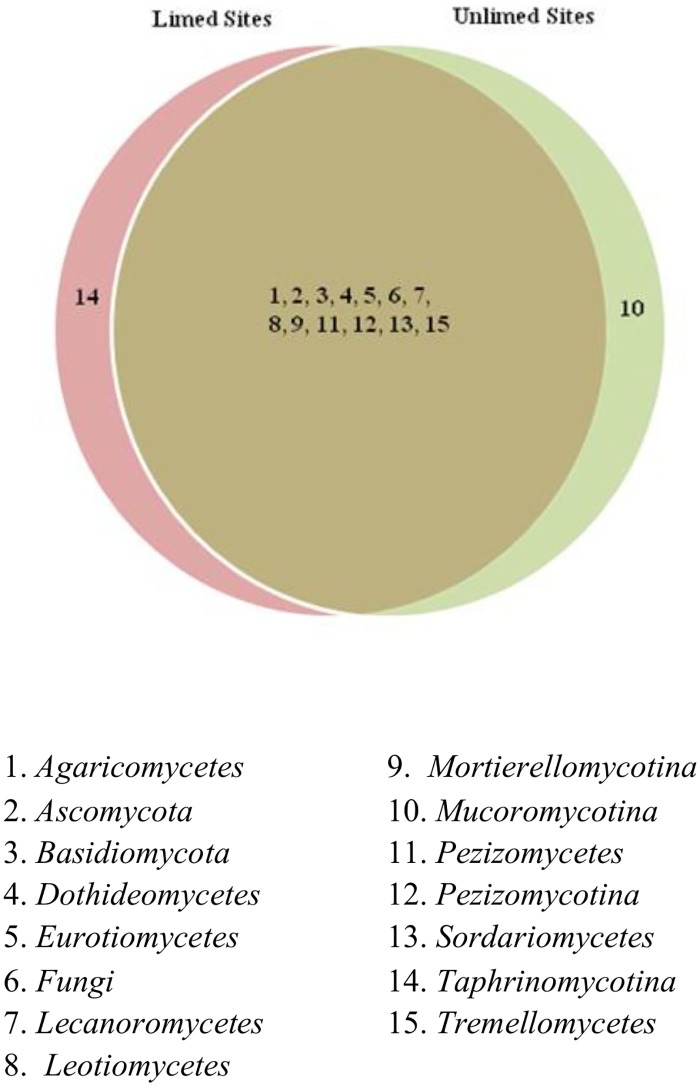
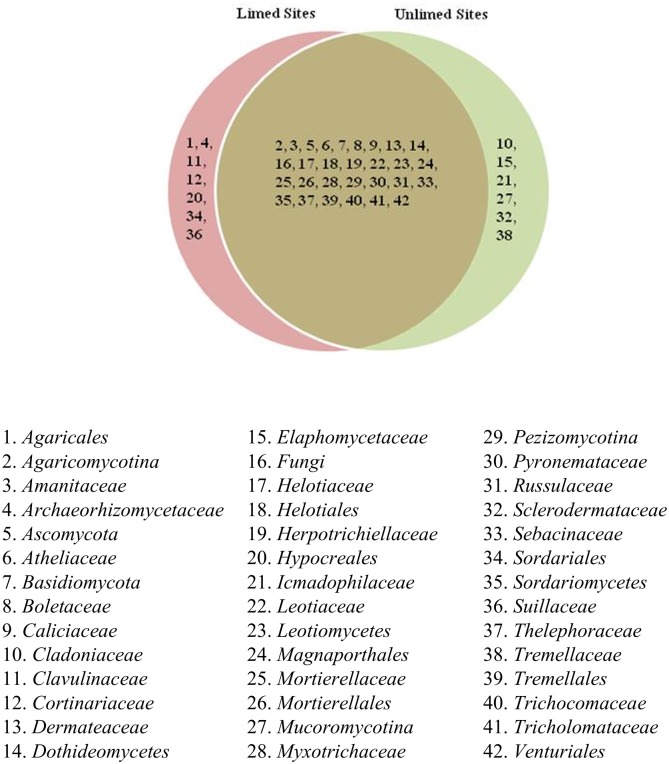
The study was conducted in reclaimed mining sites and metal uncontaminated areas. The limestone applications were performed over 35 years ago. Total microbial biomass was determined by Phospholipid fatty acids. Bacterial and fungal relative abundance and diversity were assessed using 454 pyrosequencing. There was a significant increase of total microbial biomass in limed sites (342 ng/g) compared to unlimed areas (149 ng/g). Chao1 estimates followed the same trend. But the total number of OTUs (Operational Taxonomic Units) in limed (463 OTUs) and unlimed (473 OTUs) soil samples for bacteria were similar. For fungi, OTUs were 96 and 81 for limed and unlimed soil samples, respectively. Likewise, Simpson and Shannon diversity indices revealed no significant differences between limed and unlimed sites. Bacterial and fungal groups specific to either limed or unlimed sites were identified. Five major bacterial phyla including Actinobacteria, Acidobacteria, Chloroflexi, Firmicutes, and Proteobacteria were found. The latter was the most prevalent phylum in all the samples with a relative abundance of 50%. Bradyrhizobiaceae family with 12 genera including the nitrogen fixing Bradirhizobium genus was more abundant in limed sites compared to unlimed areas. For fungi, Ascomycota was the most predominant phylum in unlimed soils (46%) while Basidiomycota phylum represented 86% of all fungi in the limed areas.
Detailed analysis of the data revealed that although soil liming increases significantly the amount of microbial biomass, the level of species diversity remain statistically unchanged even though the microbial compositions of the damaged and restored sites are different.
Soil liming still have a significant beneficial effects on soil microbial abundance and composition > 35 years after dolomitic limestone applications.
评估白云石质石灰石的施用对金属开采复垦地区土壤微生物群落动态、细菌和真菌生物量、相对丰度及多样性的影响。
该研究在复垦矿区和未受金属污染的区域开展。石灰石的施用在35年前就已进行。总微生物生物量通过磷脂脂肪酸测定。细菌和真菌的相对丰度及多样性采用454焦磷酸测序进行评估。与未施用石灰石的区域(149纳克/克)相比,施用石灰石的区域总微生物生物量显著增加(342纳克/克)。Chao1估计值呈现相同趋势。但施用石灰石(463个操作分类单元)和未施用石灰石(473个操作分类单元)的土壤样本中细菌的操作分类单元总数相似。对于真菌,施用石灰石和未施用石灰石的土壤样本中操作分类单元分别为96个和81个。同样,辛普森和香农多样性指数显示施用石灰石和未施用石灰石的区域之间无显著差异。鉴定出了施用石灰石或未施用石灰石区域特有的细菌和真菌类群。发现了包括放线菌门、酸杆菌门、绿弯菌门、厚壁菌门和变形菌门在内的五个主要细菌门。后者是所有样本中最普遍的门,相对丰度为50%。与未施用石灰石的区域相比,包含固氮慢生根瘤菌属在内的有12个属的慢生根瘤菌科在施用石灰石的区域更为丰富。对于真菌,子囊菌门是未施用石灰石土壤中最主要的门(46%),而担子菌门在施用石灰石的区域占所有真菌的86%。
对数据的详细分析表明,尽管土壤施用石灰显著增加了微生物生物量,但即使受损和恢复区域的微生物组成不同,物种多样性水平在统计学上仍保持不变。
在施用白云石质石灰石3