Barros Alexandre Guimarães de Almeida, Bridi Jessika Cristina, de Souza Bruno Rezende, de Castro Júnior Célio, de Lima Torres Karen Cecília, Malard Leandro, Jorio Ado, de Miranda Débora Marques, Ashrafi Kaveh, Romano-Silva Marco Aurélio
Instituto Nacional de Ciência e Tecnologia de Medicina Molecular, Faculdade de Medicina da Universidade Federal de Minas Gerais, Belo Horizonte, Minas Gerais, Brazil.
Departamento de Fisiologia e Biofísica, Instituto de Ciências Biológicas da Universidade Federal de Minas Gerais, Belo Horizonte, Minas Gerais, Brazil.
PLoS One. 2014 Jan 22;9(1):e85874. doi: 10.1371/journal.pone.0085874. eCollection 2014.
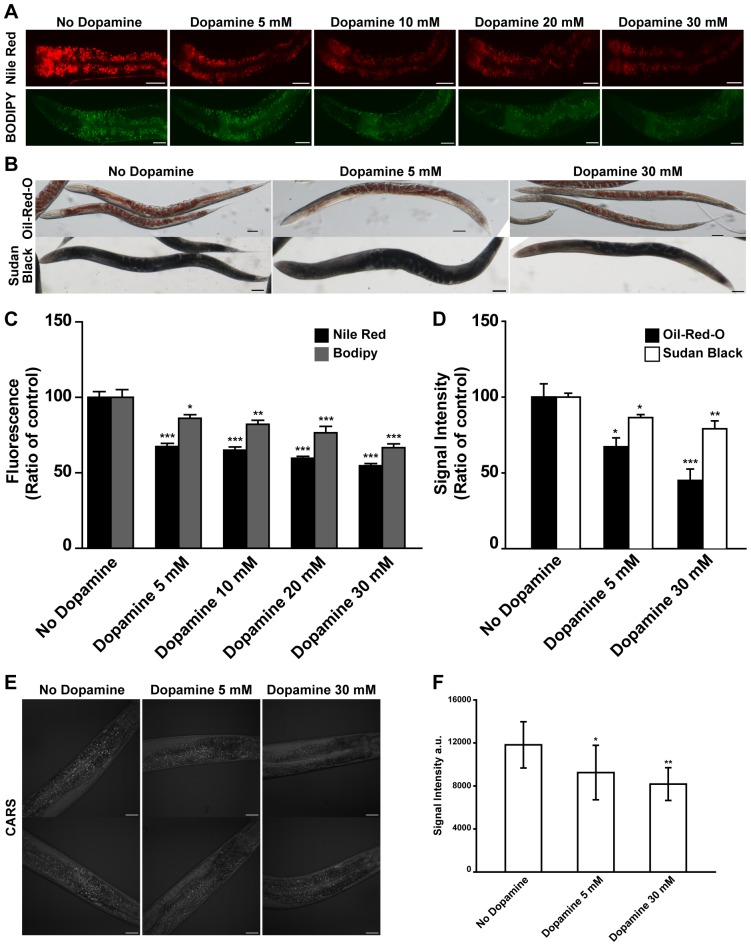
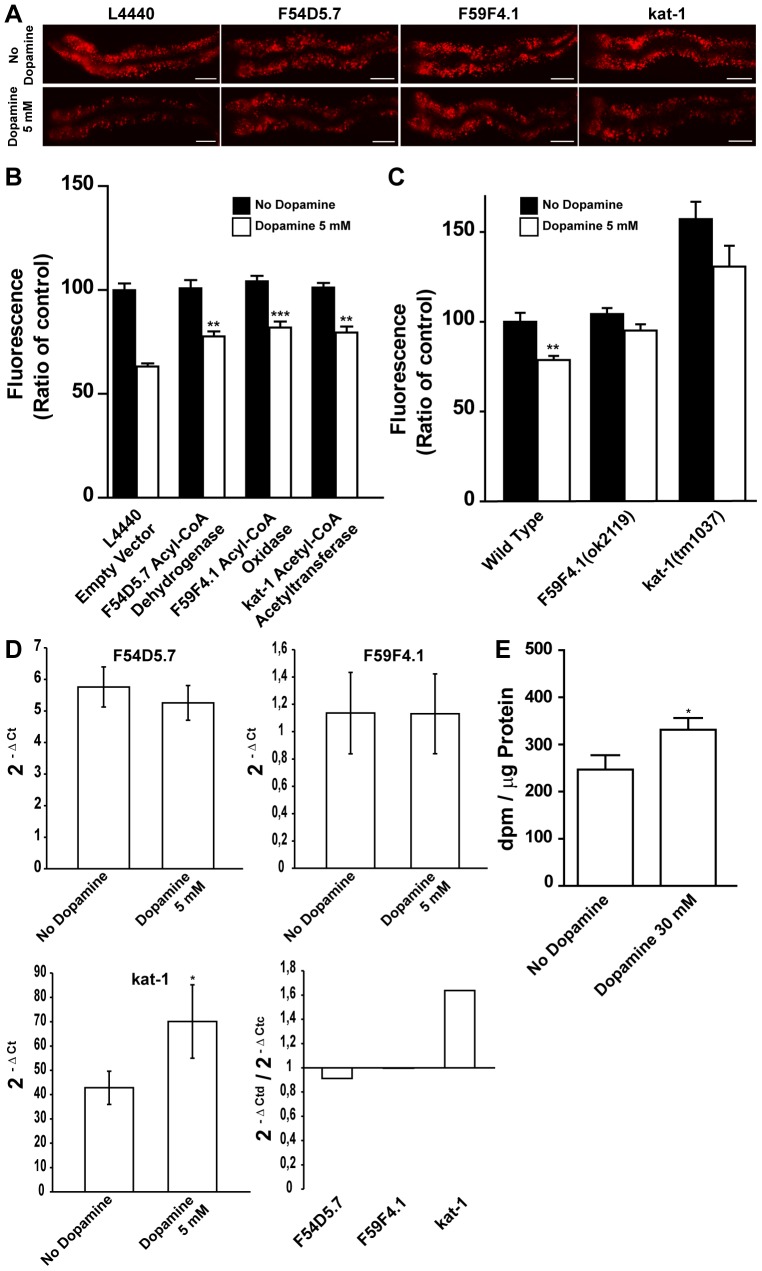
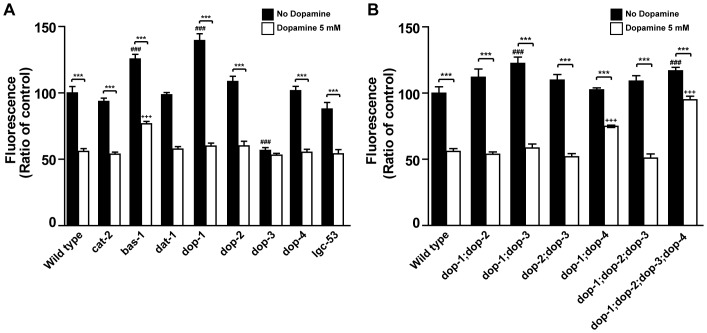
The regulation of energy balance involves an intricate interplay between neural mechanisms that respond to internal and external cues of energy demand and food availability. Compelling data have implicated the neurotransmitter dopamine as an important part of body weight regulation. However, the precise mechanisms through which dopamine regulates energy homeostasis remain poorly understood. Here, we investigate mechanisms through which dopamine modulates energy storage. We showed that dopamine signaling regulates fat reservoirs in Caenorhabditis elegans. We found that the fat reducing effects of dopamine were dependent on dopaminergic receptors and a set of fat oxidation enzymes. Our findings reveal an ancient role for dopaminergic regulation of fat and suggest that dopamine signaling elicits this outcome through cascades that ultimately mobilize peripheral fat depots.
能量平衡的调节涉及神经机制之间复杂的相互作用,这些神经机制会对能量需求和食物供应的内部及外部线索做出反应。有力的数据表明神经递质多巴胺是体重调节的重要组成部分。然而,多巴胺调节能量稳态的确切机制仍知之甚少。在此,我们研究多巴胺调节能量储存的机制。我们发现多巴胺信号传导调节秀丽隐杆线虫的脂肪储存库。我们发现多巴胺的减脂作用依赖于多巴胺能受体和一组脂肪氧化酶。我们的研究结果揭示了多巴胺能对脂肪调节的古老作用,并表明多巴胺信号通过最终动员外周脂肪库的级联反应引发这一结果。