Brunamonti Emiliano, Chiricozzi Francesca R, Clausi Silvia, Olivito Giusy, Giusti Maria Assunta, Molinari Marco, Ferraina Stefano, Leggio Maria
Department of Physiology and Pharmacology, Sapienza University, Rome, Italy.
Department of Psychology, Sapienza University, Rome, Italy ; Ataxia Research Lab, IRCCS Santa Lucia Foundation, Rome, Italy.
PLoS One. 2014 Jan 17;9(1):e85997. doi: 10.1371/journal.pone.0085997. eCollection 2014.
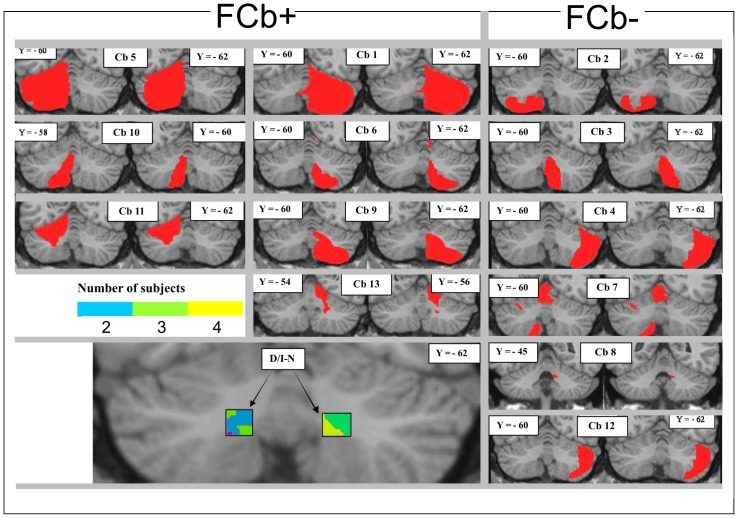
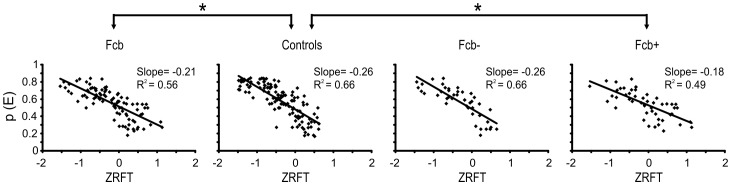
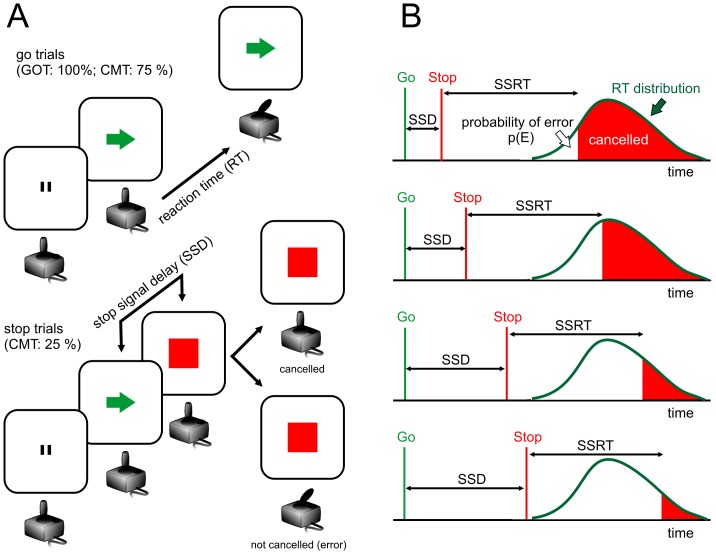
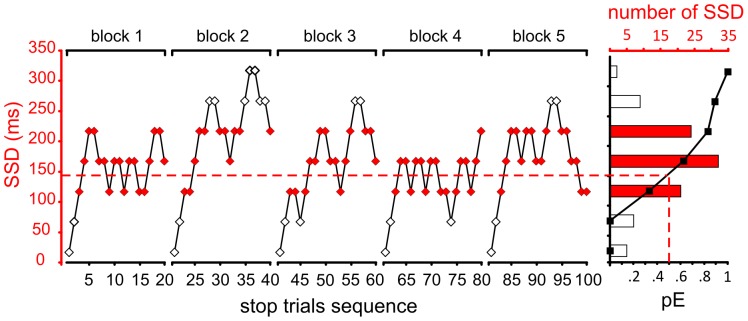
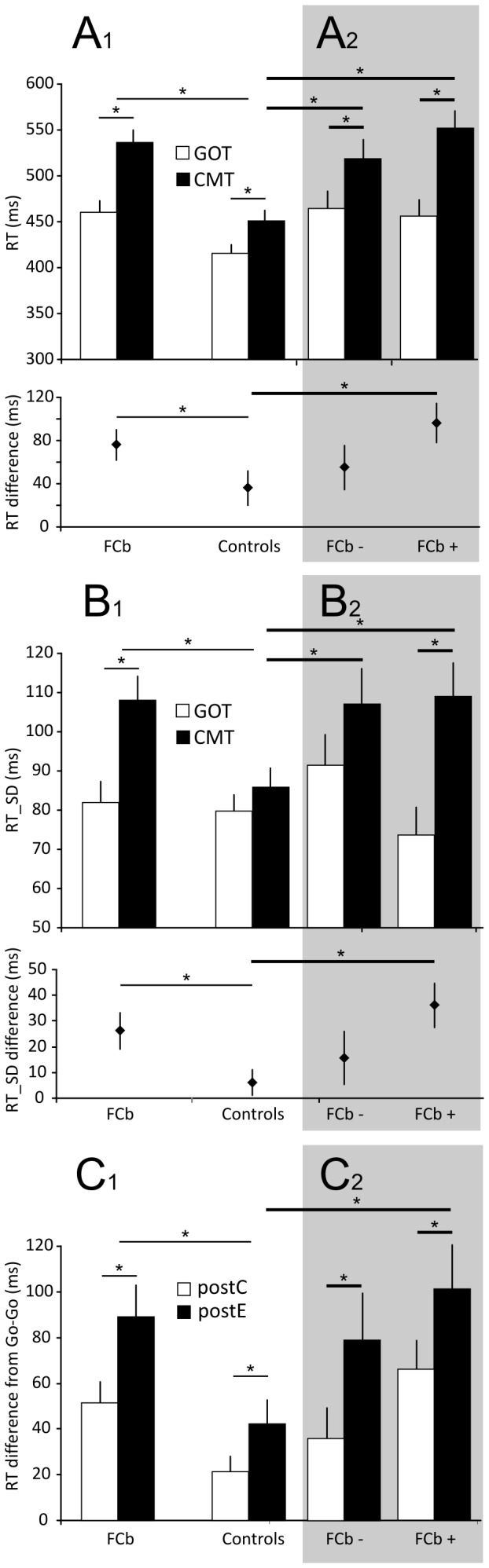
Executive control of motor responses is a psychological construct of the executive system. Several studies have demonstrated the involvement of the cerebral cortex, basal ganglia, and thalamus in the inhibition of actions and monitoring of performance. The involvement of the cerebellum in cognitive function and its functional interaction with basal ganglia have recently been reported. Based on these findings, we examined the hypothesis of cerebellar involvement in executive control by administering a countermanding task in patients with focal cerebellar damage. The countermanding task requires one to make a movement in response to a 'go' signal and to halt it when a 'stop' signal is presented. The duration of the go process (reaction time; RT), the duration of the stop process (stop signal reaction time; SSRT), and their relationship, expressed by a psychometric function, are recorded as measures of executive control. All patients had longer go process duration in general and in particular, as a proactive control, as demonstrated by the increase in RT after erroneously performed stop trials. Further, they were defective in the slope of the psychometric function indicating a difficulty on triggering the stop process, although the SSRT did not differ from controls. Notably, their performance was worse when lesions affected deep cerebellar nuclei. Our results support the hypothesis that the cerebellum regulates the executive control of voluntary actions. We speculate that its activity is attributed to specific cerebellar influence over the cortico-striatal loop.
运动反应的执行控制是执行系统的一种心理结构。多项研究已证明大脑皮层、基底神经节和丘脑参与了动作抑制和行为监测。最近有报道称小脑参与认知功能及其与基底神经节的功能相互作用。基于这些发现,我们通过对局部小脑损伤患者进行取消任务来检验小脑参与执行控制的假设。取消任务要求受试者在收到“开始”信号时做出动作,并在出现“停止”信号时停止该动作。“开始”过程的持续时间(反应时间;RT)、“停止”过程的持续时间(停止信号反应时间;SSRT)以及由心理测量函数表示的它们之间的关系,被记录为执行控制的指标。所有患者总体上“开始”过程持续时间更长,尤其是作为一种主动控制,这表现为错误执行停止试验后反应时间增加。此外,尽管他们的停止信号反应时间与对照组无差异,但他们在心理测量函数的斜率方面存在缺陷,这表明在触发“停止”过程时有困难。值得注意的是,当病变影响小脑深部核团时,他们的表现更差。我们的结果支持小脑调节自主动作执行控制的假设。我们推测其活动归因于小脑对皮质 - 纹状体环路的特定影响。