Samarasinghe Amali E, Woolard Stacie N, Boyd Kelli L, Hoselton Scott A, Schuh Jane M, McCullers Jonathan A
1] Department of Infectious Diseases, Memphis, TN, USA [2] St Jude Children's Research Hospital, Memphis, TN, USA [3] Department of Pediatrics, University of Tennessee Health Science Center, Children's Foundation Research Center, Memphis, TN, USA.
1] St Jude Children's Research Hospital, Memphis, TN, USA [2] Department of Tumor Cell Biology, Memphis, TN, USA.
Immunol Cell Biol. 2014 May-Jun;92(5):449-59. doi: 10.1038/icb.2013.113. Epub 2014 Jan 28.
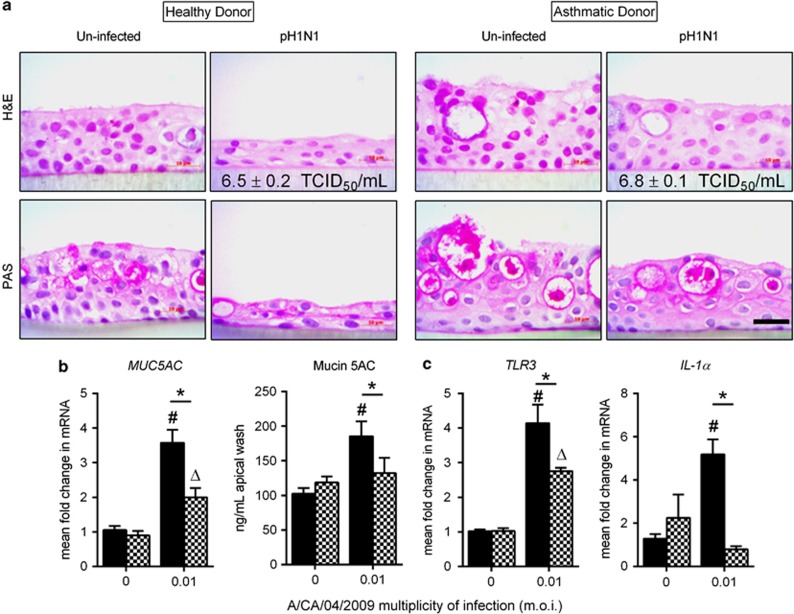
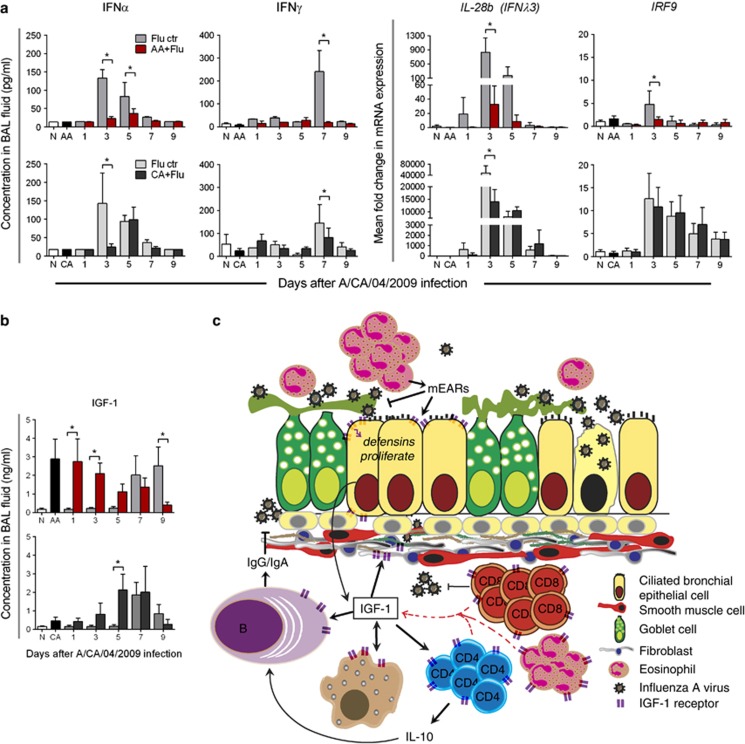
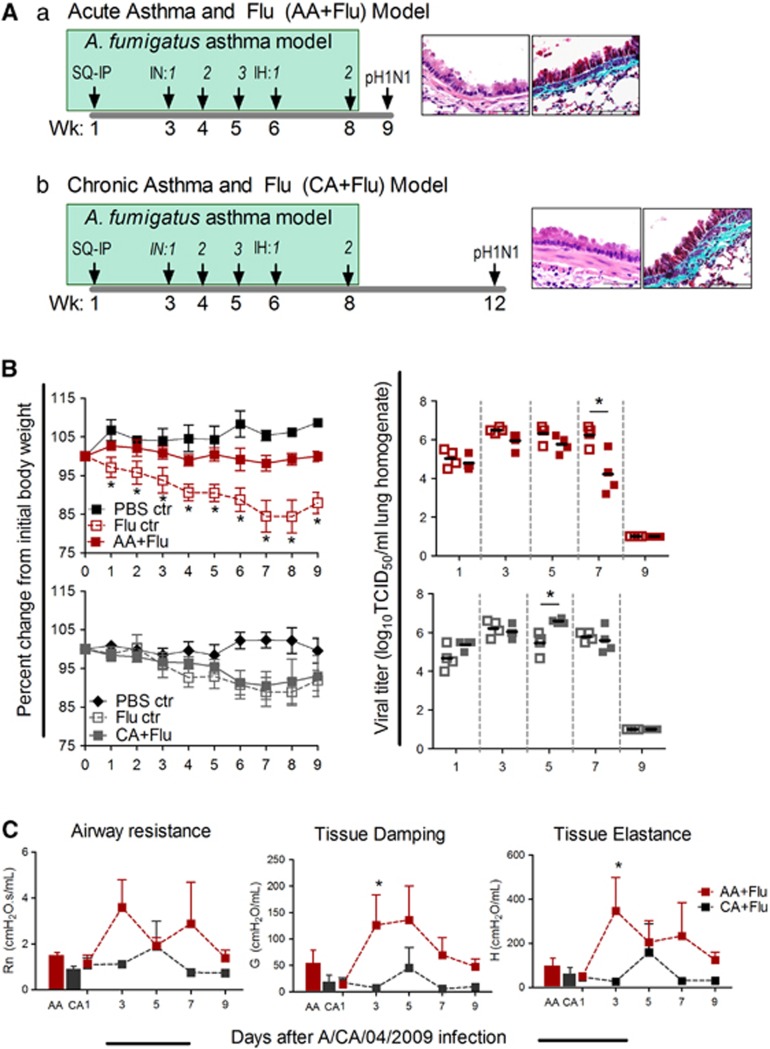
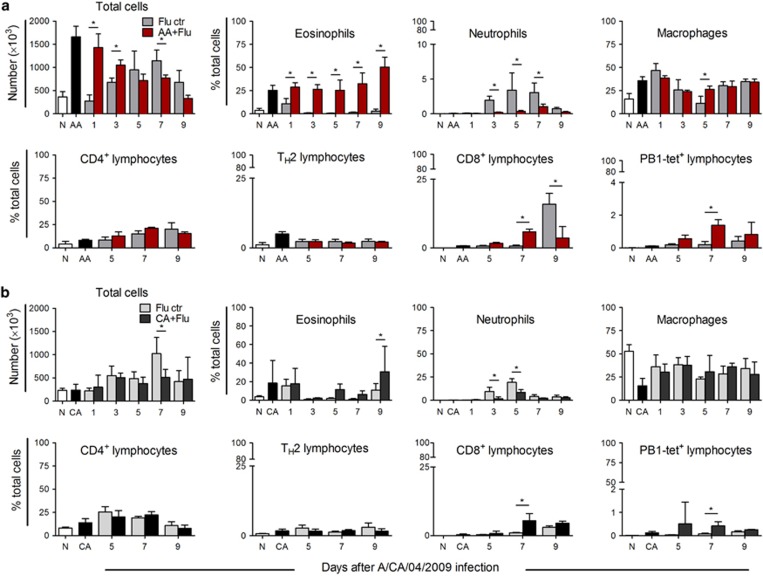
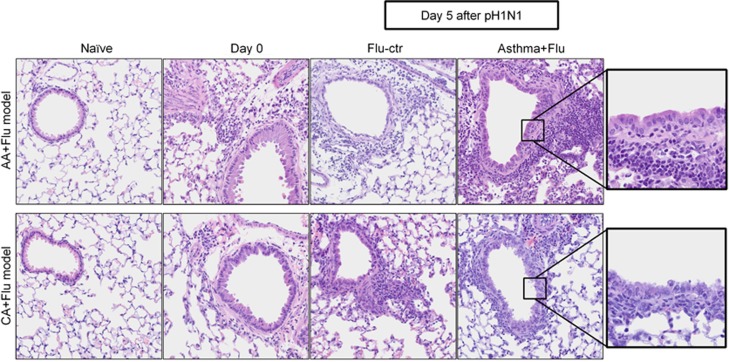
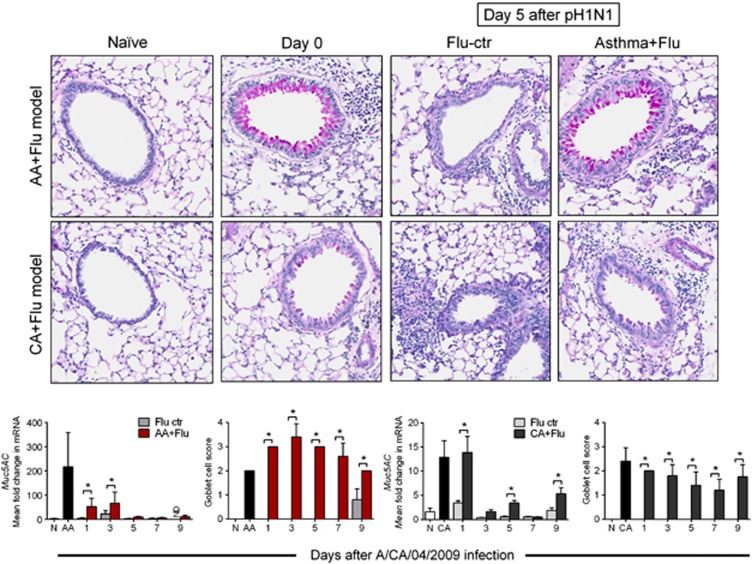
Asthma was the most common comorbidity in hospitalized patients during the 2009 influenza pandemic. For unknown reasons, hospitalized asthmatics had less severe outcomes and were less likely to die from pandemic influenza. Our data with primary human bronchial cells indicate that changes intrinsic to epithelial cells in asthma may protect against cytopathology induced by influenza virus. To further study influenza virus pathogenesis in allergic hosts, we aimed to develop and characterize murine models of asthma and influenza comorbidity to determine structural, physiological and immunological changes induced by influenza in the context of asthma. Aspergillus fumigatus-sensitized and -challenged C57BL/6 mice were infected with pandemic H1N1 influenza virus, either during peak allergic inflammation or during airway remodeling to gain insight into disease pathogenesis. Mice infected with the influenza virus during peak allergic inflammation did not lose body weight and cleared the virus rapidly. These mice exhibited high eosinophilia, preserved airway epithelial cell integrity, increased mucus, reduced interferon response and increased insulin-like growth factor-1. In contrast, weight loss and viral replication kinetics in the mice that were infected during the late airway remodeling phase were equivalent to flu-only controls. These mice had neutrophils in the airways, damaged airway epithelial cells, less mucus production, increased interferons and decreased insulin-like growth factor-1. The state of the allergic airways at the time of influenza virus infection alters host responses against the virus. These murine models of asthma and influenza comorbidity may improve our understanding of the epidemiology and pathogenesis of viral infections in humans with asthma.
哮喘是2009年流感大流行期间住院患者中最常见的合并症。出于不明原因,住院的哮喘患者病情较轻,死于大流行性流感的可能性较小。我们对原代人支气管细胞的数据表明,哮喘上皮细胞的内在变化可能预防流感病毒诱导的细胞病理学。为了进一步研究变应性宿主中的流感病毒发病机制,我们旨在建立并表征哮喘与流感合并症的小鼠模型,以确定在哮喘背景下流感诱导的结构、生理和免疫变化。将经烟曲霉致敏和激发的C57BL/6小鼠在过敏性炎症高峰期或气道重塑期感染大流行性H1N1流感病毒,以深入了解疾病发病机制。在过敏性炎症高峰期感染流感病毒的小鼠没有体重减轻,并且迅速清除了病毒。这些小鼠表现出高嗜酸性粒细胞增多、气道上皮细胞完整性得以保留、黏液增加、干扰素反应降低以及胰岛素样生长因子-1增加。相比之下,在气道重塑后期感染的小鼠的体重减轻和病毒复制动力学与仅感染流感的对照组相当。这些小鼠气道中有中性粒细胞、气道上皮细胞受损、黏液分泌减少、干扰素增加以及胰岛素样生长因子-1减少。流感病毒感染时过敏性气道的状态会改变宿主对病毒的反应。这些哮喘与流感合并症的小鼠模型可能会增进我们对哮喘患者病毒感染的流行病学和发病机制的理解。