Feng Shaoyan, Xu Ying, Ma Renqiang, Sun Yueqi, Luo Xi, Li Huabin
Allergy and Cancer Center, Otorhinolarygology Hospital, The First Affiliated Hospital of Sun Yat-sen University, Guangzhou, China ; Department of Otolaryngology, The Fifth Affiliated Hospital of Sun Yat-sen University, Zhuhai, China.
Department of Epidemiology and Biostatistics, School of Public Health, Guangdong Pharmaceutical University, Guangzhou, China.
PLoS One. 2014 Jan 28;9(1):e86529. doi: 10.1371/journal.pone.0086529. eCollection 2014.
Although allergen specific immunotherapy (SIT) represents the only immune- modifying and curative option available for patients with allergic rhinitis (AR), the optimal schedule for specific subcutaneous immunotherapy (SCIT) is still unknown. The objective of this study is to systematically assess the efficacy and safety of cluster SCIT for patients with AR.
By searching PubMed, EMBASE and the Cochrane clinical trials database from 1980 through May 10th, 2013, we collected and analyzed the randomized controlled trials (RCTs) of cluster SCIT to assess its efficacy and safety.
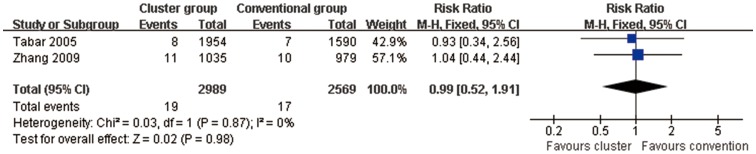
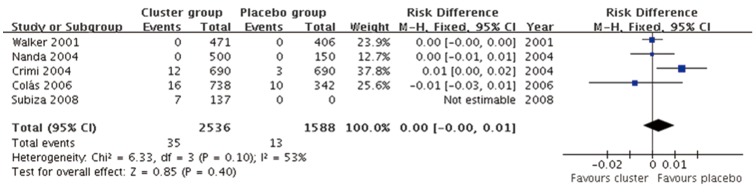
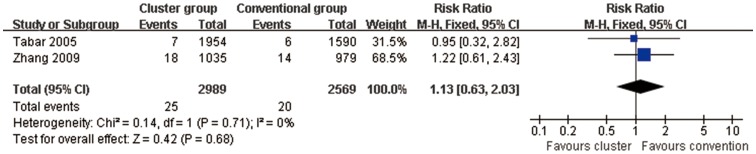
Eight trials involving 567 participants were included in this systematic review. Our meta-analysis showed that cluster SCIT have similar effect in reduction of both rhinitis symptoms and the requirement for anti-allergic medication compared with conventional SCIT, but when comparing cluster SCIT with placebo, no statistic significance were found in reduction of symptom scores or medication scores. Some caution is required in this interpretation as there was significant heterogeneity between studies. Data relating to Rhinoconjunctivitis Quality of Life Questionnaire (RQLQ) in 3 included studies were analyzed, which consistently point to the efficacy of cluster SCIT in improving quality of life compared to placebo. To assess the safety of cluster SCIT, meta-analysis showed that no differences existed in the incidence of either local adverse reaction or systemic adverse reaction between the cluster group and control group.
Based on the current limited evidence, we still could not conclude affirmatively that cluster SCIT was a safe and efficacious option for the treatment of AR patients. Further large-scale, well-designed RCTs on this topic are still needed.
尽管变应原特异性免疫疗法(SIT)是变应性鼻炎(AR)患者唯一可用的免疫调节和治愈性选择,但特异性皮下免疫疗法(SCIT)的最佳方案仍不明确。本研究的目的是系统评估聚类SCIT治疗AR患者的疗效和安全性。
通过检索1980年至2013年5月10日的PubMed、EMBASE和Cochrane临床试验数据库,我们收集并分析了聚类SCIT的随机对照试验(RCT),以评估其疗效和安全性。
本系统评价纳入了8项涉及567名参与者的试验。我们的荟萃分析表明,与传统SCIT相比,聚类SCIT在减轻鼻炎症状和减少抗过敏药物需求方面具有相似的效果,但在将聚类SCIT与安慰剂进行比较时,在症状评分或药物评分的降低方面未发现统计学意义。由于研究之间存在显著异质性,在解释时需要谨慎。对3项纳入研究中与鼻结膜炎生活质量问卷(RQLQ)相关的数据进行了分析,这些数据一致表明聚类SCIT与安慰剂相比在改善生活质量方面的疗效。为了评估聚类SCIT的安全性,荟萃分析表明聚类组和对照组之间局部不良反应或全身不良反应的发生率没有差异。
基于目前有限的证据,我们仍不能肯定地得出聚类SCIT是治疗AR患者的安全有效选择的结论。仍需要对此主题进行进一步的大规模、精心设计的RCT。