Higuchi Yujiro, Ashwin Peter, Roger Yvonne, Steinberg Gero
Biosciences and 2 Mathematics Research Institute, University of Exeter, Exeter EX4 4QD, England, UK.
J Cell Biol. 2014 Feb 3;204(3):343-57. doi: 10.1083/jcb.201307164.
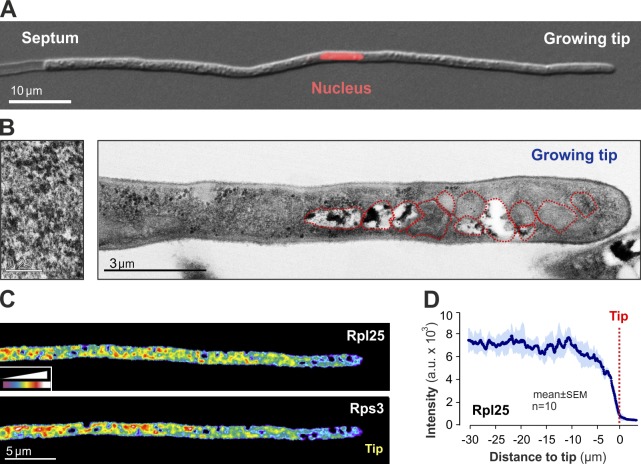
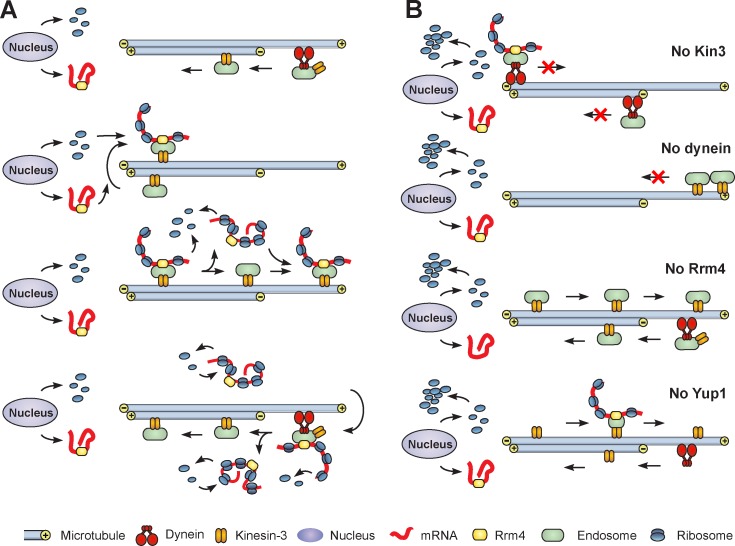
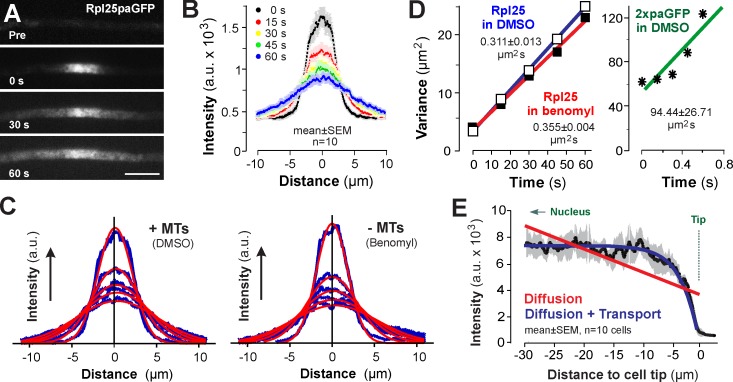
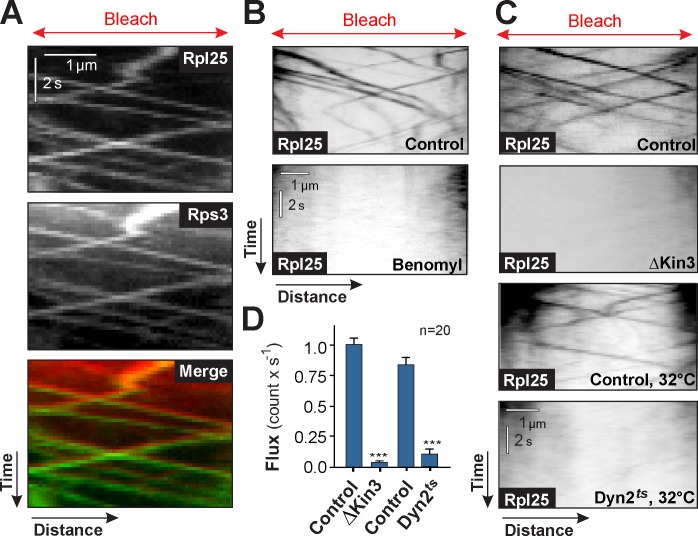
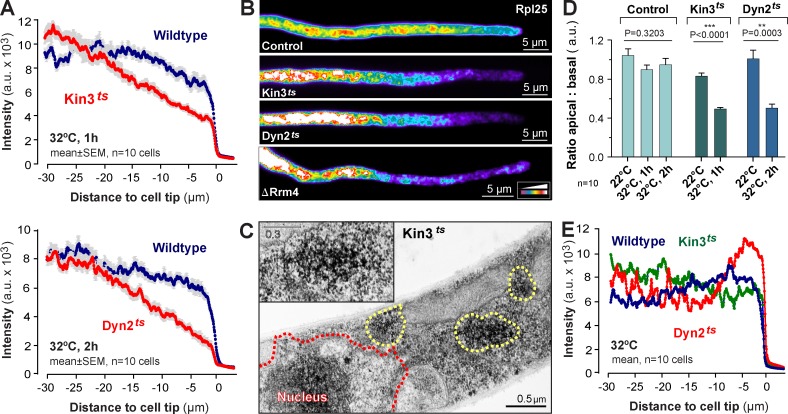
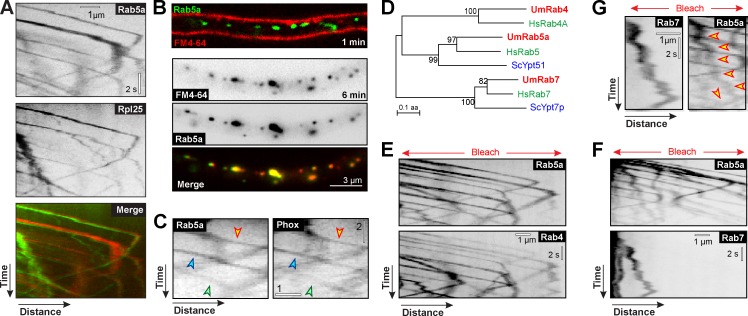
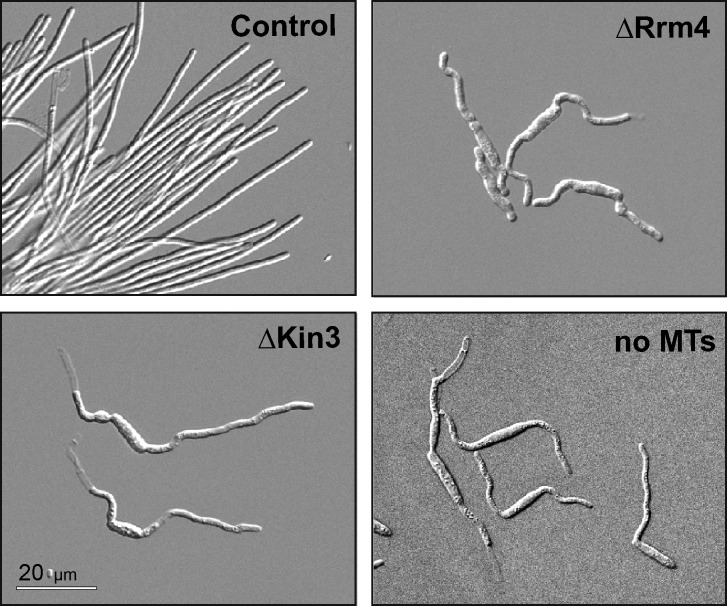
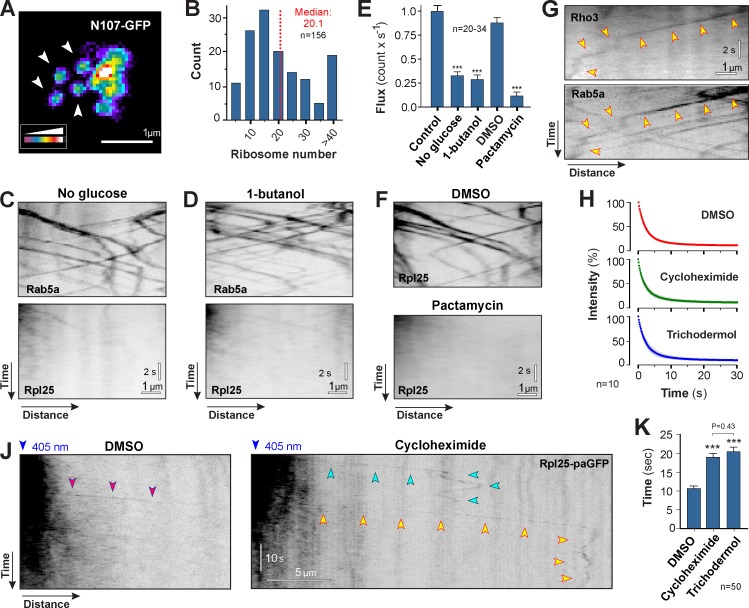
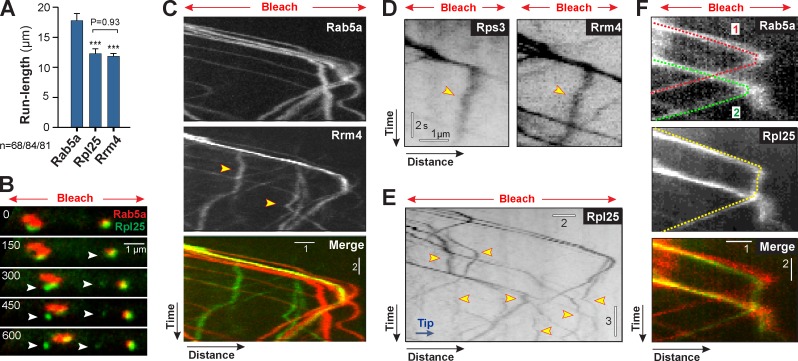
Early endosomes (EEs) mediate protein sorting, and their cytoskeleton-dependent motility supports long-distance signaling in neurons. Here, we report an unexpected role of EE motility in distributing the translation machinery in a fungal model system. We visualize ribosomal subunit proteins and show that the large subunits diffused slowly throughout the cytoplasm (Dc,60S = 0.311 µm(2)/s), whereas entire polysomes underwent long-range motility along microtubules. This movement was mediated by "hitchhiking" on kinesin-3 and dynein-driven EEs, where the polysomes appeared to translate EE-associated mRNA into proteins. Modeling indicates that this motor-driven transport is required for even cellular distribution of newly formed ribosomes. Indeed, impaired EE motility in motor mutants, or their inability to bind EEs in mutants lacking the RNA-binding protein Rrm4, reduced ribosome transport and induced ribosome aggregation near the nucleus. As a consequence, cell growth was severely restricted. Collectively, our results indicate that polysomes associate with moving EEs and that "off- and reloading" distributes the protein translation machinery.
早期内体(EEs)介导蛋白质分选,其依赖细胞骨架的运动性支持神经元中的长距离信号传导。在此,我们报道了EE运动性在真菌模型系统中对翻译机器分布的意外作用。我们可视化核糖体亚基蛋白,并表明大亚基在整个细胞质中缓慢扩散(Dc,60S = 0.311 µm(2)/s),而整个多核糖体沿微管进行长距离运动。这种运动是通过在驱动蛋白-3和动力蛋白驱动的EE上“搭便车”介导的,多核糖体似乎在那里将与EE相关的mRNA翻译成蛋白质。模型表明,这种由马达驱动的运输对于新形成核糖体的均匀细胞分布是必需的。实际上,运动突变体中EE运动性受损,或者在缺乏RNA结合蛋白Rrm4的突变体中它们无法结合EE,会减少核糖体运输并诱导核糖体在细胞核附近聚集。结果,细胞生长受到严重限制。总体而言,我们的结果表明多核糖体与移动的EE相关联,并且“卸载和重新装载”可分布蛋白质翻译机器。