Limam Rim Driss, Chouari Rakia, Mazéas Laurent, Wu Ting-Di, Li Tianlun, Grossin-Debattista Julien, Guerquin-Kern Jean-Luc, Saidi Mouldi, Landoulsi Ahmed, Sghir Abdelghani, Bouchez Théodore
Irstea, UR HBAN, 1 rue Pierre-Gilles de Gennes CS 10030, F-92761, Antony Cedex, France; CEA/Genoscope CNS 2, rue Gaston Crémieux, Evry, 91000, France; University of Evry-Val d'Essonne, Evry, 91057, France; UR04CNSTN01 "Medical and Agricultural Applications of Nuclear Techniques", CNSTN, Sidi Thabet, Ariana, 2020, Tunisia; Faculté des Sciences de Bizerte, Laboratoire de Biochimie et Biologie Moléculaire, 03/UR/0902, Bizerte, Tunisia.
Microbiologyopen. 2014 Apr;3(2):157-67. doi: 10.1002/mbo3.144. Epub 2014 Feb 5.
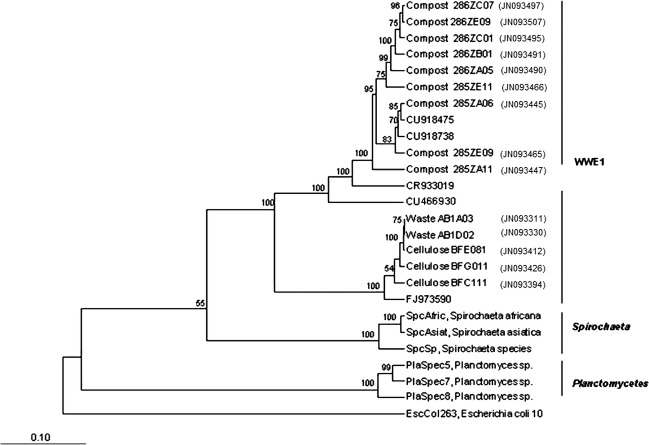
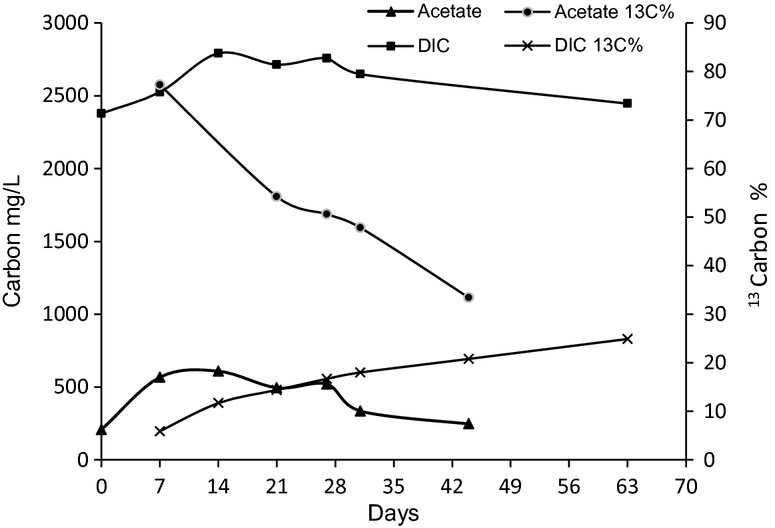
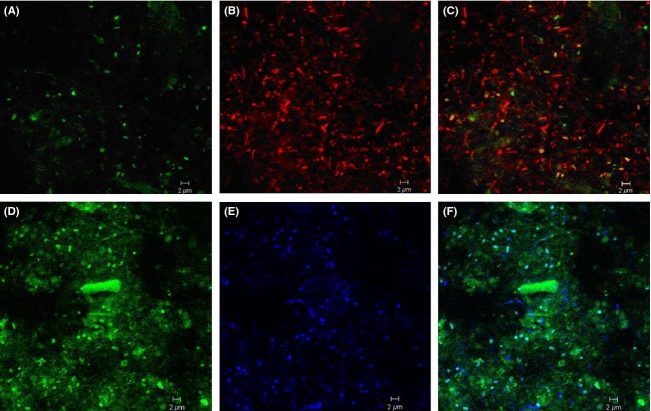
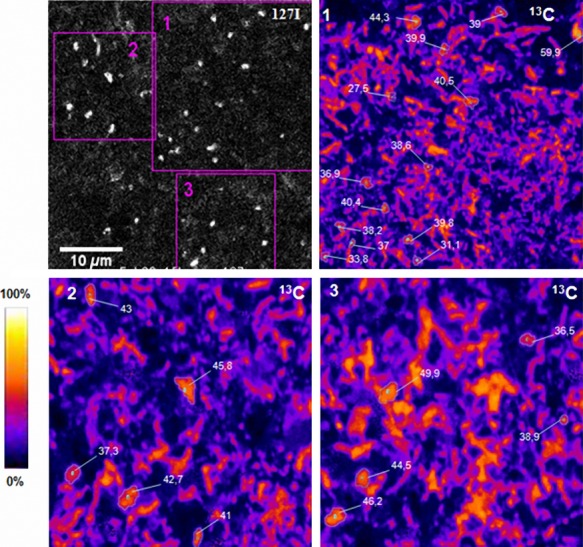
Clones of the WWE1 (Waste Water of Evry 1) candidate division were retrieved during the exploration of the bacterial diversity of an anaerobic mesophilic (35 ± 0.5°C) digester. In order to investigate the metabolic function of WWE1 members, a 16S rRNA gene -based stable isotope probing (SIP) method was used. Eighty-seven percent of 16S r rRNA gene sequences affiliated to WWE1 candidate division were retrieved in a clone library obtained after polymerase chain reaction (PCR) amplification of enriched DNA fraction from anaerobic municipal solid waste samples incubated with (13) C-cellulose, at the end of the incubation (day 63) using a Pla46F-1390R primer pair. The design of a specific WWE1 probe associated with the fluorescence in situ hybridization (FISH) technique corroborated the abundant representation of WWE1 members in our (13) C-cellulose incubations. Secondary ion mass spectrometry-in situ hybridization (SIMSISH) using an iodine-labeled oligonucleotide probe combined with high-resolution nanometer-scale SIMS (NanoSIMS) observation confirmed the isotopic enrichment of members of WWE1 candidate division. The (13) C apparent isotopic composition of hybridized WWE1 cells reached the value of about 40% early during the cellulose degradation process, suggesting that these bacteria play a role either in an extracellular cellulose hydrolysis process and/or in the uptake fermentation products.
在对中温厌氧(35±0.5°C)消化器的细菌多样性进行探索期间,获得了WWE1(埃夫里1号废水)候选分类群的克隆。为了研究WWE1成员的代谢功能,使用了基于16S rRNA基因的稳定同位素探测(SIP)方法。在使用Pla46F - 1390R引物对,对与(13)C - 纤维素一起孵育的厌氧城市固体废物样品的富集DNA部分进行聚合酶链反应(PCR)扩增后获得的克隆文库中,检索到了87%隶属于WWE1候选分类群的16S rRNA基因序列。在孵育结束时(第63天)。与荧光原位杂交(FISH)技术相关的特异性WWE1探针的设计,证实了WWE1成员在我们的(13)C - 纤维素孵育物中有丰富的表现。使用碘标记的寡核苷酸探针结合高分辨率纳米级二次离子质谱(NanoSIMS)观察的二次离子质谱 - 原位杂交(SIMSISH),证实了WWE1候选分类群成员的同位素富集。在纤维素降解过程早期,杂交的WWE1细胞的(13)C表观同位素组成达到约40%的值,这表明这些细菌在细胞外纤维素水解过程和/或摄取发酵产物中发挥作用。