Department of Agricultural Sciences, Biotechnology and Food Science, Cyprus University of Technology, 3603 Lemesos, Cyprus.
BMC Plant Biol. 2014 Feb 5;14:42. doi: 10.1186/1471-2229-14-42.
Temperature extremes represent an important limiting factor to plant growth and productivity. The present study evaluated the effect of hydroponic pretreatment of strawberry (Fragaria x ananassa cv. 'Camarosa') roots with an H2S donor, sodium hydrosulfide (NaHS; 100 μM for 48 h), on the response of plants to acute heat shock treatment (42°C, 8 h).
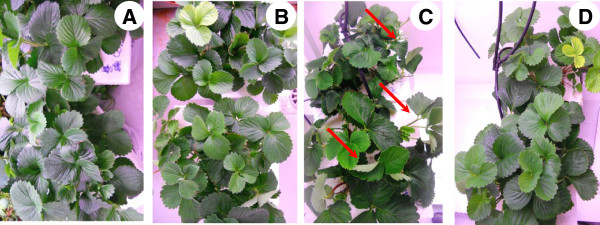
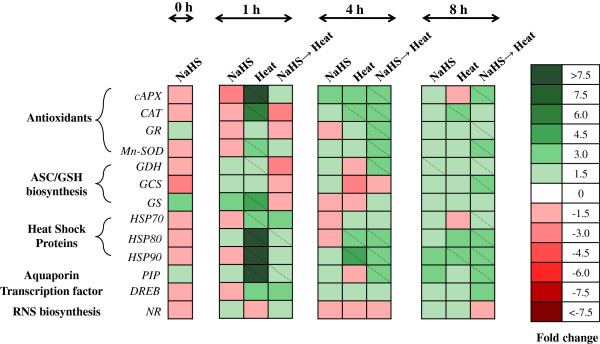
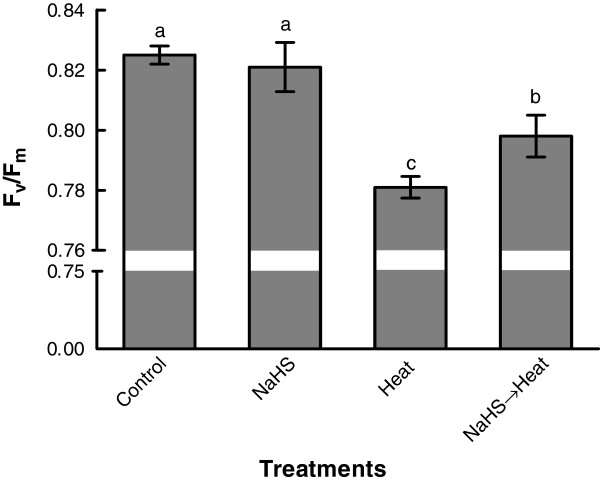
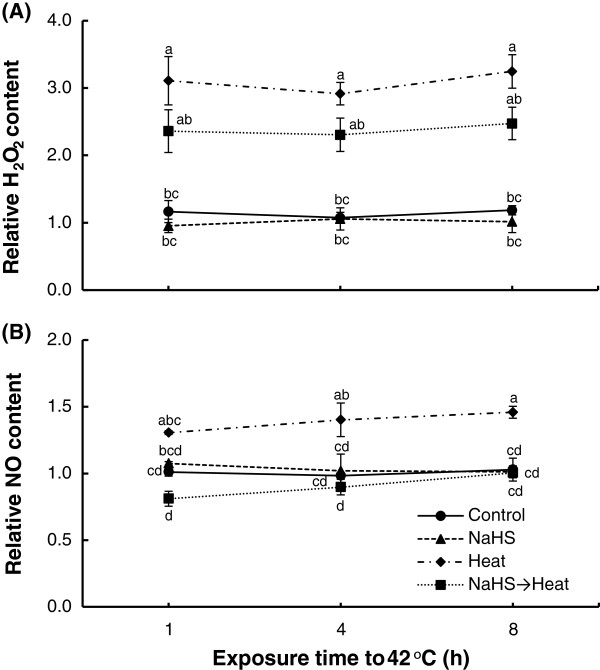
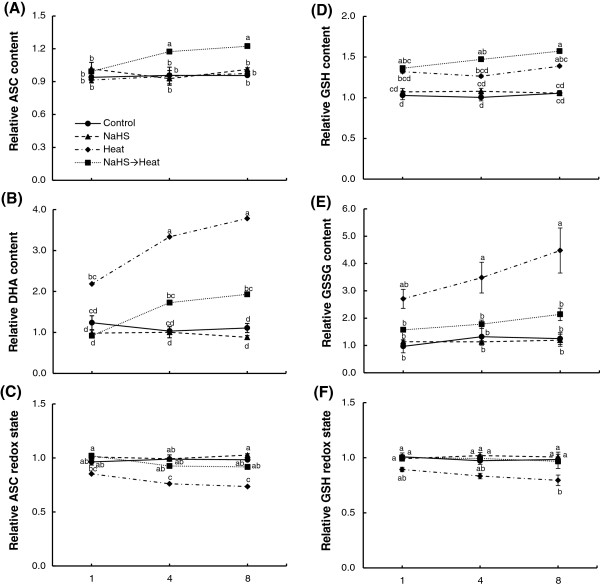
Heat stress-induced phenotypic damage was ameliorated in NaHS-pretreated plants, which managed to preserve higher maximum photochemical PSII quantum yields than stressed plants. Apparent mitigating effects of H2S pretreatment were registered regarding oxidative and nitrosative secondary stress, since malondialdehyde (MDA), H2O2 and nitric oxide (NO) were quantified in lower amounts than in heat-stressed plants. In addition, NaHS pretreatment preserved ascorbate/glutathione homeostasis, as evidenced by lower ASC and GSH pool redox disturbances and enhanced transcription of ASC (GDH) and GSH biosynthetic enzymes (GS, GCS), 8 h after heat stress imposition. Furthermore, NaHS root pretreatment resulted in induction of gene expression levels of an array of protective molecules, such as enzymatic antioxidants (cAPX, CAT, MnSOD, GR), heat shock proteins (HSP70, HSP80, HSP90) and aquaporins (PIP).
Overall, we propose that H2S root pretreatment activates a coordinated network of heat shock defense-related pathways at a transcriptional level and systemically protects strawberry plants from heat shock-induced damage.
温度极端是植物生长和生产力的一个重要限制因素。本研究评估了水培预处理草莓(Fragaria x ananassa cv. 'Camarosa')根系与 H2S 供体硫氢化钠(NaHS;100 μM,48 h)对植物对急性热激处理(42°C,8 h)的响应的影响。
热应激诱导的表型损伤在 NaHS 预处理植物中得到改善,这些植物设法保持比应激植物更高的最大光化学 PSII 量子产量。H2S 预处理的明显缓解作用与氧化和硝化二次应激有关,因为丙二醛(MDA)、H2O2 和一氧化氮(NO)的含量低于热应激植物。此外,NaHS 预处理通过降低 ASC 和 GSH 池氧化还原干扰和增强 ASC(GDH)和 GSH 生物合成酶(GS、GCS)的转录,在热应激 8 小时后维持了抗坏血酸/谷胱甘肽的平衡。此外,NaHS 根系预处理导致一系列保护分子(如酶抗氧化剂(cAPX、CAT、MnSOD、GR)、热休克蛋白(HSP70、HSP80、HSP90)和水通道蛋白(PIP))的基因表达水平的诱导。
总的来说,我们提出 H2S 根系预处理通过转录水平激活与热休克防御相关的途径的协调网络,并系统地保护草莓植物免受热激诱导的损伤。