Laboratory of Pharmaceutical Biotechnology, Department of Pharmaceutical Chemistry, Faculty of Pharmaceutical Sciences, Prince of Songkla University, Hat-Yai, Songkhla 90112, Thailand.
BMC Cancer. 2014 Feb 7;14:73. doi: 10.1186/1471-2407-14-73.
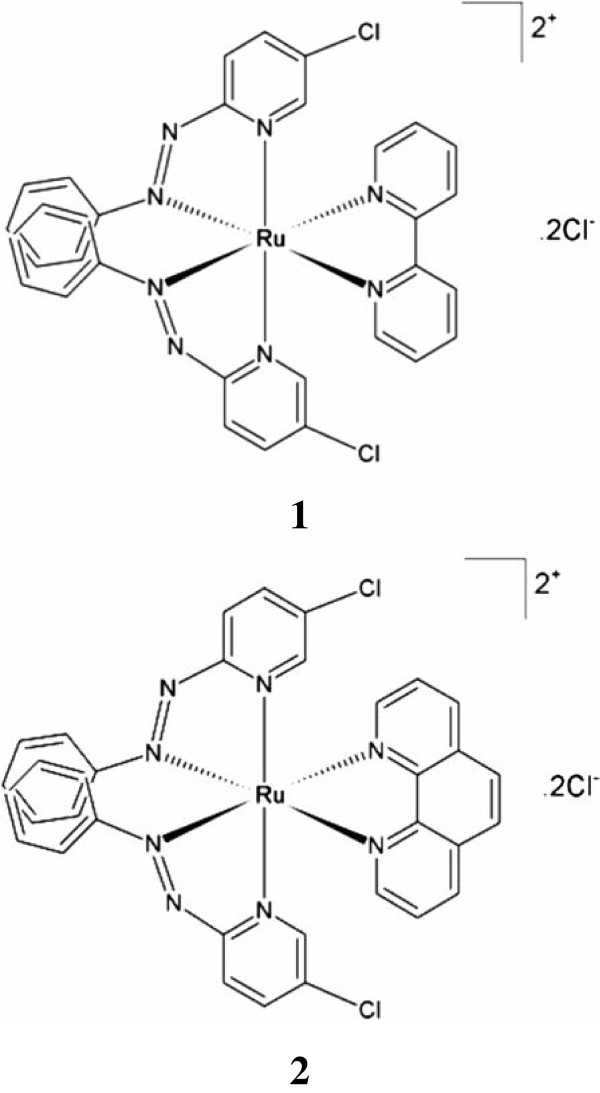
Triple-negative breast cancer (TNBC) is defined by the absence of expression of estrogen receptor, progesterone receptor and human epidermal growth factor receptor 2. Breast cancers with a BRCA1 mutation are also frequently triple-negative. Currently, there is a lack of effective therapies and known specific molecular targets for this aggressive breast cancer subtype. To address this concern, we have explored the cellular responses of BRCA1-defective and triple-negative breast cancer cells, and in vitro BRCA1 interactions induced by the ruthenium(II) complexes containing the bidentate ligand, 5-chloro-2-(phenylazo)pyridine.
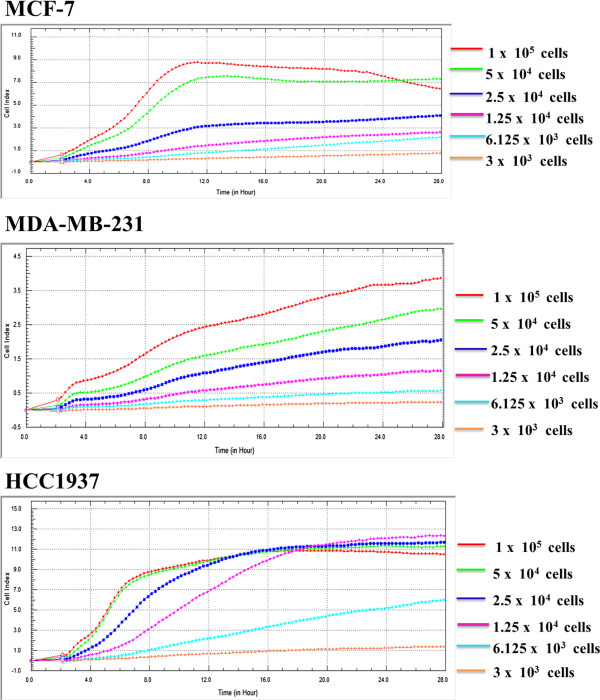
Triple-negative MDA-MB-231, BRCA1-defective HCC1937 and BRCA1-competent MCF-7 breast cancer cell lines were treated with ruthenium(II) complexes. The cytoxoxicity of ruthenium-induced breast cancer cells was evaluated by a real time cellular analyzer (RTCA). Cellular uptake of ruthenium complexes was determined by ICP-MS. Cell cycle progression and apoptosis were assessed using propidium iodide and Annexin V flow cytometry. The N-terminal BRCA1 RING protein was used for conformational and functional studies using circular dichroism and in vitro ubiquitination.
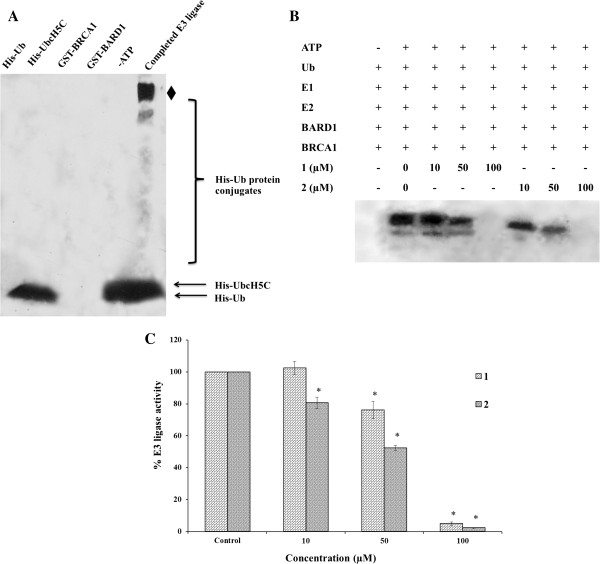
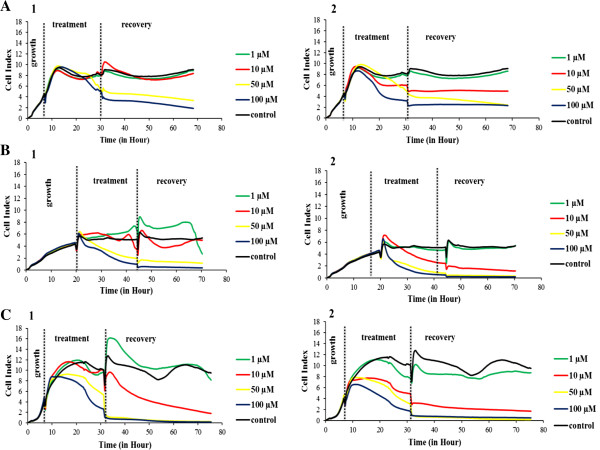
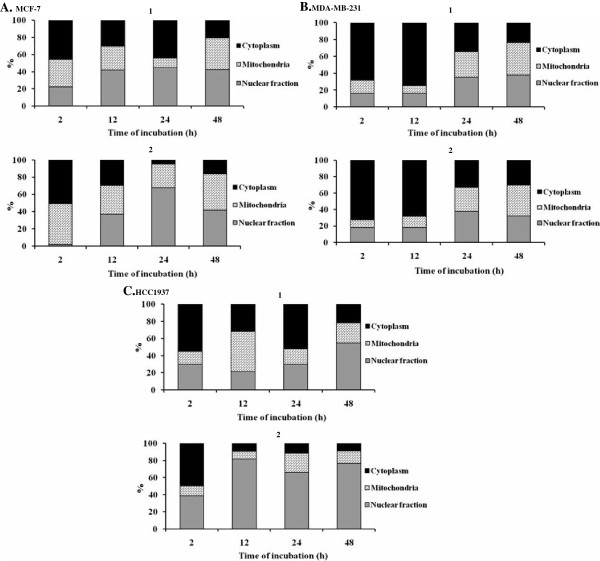
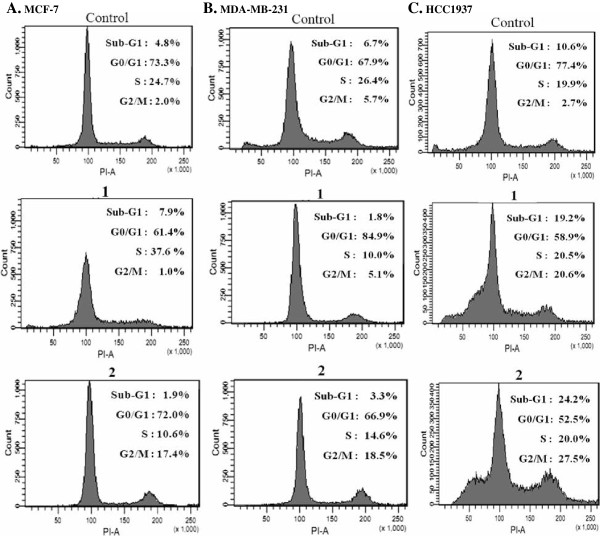
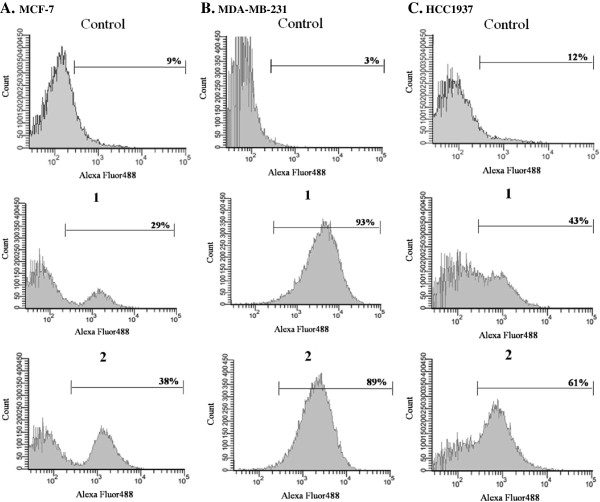
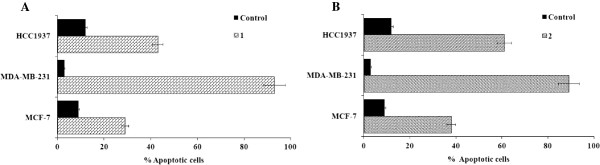
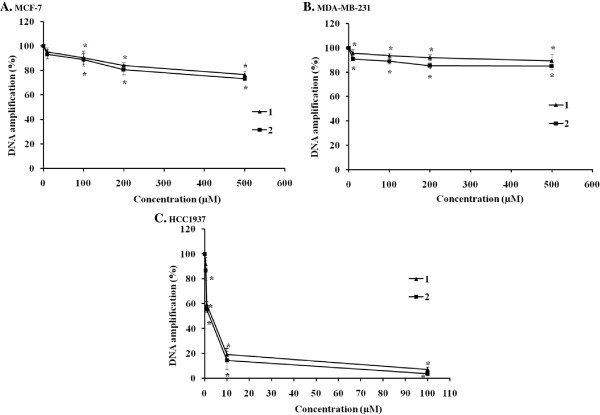
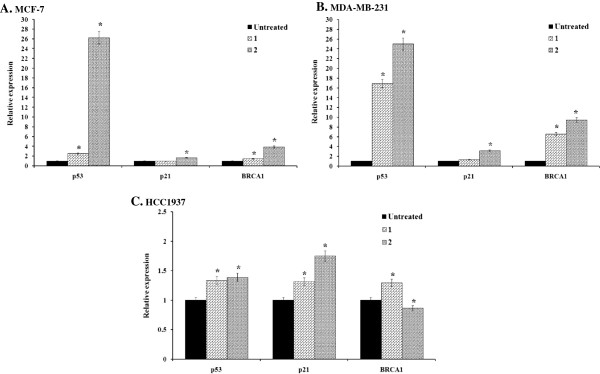
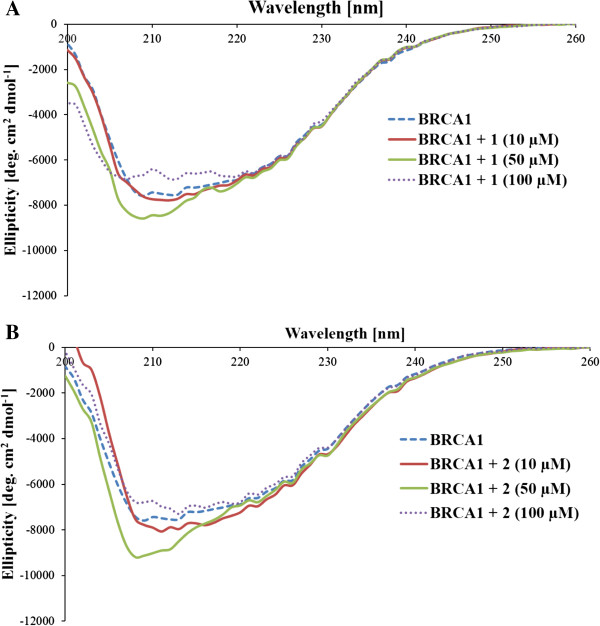
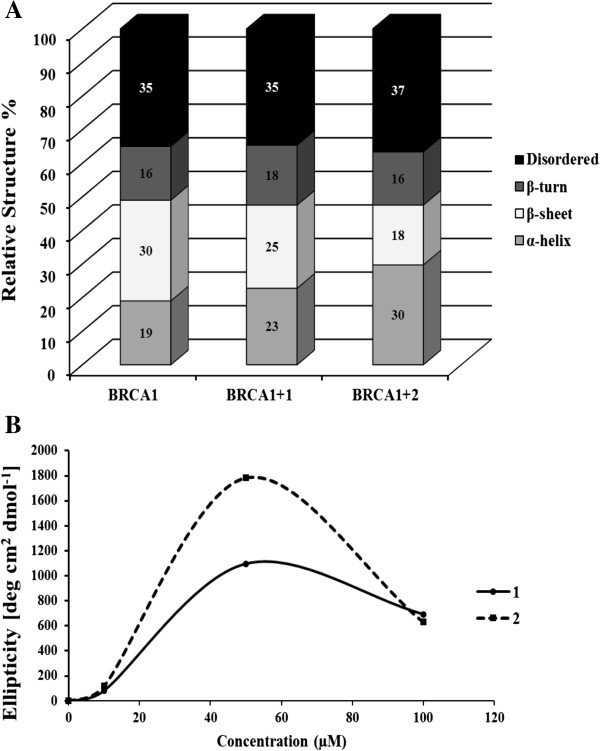
HCC1937 cells were significantly more sensitive to the ruthenium complexes than the MDA-MB-231 and MCF-7 cells. Treatment demonstrated a higher degree of cytotoxicity than cisplatin against all three cell lines. Most ruthenium atoms were retained in the nuclear compartment, particularly in HCC1937 cells, after 24 h of incubation, and produced a significant block at the G2/M phase. An increased induction of apoptotic cells as well as an upregulation of p53 mRNA was observed in all tested breast cancer cells. It was of interest that BRCA1 mRNA and replication of BRCA1-defective cells were downregulated. Changes in the conformation and binding constants of ruthenium-BRCA1 adducts were observed, causing inactivation of the RING heterodimer BRCA1/BARD1-mediated E3 ubiquitin ligase activity.
This study has revealed the ability of ruthenium complexes to inhibit cell proliferation, induce cell cycle progression and apoptosis. Ruthenium treatment upregulated the marker genes involved in apoptosis and cell cycle progression while it downregulated BRCA1 mRNA and replication of HCC1937 cells. Our results could provide an alternative approach to finding effective therapeutic ruthenium-based agents with promising anticancer activity, and demonstrated that the BRCA1 RING domain protein was a promising therapeutic target for breast cancers.
三阴性乳腺癌(TNBC)的定义是雌激素受体、孕激素受体和人表皮生长因子受体 2 表达缺失。BRCA1 突变的乳腺癌也常为三阴性。目前,对于这种侵袭性乳腺癌亚型,缺乏有效的治疗方法和已知的特定分子靶点。为了解决这一问题,我们研究了 BRCA1 缺陷和三阴性乳腺癌细胞的细胞反应,以及含有双齿配体 5-氯-2-(苯基偶氮)吡啶的钌(II)配合物在体外诱导的 BRCA1 相互作用。
用钌(II)配合物处理三阴性 MDA-MB-231、BRCA1 缺陷 HCC1937 和 BRCA1 功能正常 MCF-7 乳腺癌细胞系。通过实时细胞分析(RTCA)评估钌诱导的乳腺癌细胞的细胞毒性。用 ICP-MS 测定钌配合物的细胞摄取量。用碘化丙啶和 Annexin V 流式细胞术评估细胞周期进程和细胞凋亡。用 N 端 BRCA1 RING 蛋白进行构象和功能研究,使用圆二色性和体外泛素化。
HCC1937 细胞对钌配合物的敏感性明显高于 MDA-MB-231 和 MCF-7 细胞。与所有三种细胞系相比,该治疗方法对 cisplatin 的细胞毒性更高。孵育 24 小时后,大多数钌原子保留在核区室中,特别是在 HCC1937 细胞中,并在 G2/M 期产生显著阻滞。所有测试的乳腺癌细胞中,凋亡细胞的诱导增加,p53 mRNA 上调。有趣的是,BRCA1 缺陷细胞的 BRCA1 mRNA 和复制均下调。观察到钌-BRCA1 加合物构象和结合常数的变化,导致 BRCA1/BARD1 介导的 E3 泛素连接酶活性的 RING 异二聚体失活。
本研究揭示了钌配合物抑制细胞增殖、诱导细胞周期进程和细胞凋亡的能力。钌处理上调了参与细胞凋亡和细胞周期进程的标记基因,同时下调了 HCC1937 细胞的 BRCA1 mRNA 和复制。我们的结果为寻找具有潜在抗癌活性的有效治疗性含钌药物提供了一种替代方法,并表明 BRCA1 RING 结构域蛋白是乳腺癌的一个有前途的治疗靶点。