Irigoien Xabier, Klevjer T A, Røstad A, Martinez U, Boyra G, Acuña J L, Bode A, Echevarria F, Gonzalez-Gordillo J I, Hernandez-Leon S, Agusti S, Aksnes D L, Duarte C M, Kaartvedt S
King Abdullah University of Science and Technology (KAUST), Red Sea Research Center, Thuwal 23955-6900, Saudi Arabia.
AZTI, Arrantza eta Elikaigintzarako Institutu Teknologikoa, Herrera Kaia Portualdea, 20110 Pasaia, Spain.
Nat Commun. 2014;5:3271. doi: 10.1038/ncomms4271.
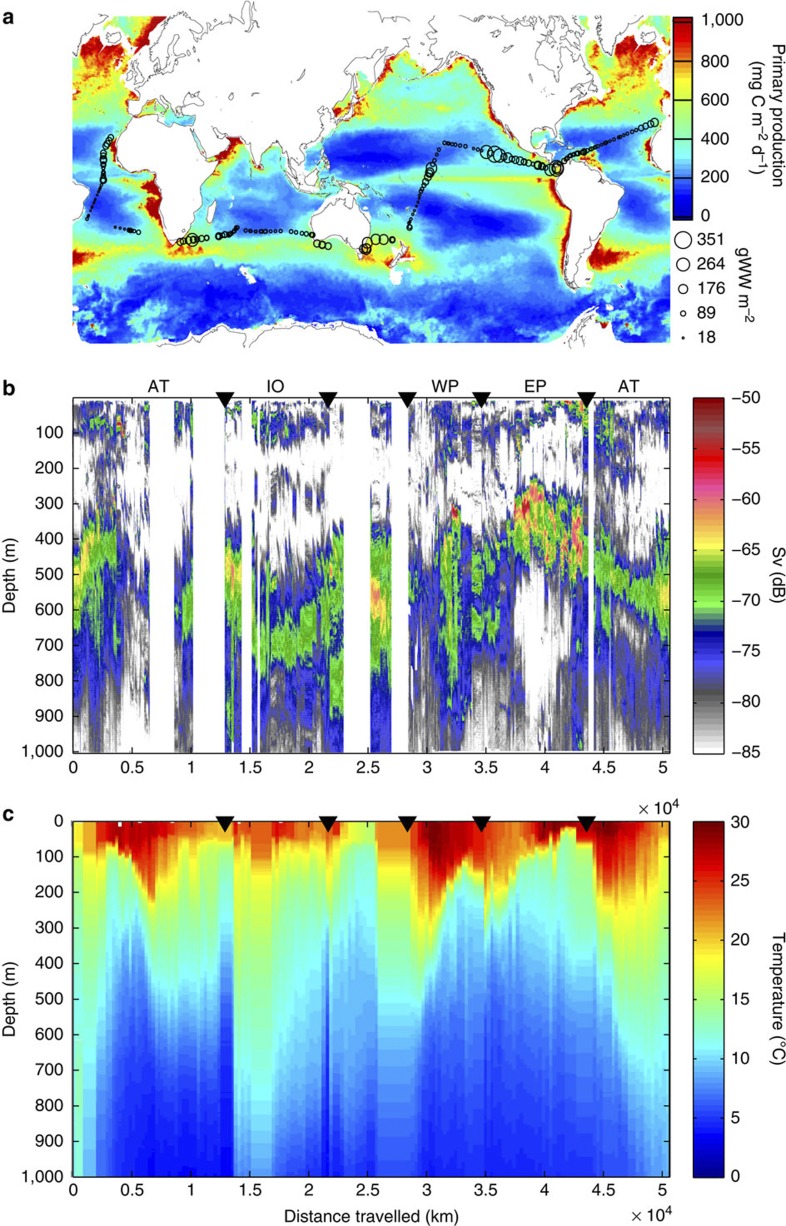
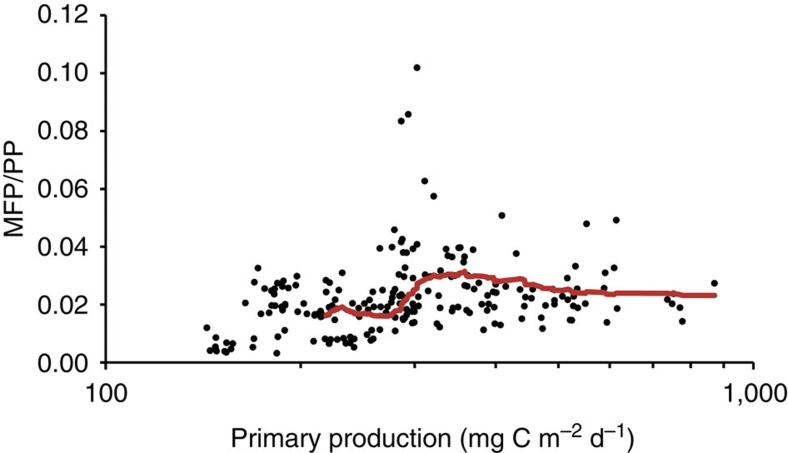
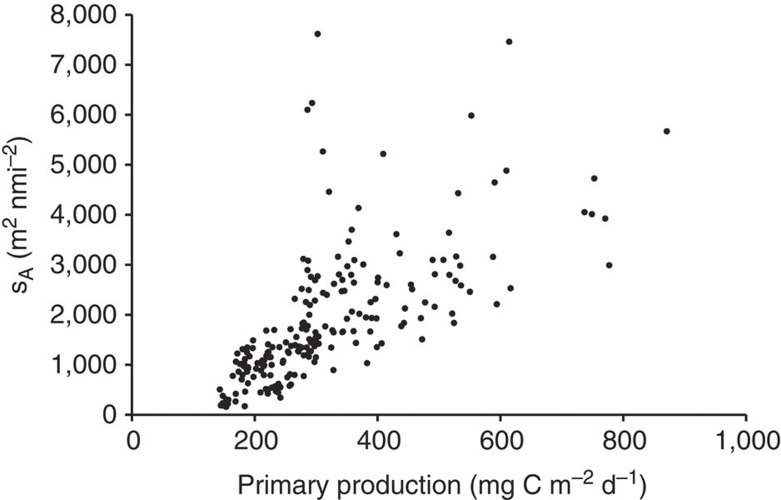
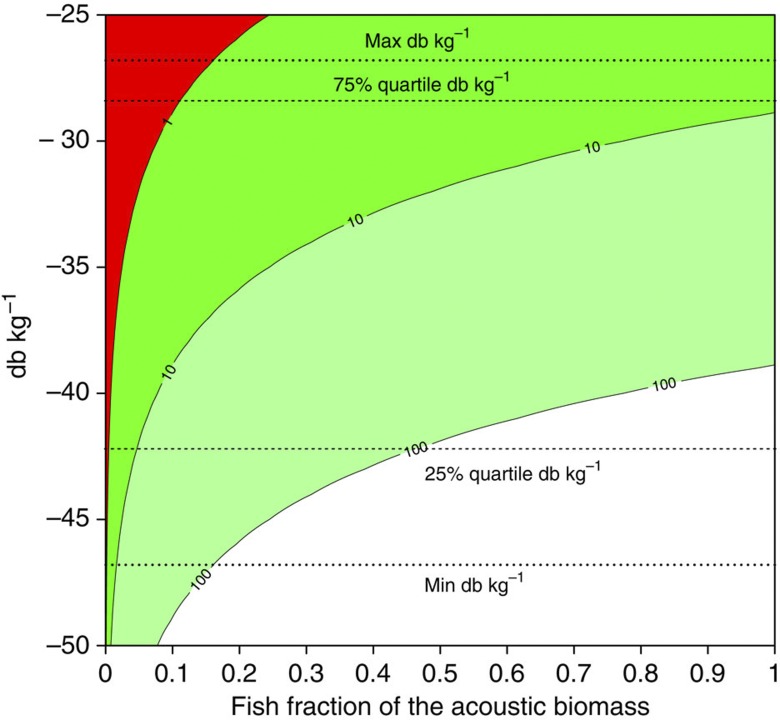
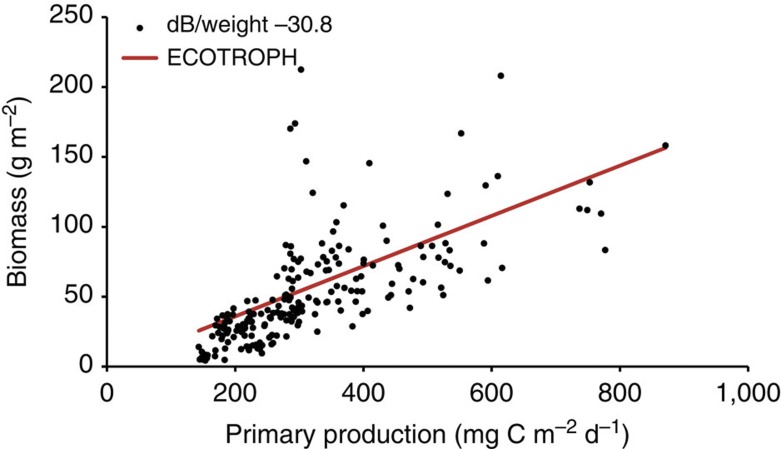
With a current estimate of ~1,000 million tons, mesopelagic fishes likely dominate the world total fishes biomass. However, recent acoustic observations show that mesopelagic fishes biomass could be significantly larger than the current estimate. Here we combine modelling and a sensitivity analysis of the acoustic observations from the Malaspina 2010 Circumnavigation Expedition to show that the previous estimate needs to be revised to at least one order of magnitude higher. We show that there is a close relationship between the open ocean fishes biomass and primary production, and that the energy transfer efficiency from phytoplankton to mesopelagic fishes in the open ocean is higher than what is typically assumed. Our results indicate that the role of mesopelagic fishes in oceanic ecosystems and global ocean biogeochemical cycles needs to be revised as they may be respiring ~10% of the primary production in deep waters.
目前估计中层鱼类约有10亿吨,它们可能在全球鱼类总生物量中占主导地位。然而,最近的声学观测表明,中层鱼类的生物量可能比目前的估计值大得多。在此,我们结合建模和对2010年“马勒斯皮纳”环球科考声学观测的敏感性分析,结果表明之前的估计值至少需要修正一个数量级。我们发现,公海鱼类生物量与初级生产力之间存在密切关系,并且从浮游植物到公海中中层鱼类的能量转移效率高于通常的假设。我们的研究结果表明,中层鱼类在海洋生态系统和全球海洋生物地球化学循环中的作用需要重新审视,因为它们可能消耗了深水区域约10%的初级生产力。