Department of Bioengineering, The University of Texas at Arlington, Arlington, TX, USA; Graduate Biomedical Engineering Program, The University of Texas Southwestern Medical Center at Dallas, Dallas, TX, USA.
Department of Internal Medicine, The University of Texas Southwestern Medical Center at Dallas, Dallas, TX, USA.
Acta Biomater. 2014 Jun;10(6):2643-52. doi: 10.1016/j.actbio.2014.01.033. Epub 2014 Feb 8.
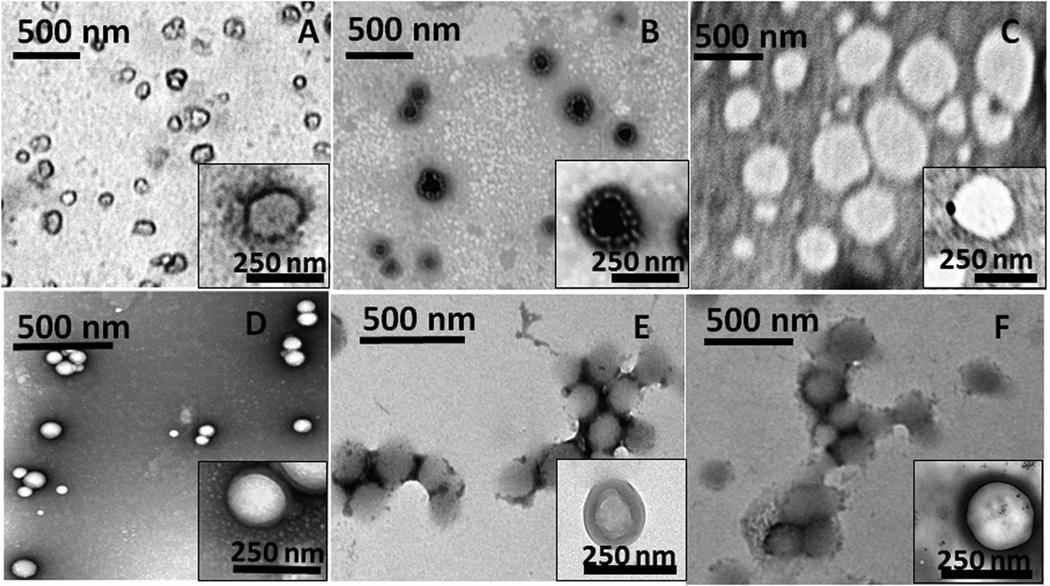
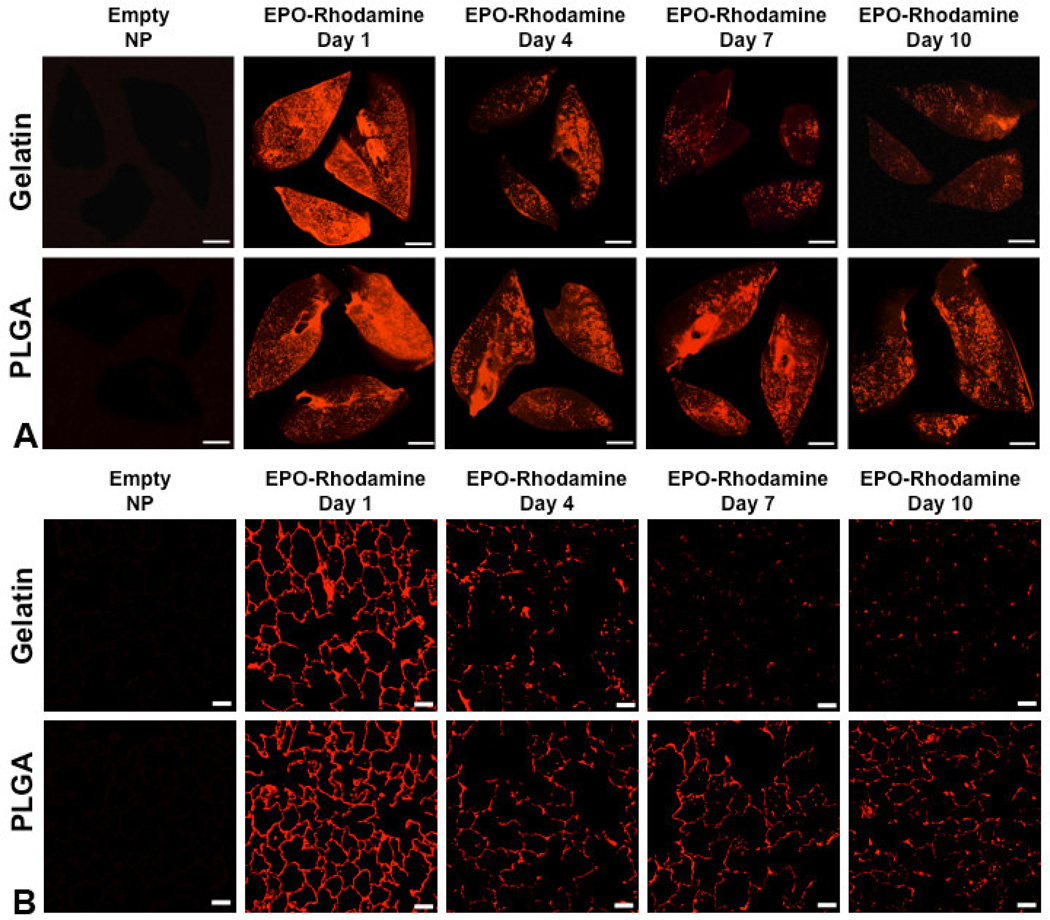
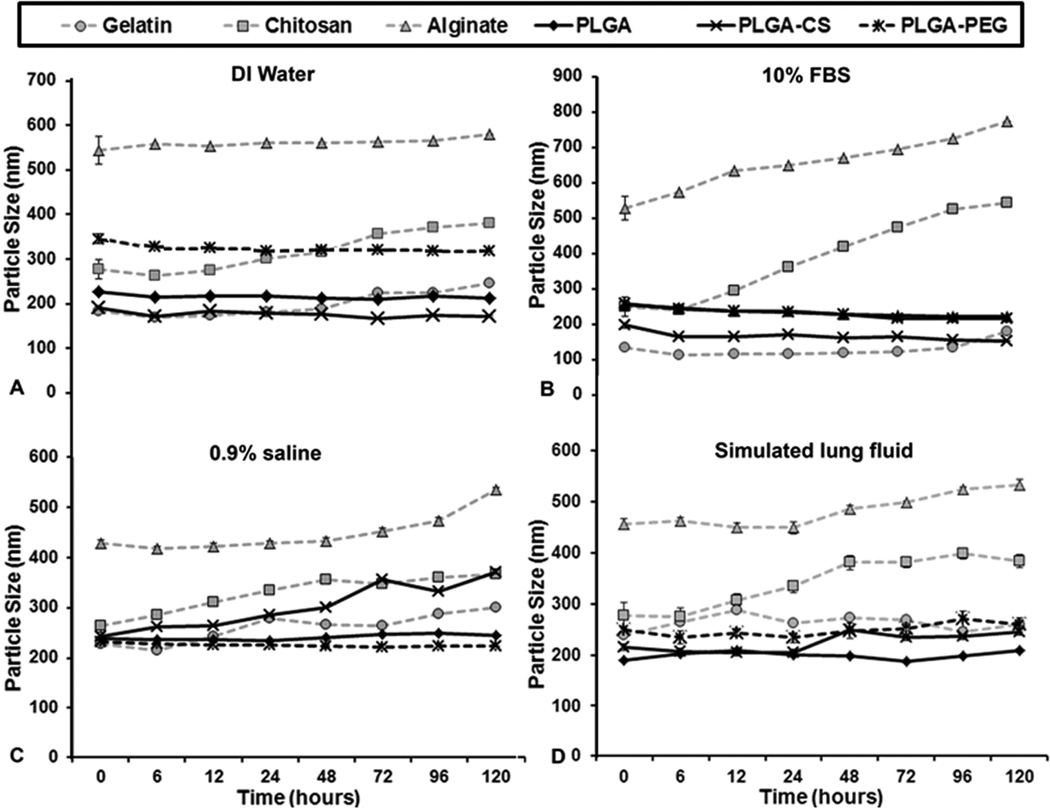
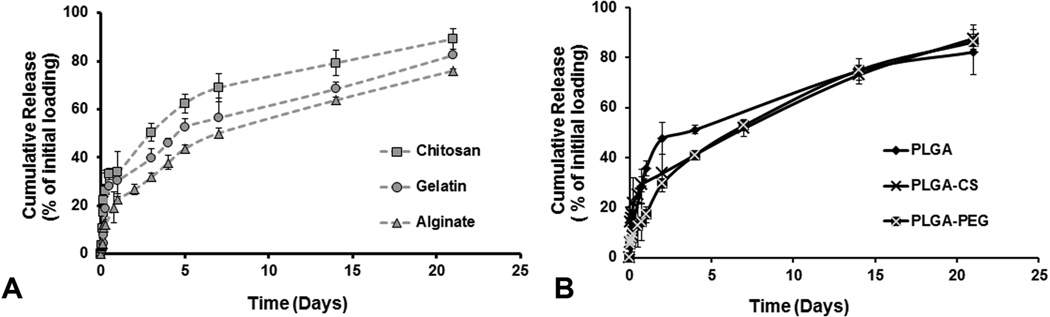
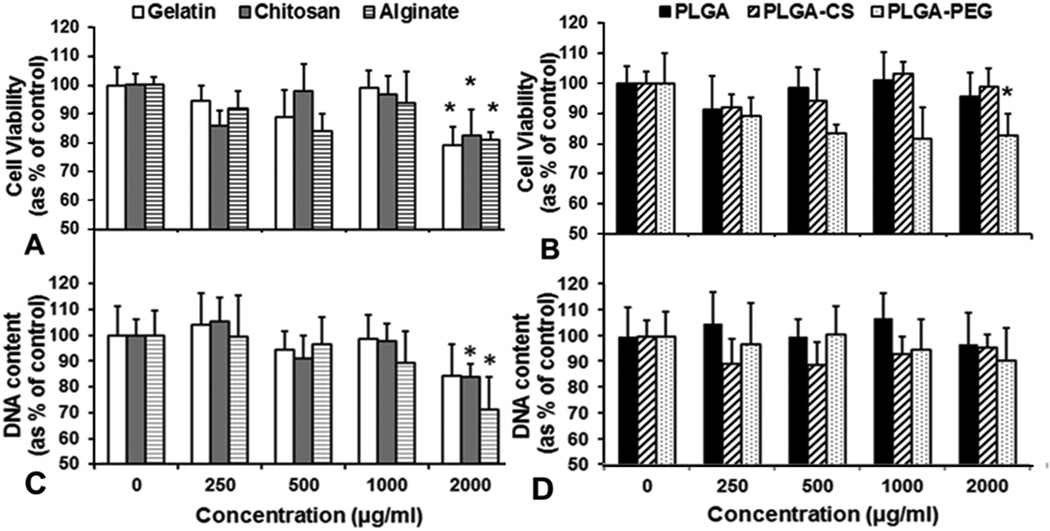
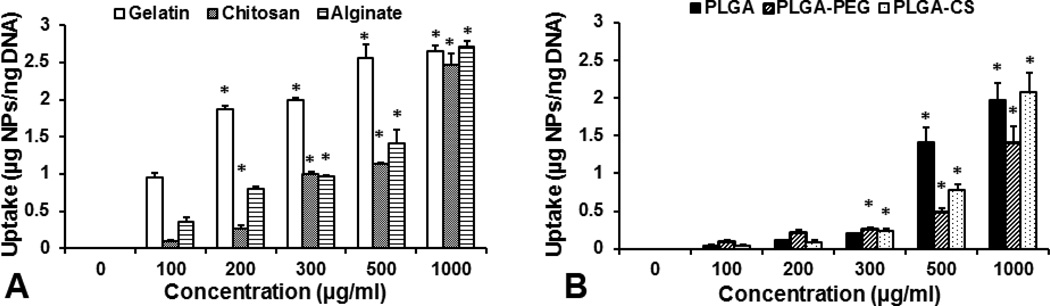
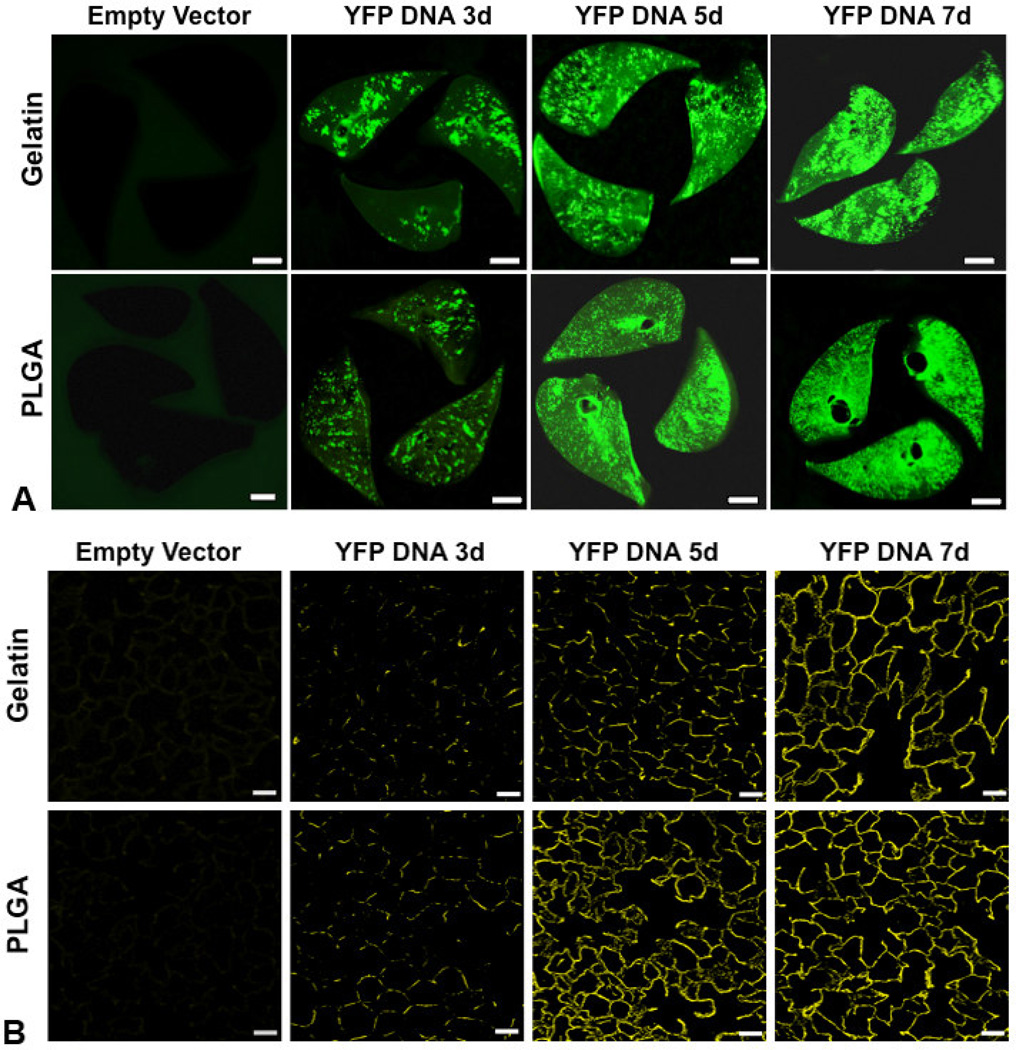
Polymeric nanoparticles (NPs) are promising carriers of biological agents to the lung due to advantages including biocompatibility, ease of surface modification, localized action and reduced systemic toxicity. However, there have been no studies extensively characterizing and comparing the behavior of polymeric NPs for pulmonary protein/DNA delivery both in vitro and in vitro. We screened six polymeric NPs: gelatin, chitosan, alginate, poly(lactic-co-glycolic) acid (PLGA), PLGA-chitosan and PLGA-poly(ethylene glycol) (PEG), for inhalational protein/DNA delivery. All NPs except PLGA-PEG and alginate were <300nm in size with a bi-phasic core compound release profile. Gelatin, PLGA NPs and PLGA-PEG NPs remained stable in deionized water, serum, saline and simulated lung fluid (Gamble's solution) over 5days. PLGA-based NPs and natural polymer NPs exhibited the highest cytocompatibility and dose-dependent in vitro uptake, respectively, by human alveolar type-1 epithelial cells. Based on these profiles, gelatin and PLGA NPs were used to encapsulate plasmid DNA encoding yellow fluorescent protein (YFP) or rhodamine-conjugated erythropoietin (EPO) for inhalational delivery to rats. Following a single inhalation, widespread pulmonary EPO distribution persisted for up to 10days while increasing YFP expression was observed for at least 7days for both NPs. The overall results support both PLGA and gelatin NPs as promising carriers for pulmonary protein/DNA delivery.
聚合物纳米颗粒(NPs)由于具有生物相容性、易于表面修饰、局部作用和降低全身毒性等优点,是向肺部输送生物制剂的有前途的载体。然而,目前还没有研究广泛描述和比较聚合物 NPs 用于肺部蛋白质/DNA 传递的体外和体内行为。我们筛选了六种聚合物 NPs:明胶、壳聚糖、海藻酸钠、聚(乳酸-共-乙醇酸)(PLGA)、PLGA-壳聚糖和 PLGA-聚(乙二醇)(PEG),用于吸入蛋白质/DNA 传递。除了 PLGA-PEG 和海藻酸钠外,所有 NPs 的粒径均<300nm,具有双相核心化合物释放特征。明胶、PLGA NPs 和 PLGA-PEG NPs 在去离子水、血清、生理盐水和模拟肺液(甘贝尔溶液)中 5 天内保持稳定。PLGA 基 NPs 和天然聚合物 NPs 分别表现出最高的细胞相容性和剂量依赖性的体外摄取。基于这些特性,明胶和 PLGA NPs 被用于包裹编码黄色荧光蛋白(YFP)或罗丹明缀合的促红细胞生成素(EPO)的质粒 DNA,用于吸入给药到大鼠。单次吸入后,EPO 在肺部的分布可长达 10 天,而两种 NPs 的 YFP 表达至少可观察到 7 天。总的结果支持 PLGA 和明胶 NPs 作为肺部蛋白质/DNA 传递的有前途的载体。