Doanh Pham Ngoc, Horii Yoichiro, Nawa Yukifumi
Institute of Ecology and Biological Resources, Vietnam Academy of Science and Technology, Hanoi, Viet Nam.
Laboratory of Veterinary Parasitic Diseases, Faculty of Agriculture, University of Miyazaki, Miyazaki, Japan.
Korean J Parasitol. 2013 Dec;51(6):621-7. doi: 10.3347/kjp.2013.51.6.621. Epub 2013 Dec 31.
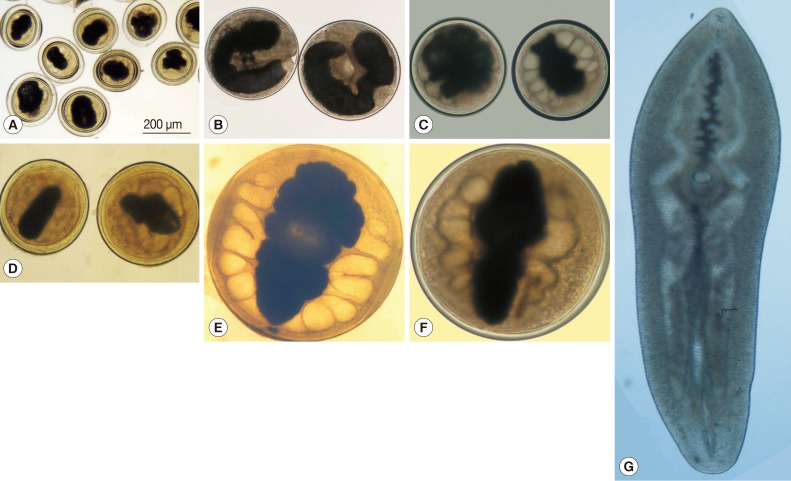
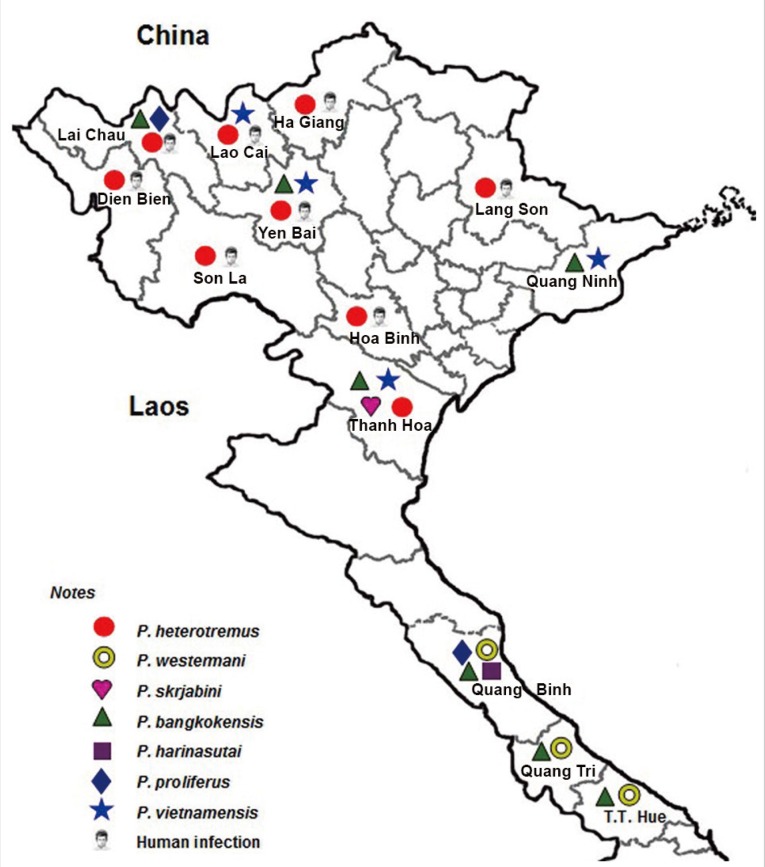
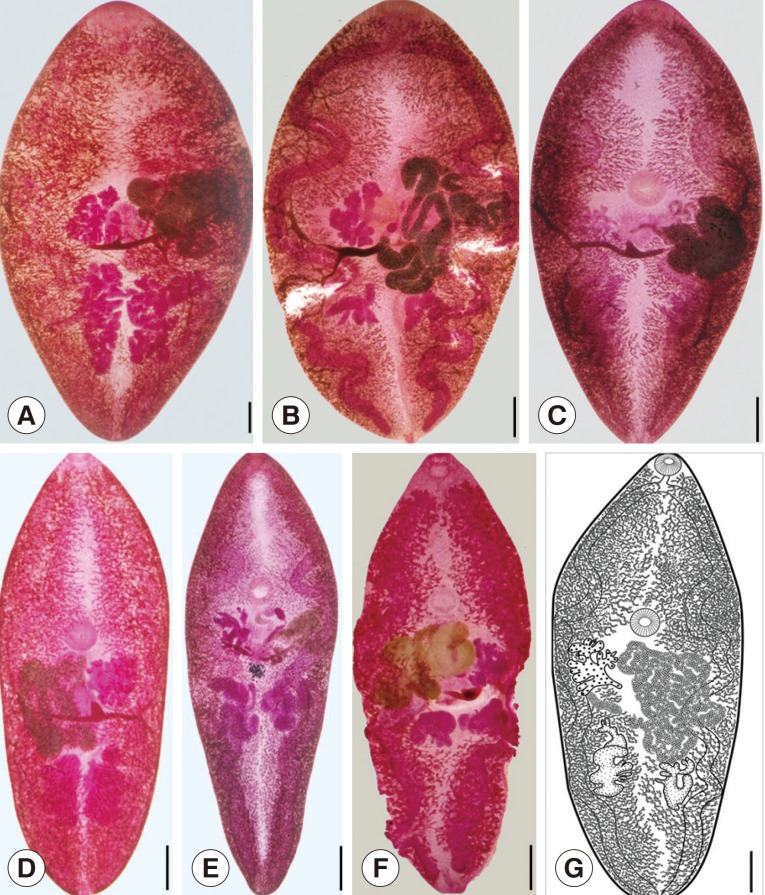
Paragonimiasis is a food-borne parasitic zoonosis caused by infection with lung flukes of the genus Paragonimus. In Vietnam, research on Paragonimus and paragonimiasis has been conducted in northern and central regions of the country. Using a combination of morphological and molecular methods, 7 Paragonimus species, namely P. heterotremus, P. westermani, P. skrjabini, P. vietnamensis, P. proliferus, P. bangkokenis and P. harinasutai, have been identified in Vietnam. Of these, the first 3, P. heterotremus, P. westermani and P. skrjabini, are known to infect humans in other countries. However, in Vietnam, only P. heterotremus, found in some northern provinces, has been shown to infect humans. Even nowadays, local people in some northern provinces, such as Lai Chau and Yen Bai, are still suffering from P. heterotremus infection. In some provinces of central Vietnam, the prevalence and infection intensity of P. westermani metacercariae in freshwater crabs (the second intermediate hosts) are extremely high, but human cases have not been reported. Likewise, although P. skrjabini was found in Thanh Hoa Province, its pathogenicity to humans in Vietnam still remains uncertain. The results of molecular phylogenetic analyses of Vietnamese Paragonimus species provides new insights on the phylogeny and taxonomy of the genus Paragonimus. Comprehensive molecular epidemiological and geobiological studies on the genus in Vietnam and adjacent countries are needed to clarify the biodiversity and public health significance of the lung flukes.
肺吸虫病是一种食源性寄生虫人畜共患病,由感染并殖吸虫属的肺吸虫引起。在越南,对并殖吸虫和肺吸虫病的研究已在该国北部和中部地区开展。通过形态学和分子方法相结合,在越南已鉴定出7种并殖吸虫,即异盘并殖吸虫、卫氏并殖吸虫、斯氏并殖吸虫、越南并殖吸虫、多殖并殖吸虫、丰宫并殖吸虫和哈氏并殖吸虫。其中,前3种,即异盘并殖吸虫、卫氏并殖吸虫和斯氏并殖吸虫,在其他国家已知可感染人类。然而,在越南,仅在一些北部省份发现的异盘并殖吸虫已被证实可感染人类。即使在如今,一些北部省份,如莱州和安沛的当地人仍在遭受异盘并殖吸虫感染。在越南中部的一些省份,淡水蟹(第二中间宿主)中卫氏并殖吸虫囊蚴的感染率和感染强度极高,但尚未报告人类病例。同样,尽管在清化省发现了斯氏并殖吸虫,但其对越南人类的致病性仍不确定。越南并殖吸虫物种的分子系统发育分析结果为并殖吸虫属的系统发育和分类学提供了新的见解。需要在越南及周边国家对该属进行全面的分子流行病学和地质生物学研究,以阐明肺吸虫的生物多样性和公共卫生意义。