Wang Hua, Liu Jingning, Yin Ying, Wu Jun, Wang Zilu, Miao Dengshun, Sun Wen
The Research Center for Bone and Stem Cells, Department of Anatomy, Histology and Embryology, Nanjing Medical University, Nanjing, P.R. of China ; Institute of Dental Research, Stomatological College, Nanjing Medical University, Nanjing, P.R. of China.
The Research Center for Bone and Stem Cells, Department of Anatomy, Histology and Embryology, Nanjing Medical University, Nanjing, P.R. of China ; Department of Geriatrics, The Second Affiliated Hospital of Nanjing Medical University, Nanjing, P.R. of China.
PLoS One. 2014 Feb 6;9(2):e88237. doi: 10.1371/journal.pone.0088237. eCollection 2014.
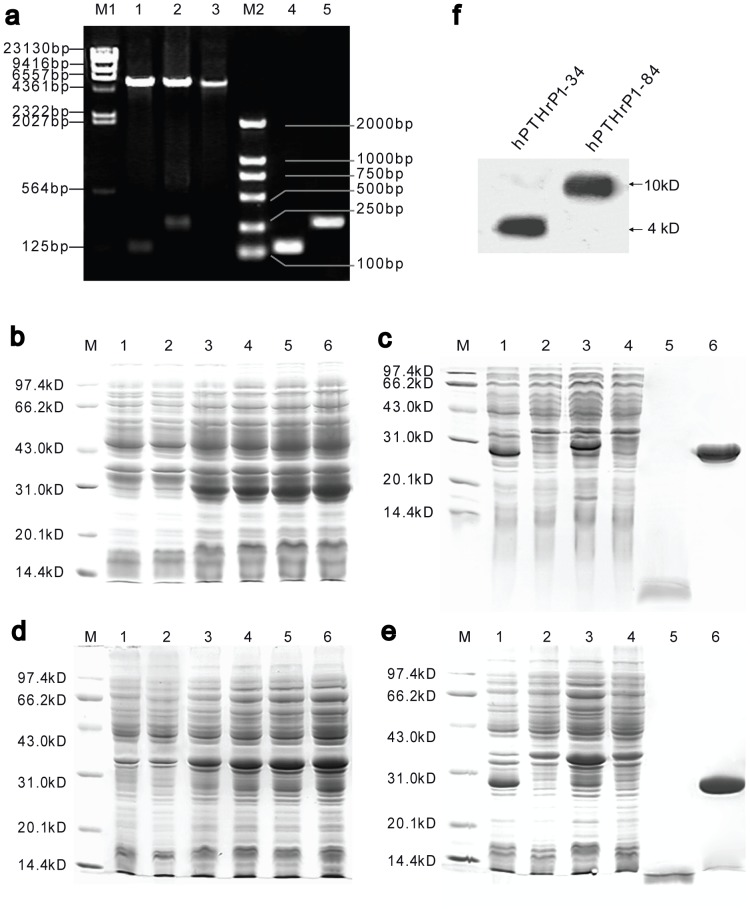
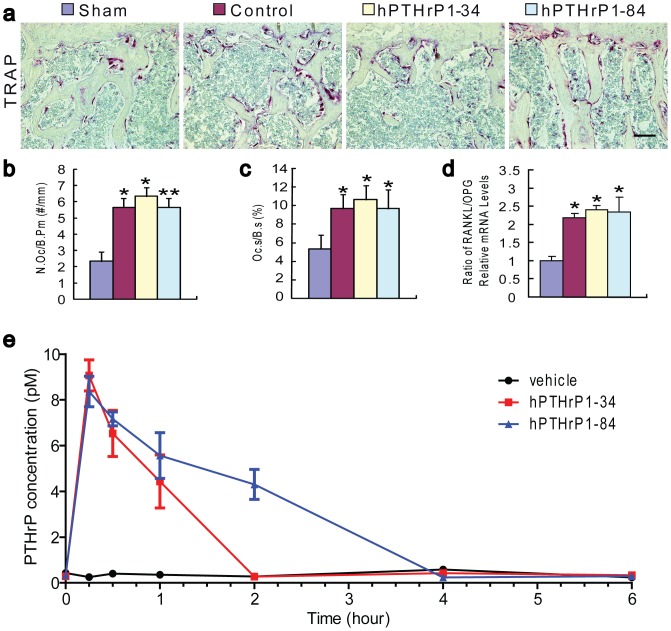
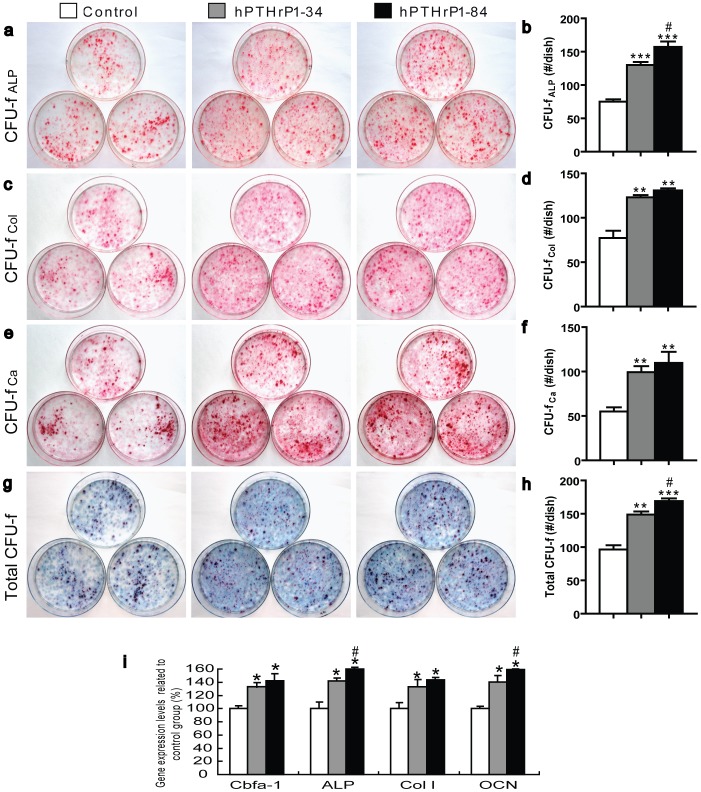
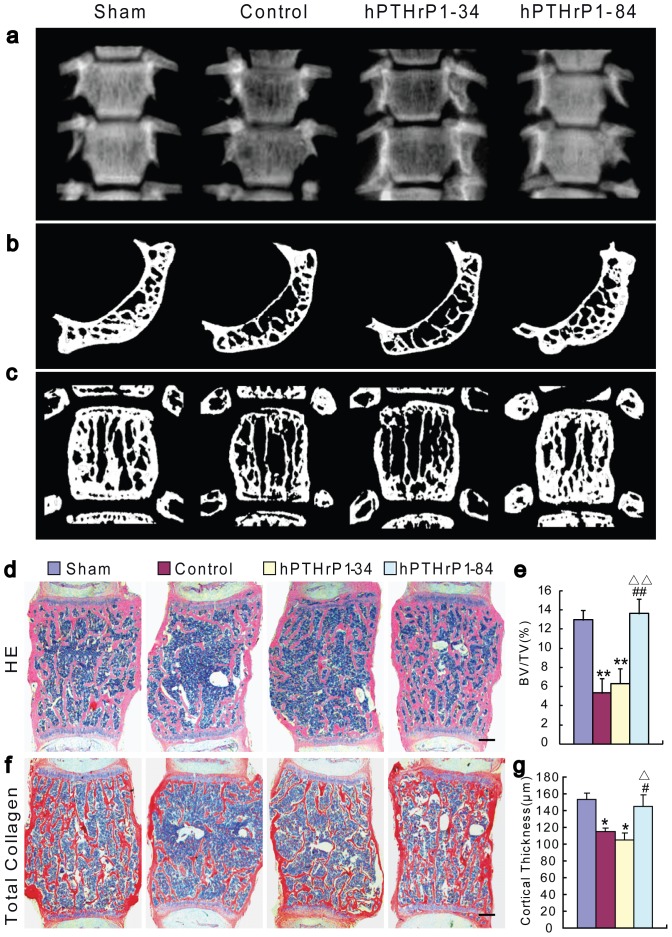
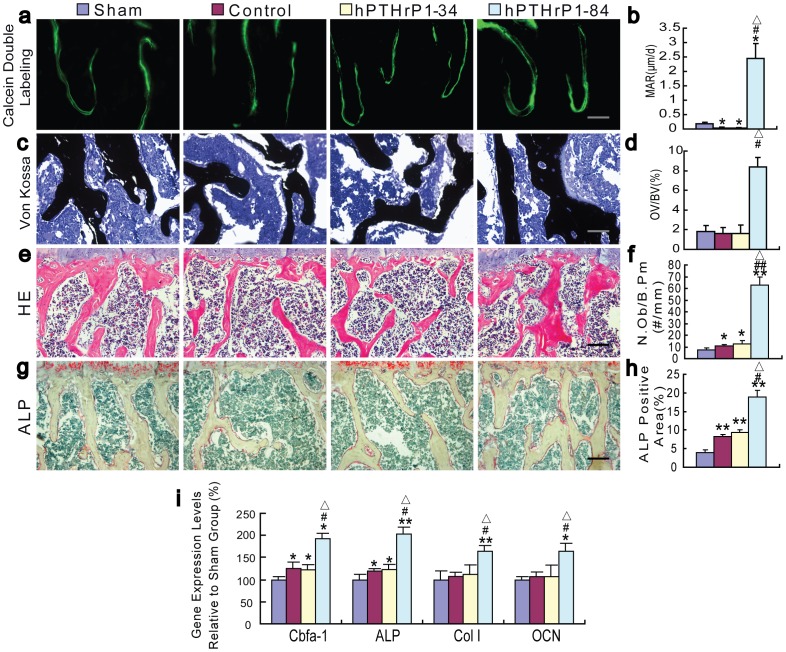
Osteoporosis is a common disorder characterized by compromised bone strength that predisposes patients to increased fracture risk. Parathyroid hormone related protein (PTHrP) is one of the candidates for clinical osteoporosis treatment. In this study, GST Gene Fusion System was used to express recombinant human PTHrP (hPTHrP) 1-34 and 1-84. To determine whether the recombinant hPTHrP1-34 and 1-84 can enhance renal calcium reabsorption and promote bone formation, we examined effects of recombinant hPTHrP1-34 and 1-84 on osteogenic lineage commitment in a primary bone marrow cell culture system and on osteoporosis treatment. Results revealed that both of recombinant hPTHrP1-34 and 1-84 increased colony formation and osteogenic cell differentiation and mineralization in vitro; however, the effect of recombinant hPTHrP1-84 is a little stronger than that of hPTHrP1-34. Next, ovariectomy was used to construct osteoporosis animal model (OVX) to test activities of these two recombinants in vivo. HPTHrP1-84 administration elevated serum calcium by up-regulating the expression of renal calcium transporters, which resulted in stimulation of osteoblastic bone formation. These factors contributed to augmented bone mass in hPTHrP1-84 treated OVX mice but did not affect bone resorption. There was no obvious bone mass alteration in hPTHrP1-34 treated OVX mice, which may be, at least partly, associated with shorter half-life of hPTHrP1-34 compared to hPTHrP1-84 in vivo. This study implies that recombinant hPTHrP1-84 is more effective than hPTHrP1-34 to enhance renal calcium reabsorption and to stimulate bone formation in vivo.
骨质疏松症是一种常见的疾病,其特征是骨强度受损,使患者骨折风险增加。甲状旁腺激素相关蛋白(PTHrP)是临床治疗骨质疏松症的候选药物之一。在本研究中,利用谷胱甘肽S-转移酶(GST)基因融合系统表达重组人PTHrP(hPTHrP)1-34和1-84。为了确定重组hPTHrP1-34和1-84是否能增强肾脏对钙的重吸收并促进骨形成,我们在原代骨髓细胞培养系统中检测了重组hPTHrP1-34和1-84对成骨谱系定向分化的影响以及对骨质疏松症治疗的效果。结果显示,重组hPTHrP1-34和1-84均能增加体外集落形成、成骨细胞分化和矿化;然而,重组hPTHrP1-84的作用比hPTHrP1-34稍强。接下来,采用卵巢切除术构建骨质疏松动物模型(OVX),以测试这两种重组体在体内的活性。给予hPTHrP1-84可通过上调肾脏钙转运蛋白的表达来提高血清钙水平,从而刺激成骨细胞的骨形成。这些因素导致hPTHrP1-84治疗的OVX小鼠骨量增加,但不影响骨吸收。hPTHrP1-34治疗的OVX小鼠骨量无明显改变,这可能至少部分与hPTHrP1-34在体内的半衰期比hPTHrP1-84短有关。本研究表明,重组hPTHrP1-84在增强肾脏钙重吸收和刺激体内骨形成方面比hPTHrP1-34更有效。