Murray D W, Didier S, Chan A, Paulino V, Van Aelst L, Ruggieri R, Tran N L, Byrne A T, Symons M
1] Department of Physiology and Medical Physics, Royal College of Surgeons in Ireland, 123 St. Stephens' Green, Dublin 2, Ireland [2] Center for Oncology and Cell Biology, The Feinstein Institute for Medical Research, North Shore-Long Island Jewish Health System, 350 Community Drive, Manhasset, NY 11030, USA.
Center for Oncology and Cell Biology, The Feinstein Institute for Medical Research, North Shore-Long Island Jewish Health System, 350 Community Drive, Manhasset, NY 11030, USA.
Br J Cancer. 2014 Mar 4;110(5):1307-15. doi: 10.1038/bjc.2014.39. Epub 2014 Feb 11.
Glioblastoma multiforme (GBM), a highly invasive primary brain tumour, remains an incurable disease. Rho GTPases and their activators, guanine nucleotide exchange factors (GEFs), have central roles in GBM invasion. Anti-angiogenic therapies may stimulate GBM invasion via HGF/c-Met signalling. We aim to identify mediators of HGF-induced GBM invasion that may represent targets in a combination anti-angiogenic/anti-invasion therapeutic paradigm.
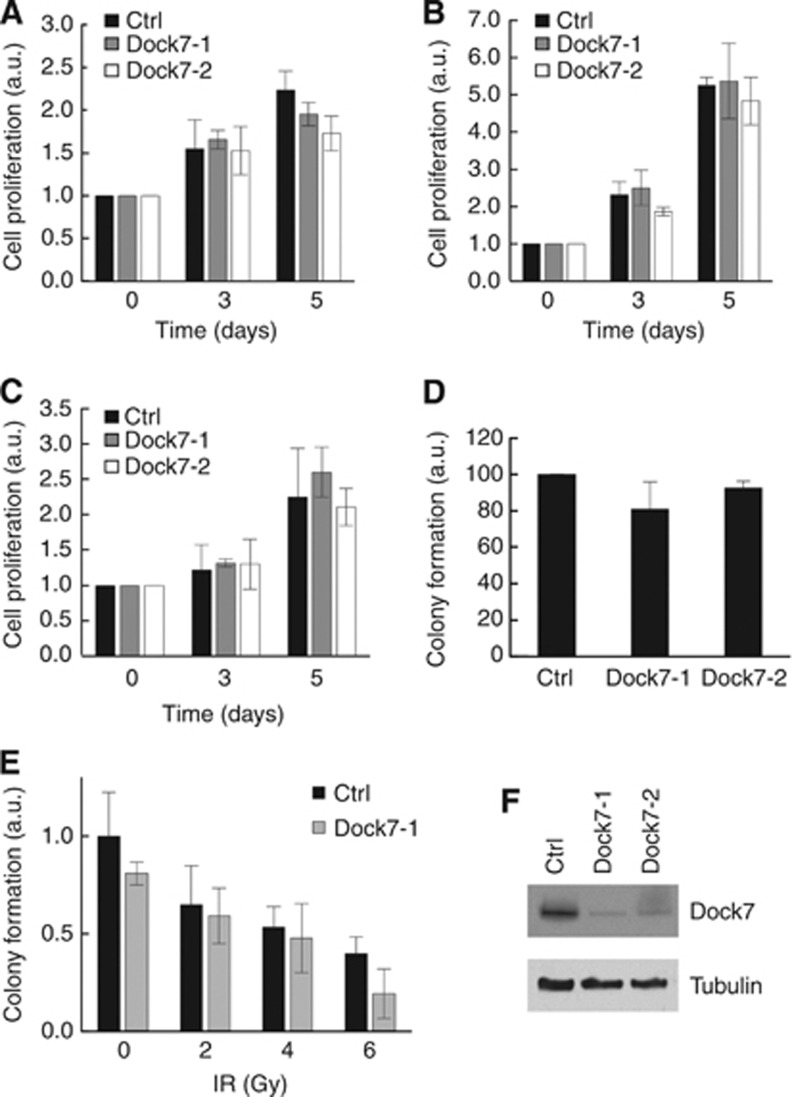
Guanine nucleotide exchange factor expression was measured by microarray analysis and western blotting. Specific depletion of proteins was accomplished using siRNA. Cell invasion was determined using matrigel and brain slice assays. Cell proliferation and survival were monitored using sulforhodamine B and colony formation assays. Guanine nucleotide exchange factor and GTPase activities were determined using specific affinity precipitation assays.
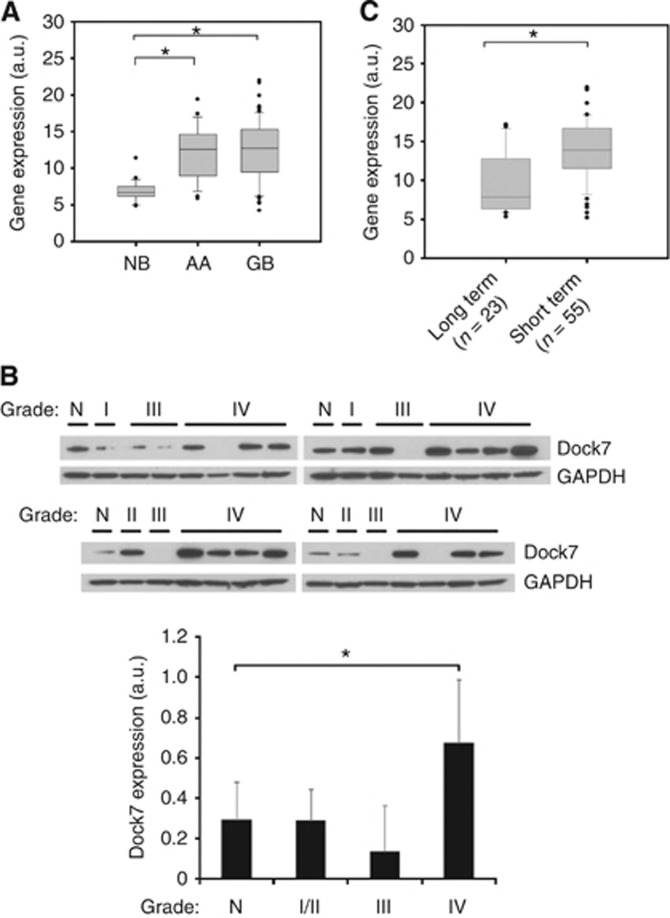
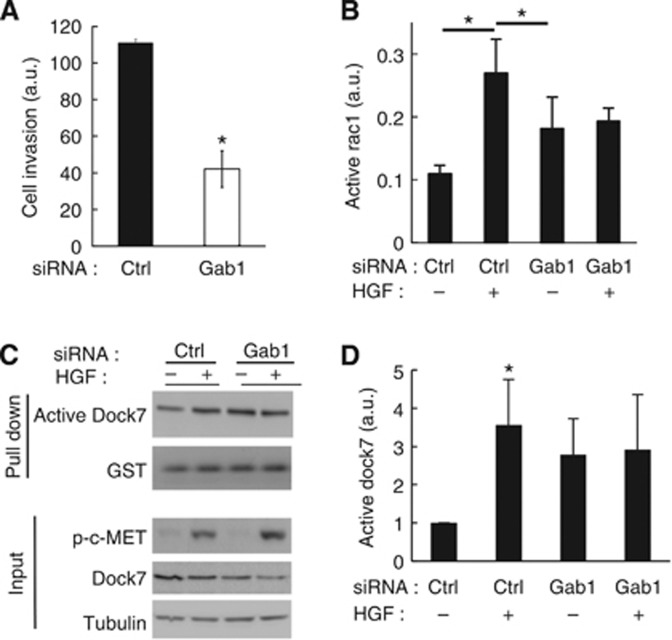
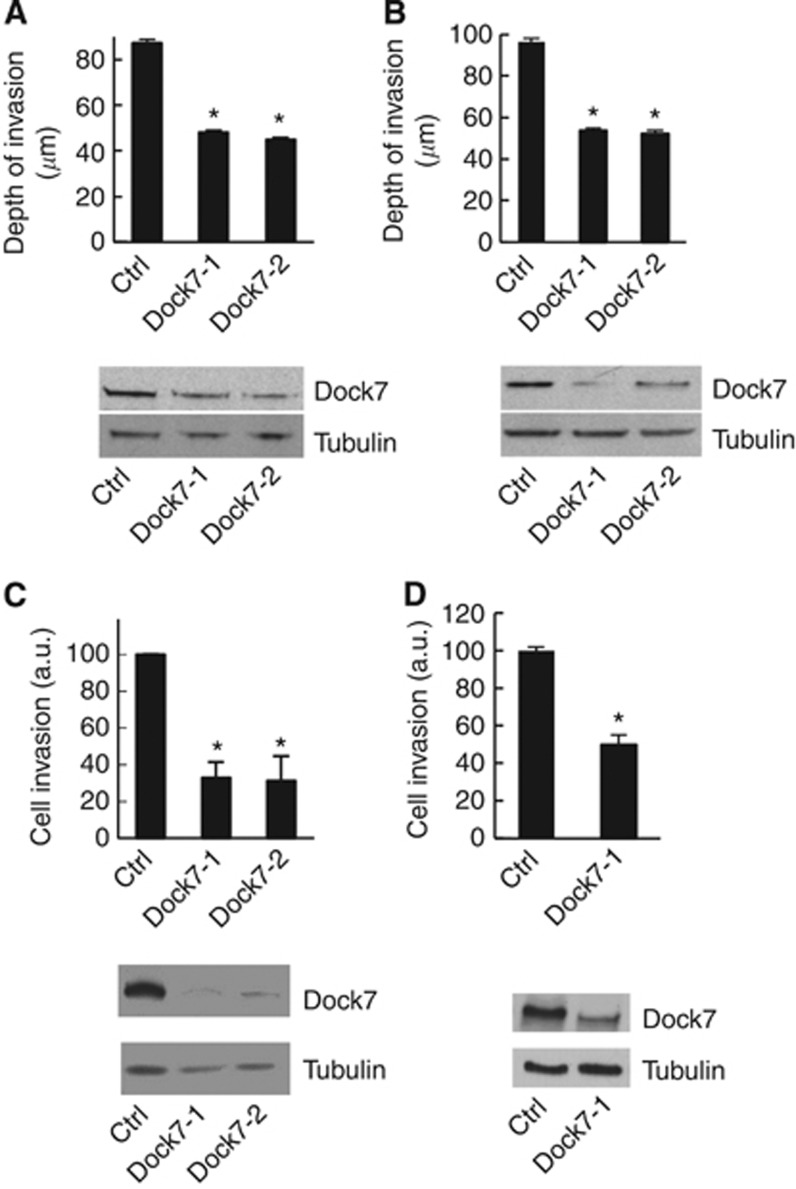
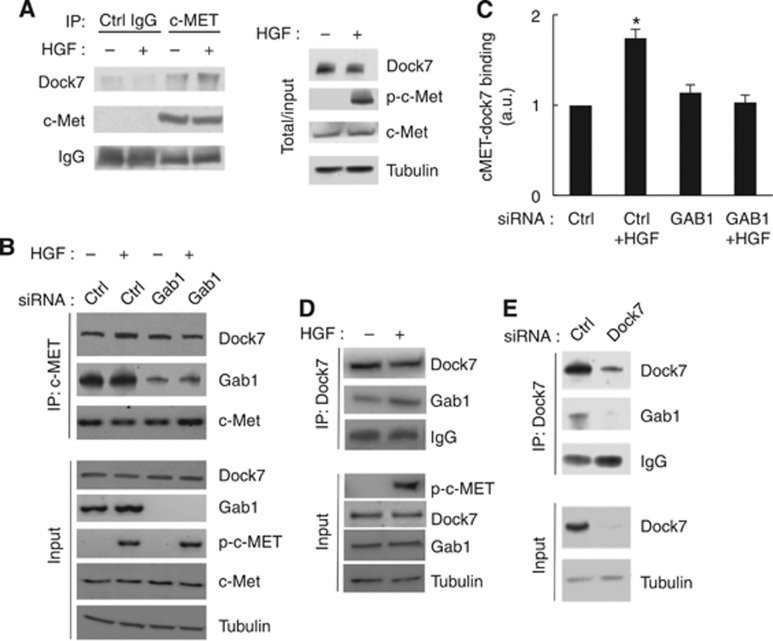
We found that expression of Dock7, a GEF, is elevated in human GBM tissue in comparison with non-neoplastic brain. We showed that Dock7 mediates serum- and HGF-induced glioblastoma cell invasion. We also showed that Dock7 co-immunoprecipitates with c-Met and that this interaction is enhanced upon HGF stimulation in a manner that is dependent on the adaptor protein Gab1. Dock7 and Gab1 also co-immunoprecipitate in an HGF-dependent manner. Furthermore, Gab1 is required for HGF-induced Dock7 and Rac1 activation and glioblastoma cell invasion.
Dock7 mediates HGF-induced GBM invasion. Targeting Dock7 in GBM may inhibit c-MET-mediated invasion in tumours treated with anti-angiogenic regimens.
多形性胶质母细胞瘤(GBM)是一种具有高度侵袭性的原发性脑肿瘤,仍然是一种无法治愈的疾病。Rho鸟苷三磷酸酶(GTPases)及其激活剂鸟嘌呤核苷酸交换因子(GEFs)在GBM侵袭中起核心作用。抗血管生成疗法可能通过HGF/c-Met信号通路刺激GBM侵袭。我们旨在确定HGF诱导的GBM侵袭的介质,这些介质可能代表联合抗血管生成/抗侵袭治疗模式中的靶点。
通过微阵列分析和蛋白质印迹法检测鸟嘌呤核苷酸交换因子的表达。使用小干扰RNA(siRNA)实现蛋白质的特异性缺失。使用基质胶和脑片试验测定细胞侵袭。使用磺酰罗丹明B和集落形成试验监测细胞增殖和存活。使用特异性亲和沉淀试验测定鸟嘌呤核苷酸交换因子和GTP酶活性。
我们发现,与非肿瘤性脑相比,GEF Dock7在人GBM组织中的表达升高。我们表明,Dock7介导血清和HGF诱导的胶质母细胞瘤细胞侵袭。我们还表明,Dock7与c-Met共免疫沉淀,并且这种相互作用在HGF刺激后以依赖于衔接蛋白Gab1的方式增强。Dock7和Gab1也以HGF依赖的方式共免疫沉淀。此外,Gab1是HGF诱导的Dock7和Rac1激活以及胶质母细胞瘤细胞侵袭所必需的。
Dock7介导HGF诱导的GBM侵袭。在GBM中靶向Dock7可能抑制抗血管生成方案治疗的肿瘤中c-MET介导的侵袭。