Division of Molecular and Clinical Genetics, Molecular and Clinical Genetics, Medical Institute of Bioregulation, Kyushu University, Fukuoka, Japan.
Cancer Sci. 2014 Apr;105(4):402-8. doi: 10.1111/cas.12367. Epub 2014 Apr 5.
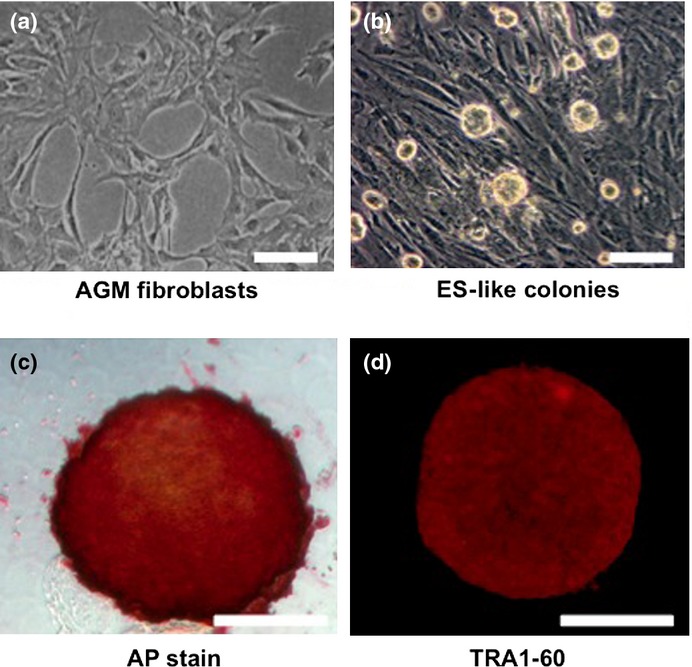
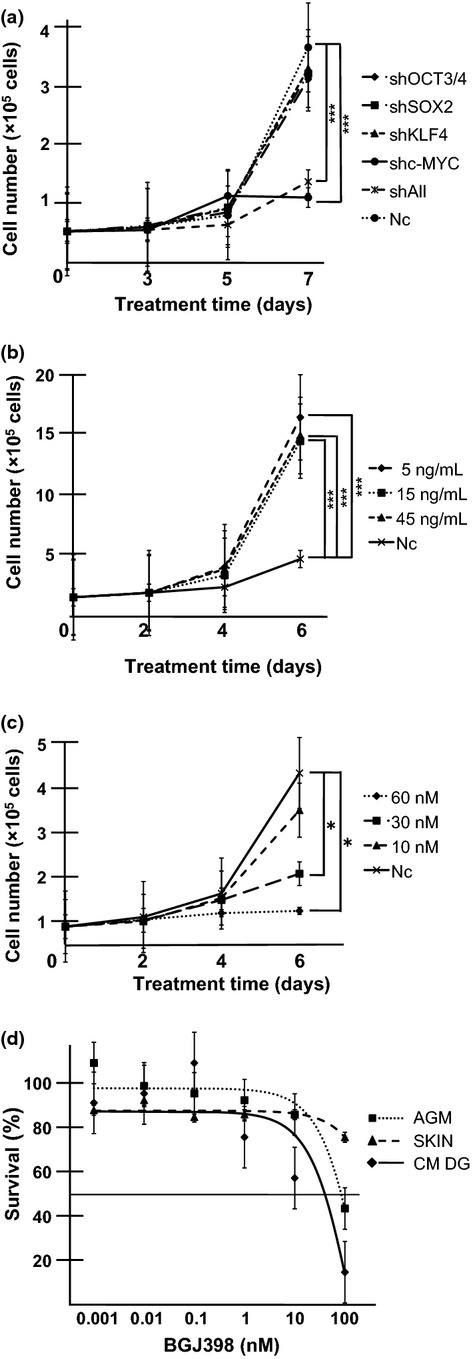
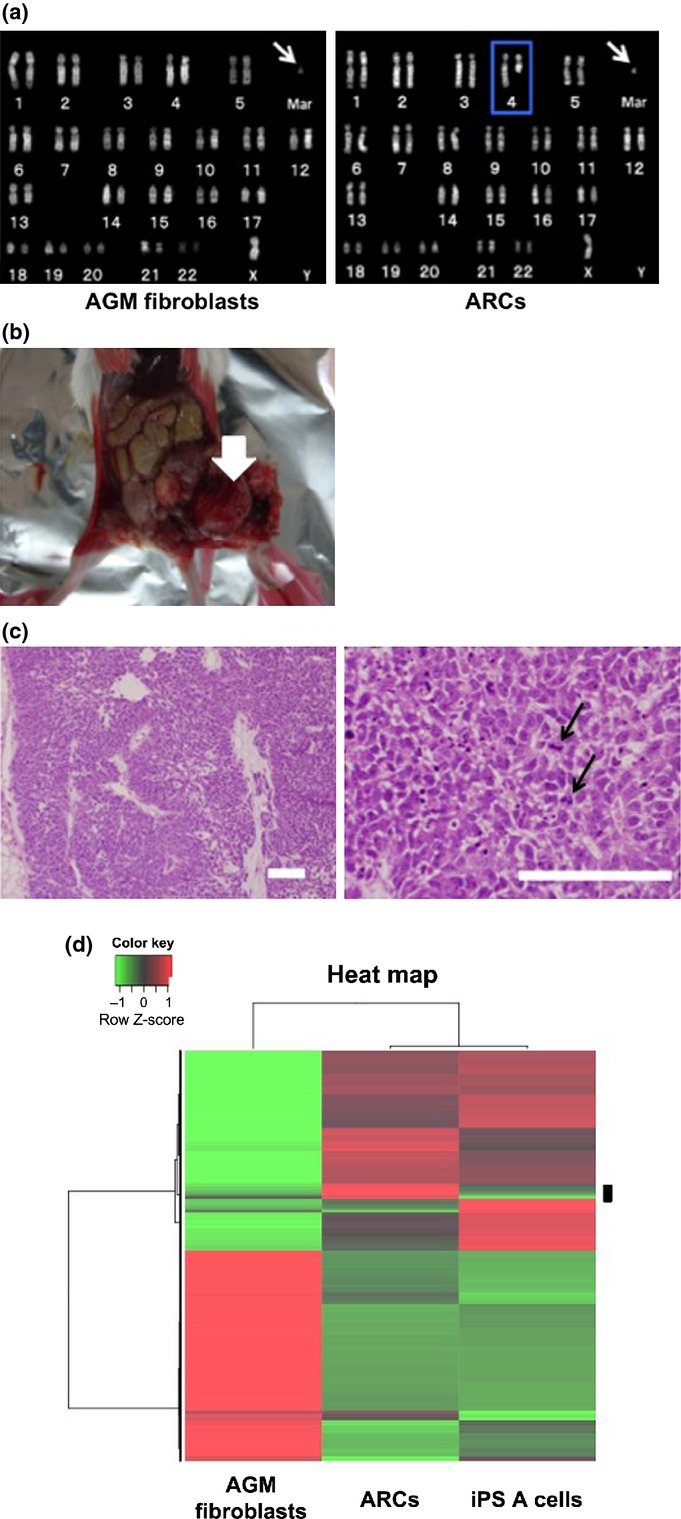
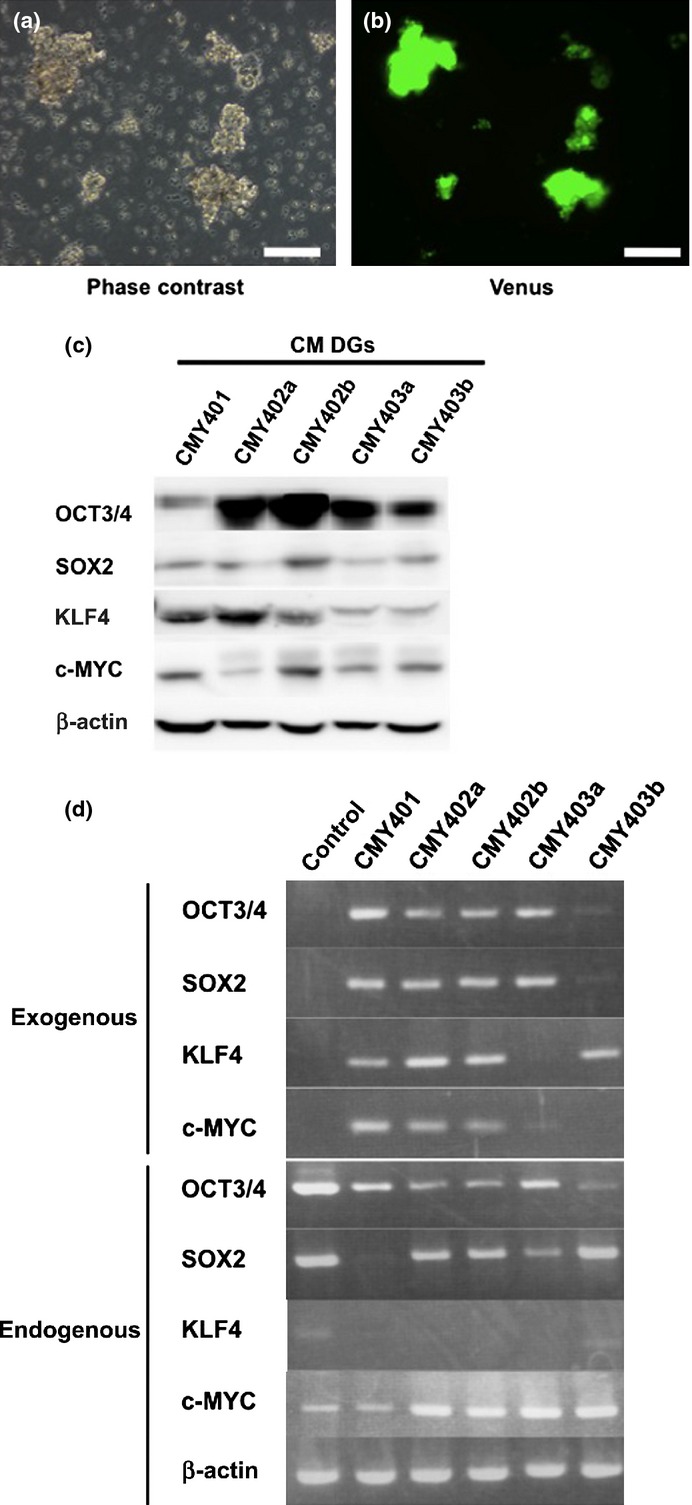
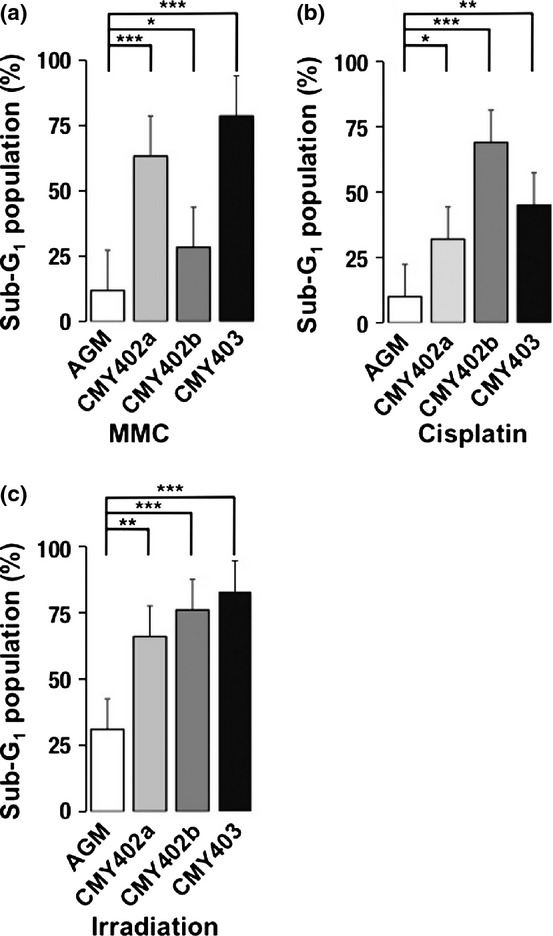
Recent generation of induced pluripotent stem (iPSCs) has made a significant impact on the field of human regenerative medicine. Prior to the clinical application of iPSCs, testing of their safety and usefulness must be carried out using reliable animal models of various diseases. In order to generate iPSCs from common marmoset (CM; Callithrix jacchus), one of the most useful experimental animals, we have lentivirally transduced reprogramming factors, including POU5F1 (also known as OCT3/4), SOX2, KLF4, and c-MYC into CM fibroblasts. The cells formed round colonies expressing embryonic stem cell markers, however, they showed an abnormal karyotype denoted as 46, X, del(4q), +mar, and formed human dysgerminoma-like tumors in SCID mice, indicating that the transduction of reprogramming factors caused unexpected tumorigenesis of CM cells. Moreover, CM dysgerminoma-like tumors were highly sensitive to DNA-damaging agents, irradiation, and fibroblast growth factor receptor inhibitor, and their growth was dependent on c-MYC expression. These results indicate that DNA-damaging agents, irradiation, fibroblast growth factor receptor inhibitor, and c-MYC-targeted therapies might represent effective treatment strategies for unexpected tumors in patients receiving iPSC-based therapy.
新一代诱导多能干细胞(iPSCs)在人类再生医学领域产生了重大影响。在将 iPSCs 应用于临床之前,必须使用各种疾病的可靠动物模型对其安全性和有效性进行测试。为了从最有用的实验动物之一的普通狨猴(CM;Callithrix jacchus)中产生 iPSCs,我们已经通过慢病毒转导了重编程因子,包括 POU5F1(也称为 OCT3/4)、SOX2、KLF4 和 c-MYC 到 CM 成纤维细胞中。这些细胞形成了表达胚胎干细胞标志物的圆形集落,然而,它们表现出异常的核型,被标记为 46,X,del(4q),+mar,并在 SCID 小鼠中形成人类生殖细胞瘤样肿瘤,表明重编程因子的转导导致 CM 细胞意外的肿瘤发生。此外,CM 生殖细胞瘤样肿瘤对 DNA 损伤剂、辐射和成纤维细胞生长因子受体抑制剂高度敏感,其生长依赖于 c-MYC 表达。这些结果表明,DNA 损伤剂、辐射、成纤维细胞生长因子受体抑制剂和针对 c-MYC 的治疗方法可能代表接受 iPSC 为基础的治疗的患者中意外肿瘤的有效治疗策略。