1] Department of Physics, Center for the Physics of Living Cells and Institute for Genomic Biology, University of Illinois at Urbana-Champaign, Urbana, Illinois 61801, USA [2] Howard Hughes Medical Institute, Urbana, Illinois 61801, USA [3] [4] School of Nano-Bioscience and Chemical Engineering, Ulsan National Institute of Science and Technology, Ulsan 689-798, Republic of Korea (H.K.); Department of Biochemistry and Biophysics, University of California at San Francisco, 600 16th Street, San Francisco, California 94143-2200, USA (M.M.); Department of Cell Biology, Harvard Medical School, 240 Longwood Avenue, LHRRB-517, Boston, Massachusetts 02115-5730, USA (K.R.).
1] T. C. Jenkins Department of Biophysics, Johns Hopkins University, 3400 N. Charles Street, Baltimore, Maryland 21218, USA [2].
Nature. 2014 Feb 20;506(7488):334-8. doi: 10.1038/nature13039. Epub 2014 Feb 12.
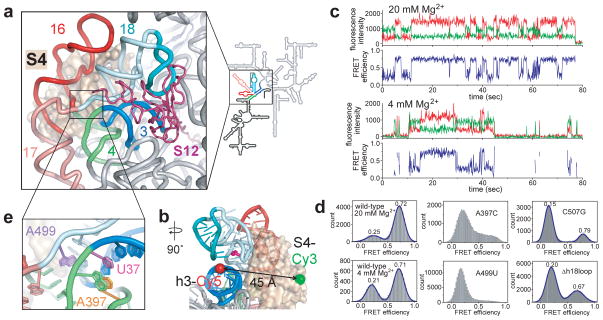
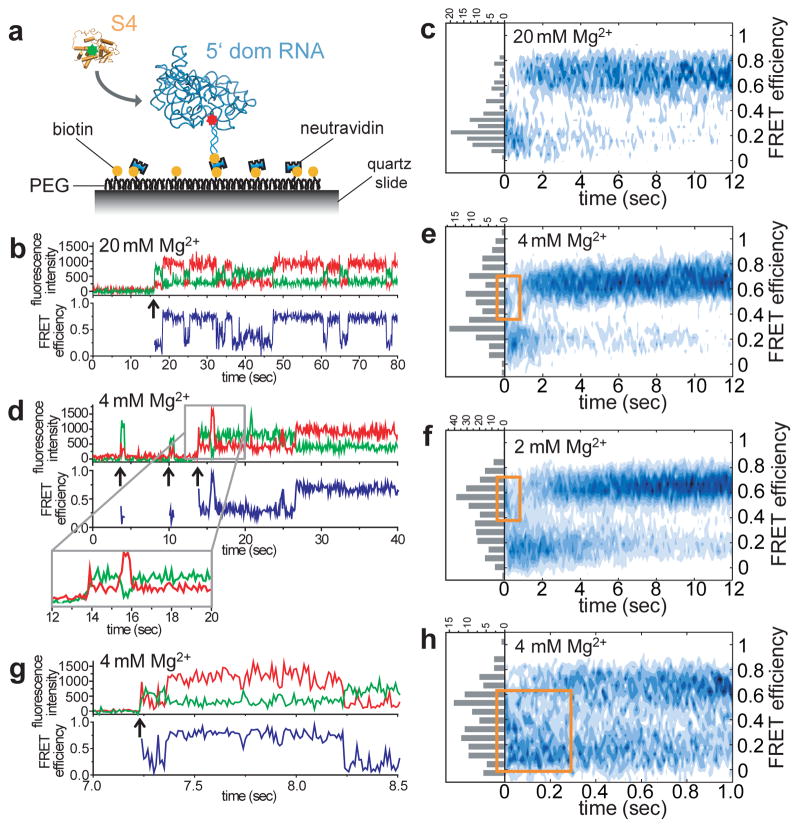
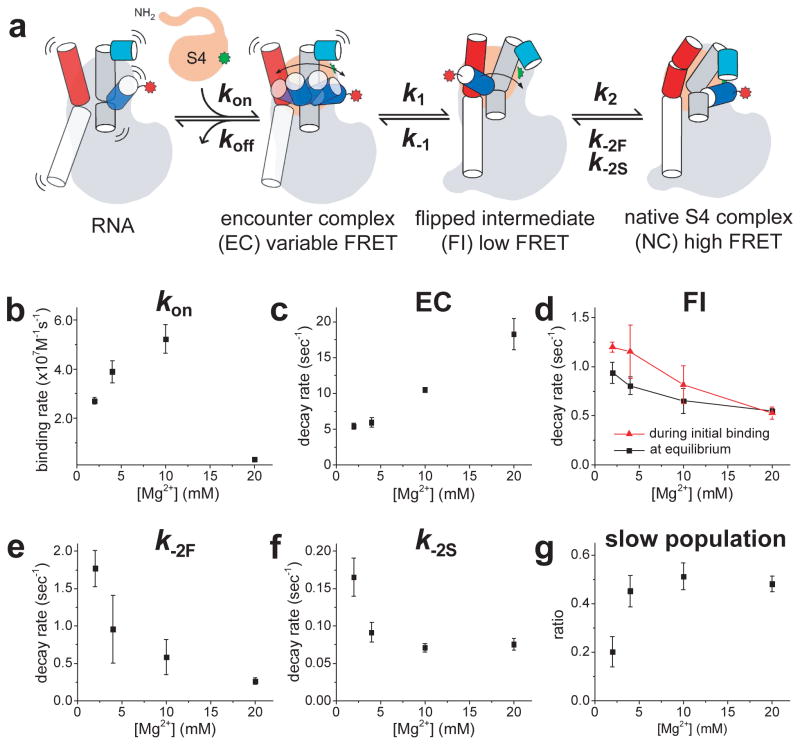
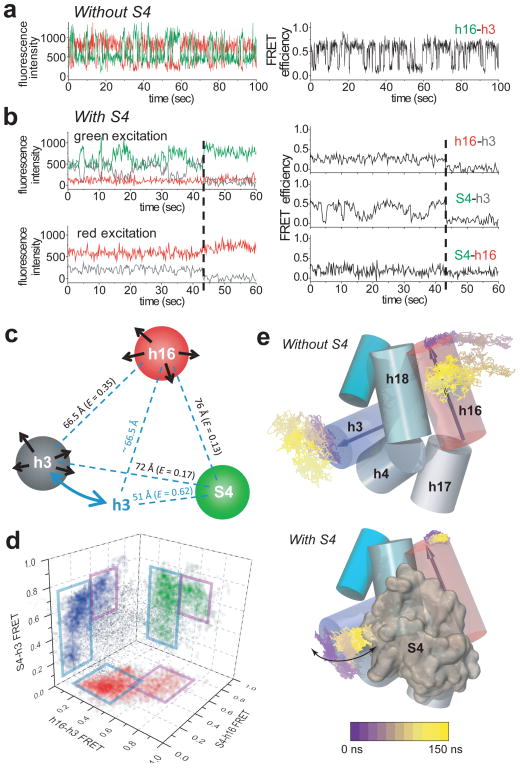
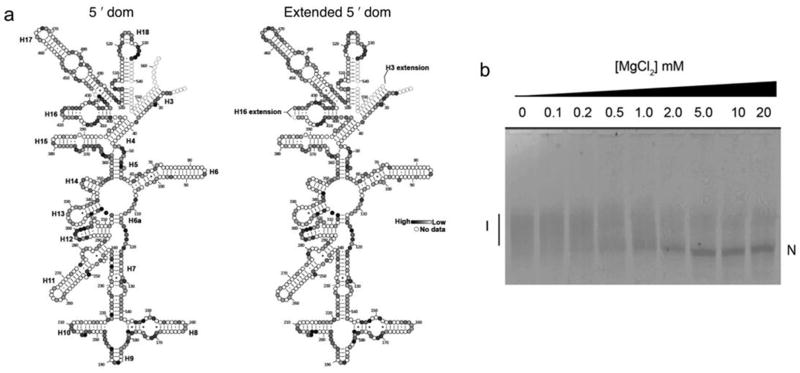
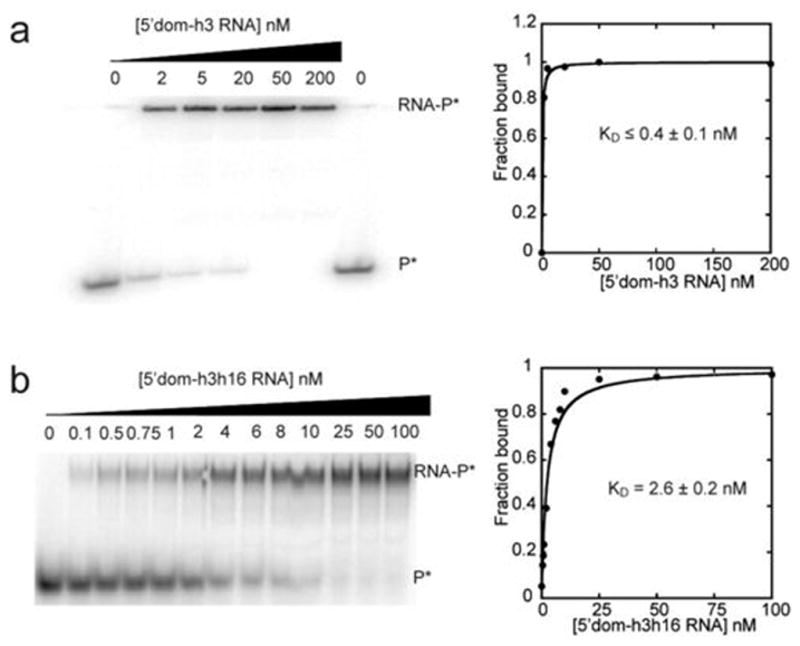
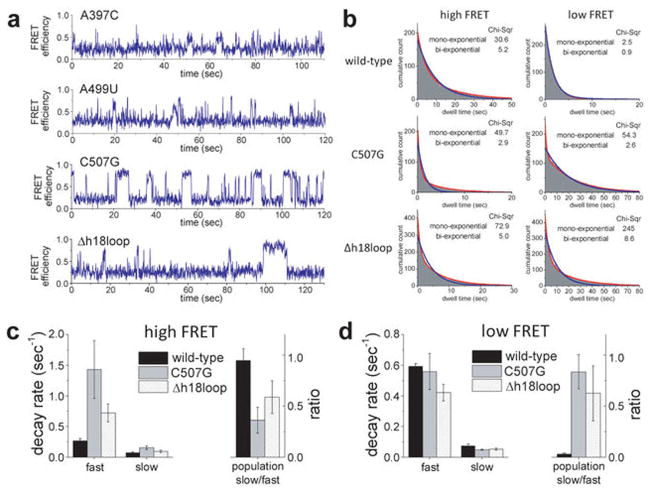
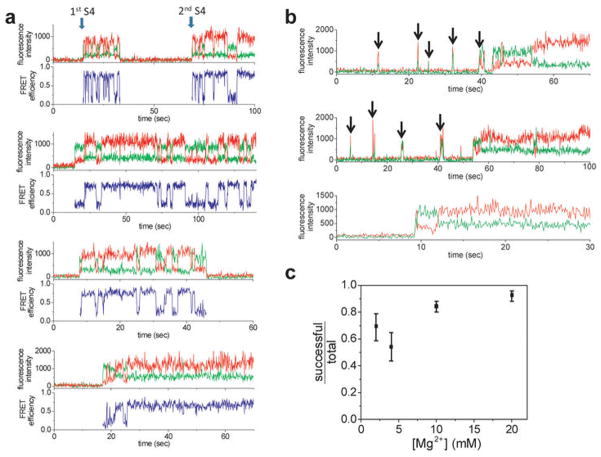
The assembly of 30S ribosomes requires the precise addition of 20 proteins to the 16S ribosomal RNA. How early binding proteins change the ribosomal RNA structure so that later proteins may join the complex is poorly understood. Here we use single-molecule fluorescence resonance energy transfer (FRET) to observe real-time encounters between Escherichia coli ribosomal protein S4 and the 16S 5' domain RNA at an early stage of 30S assembly. Dynamic initial S4-RNA complexes pass through a stable non-native intermediate before converting to the native complex, showing that non-native structures can offer a low free-energy path to protein-RNA recognition. Three-colour FRET and molecular dynamics simulations reveal how S4 changes the frequency and direction of RNA helix motions, guiding a conformational switch that enforces the hierarchy of protein addition. These protein-guided dynamics offer an alternative explanation for induced fit in RNA-protein complexes.
30S 核糖体的组装需要将 20 种蛋白质精确添加到 16S 核糖体 RNA 中。目前人们对早期结合的蛋白质如何改变核糖体 RNA 结构,从而使后来的蛋白质能够加入复合物还知之甚少。在这里,我们使用单分子荧光共振能量转移(FRET)技术,在 30S 组装的早期阶段观察到大肠杆菌核糖体蛋白 S4 与 16S 5' 结构域 RNA 之间的实时相互作用。动态初始 S4-RNA 复合物在转化为天然复合物之前,经过一个稳定的非天然中间态,这表明非天然结构可以为蛋白质 RNA 识别提供一条低自由能途径。三色 FRET 和分子动力学模拟揭示了 S4 如何改变 RNA 螺旋运动的频率和方向,引导构象转换,从而强制执行蛋白质添加的层次结构。这些由蛋白质引导的动力学为 RNA-蛋白质复合物中的诱导契合提供了另一种解释。