Hajjar Connie, Sampuda Katherine M, Boyd Lynn
Middle Tennessee State University, Murfreesboro, TN, USA.
BMC Dev Biol. 2014 Feb 15;14:6. doi: 10.1186/1471-213X-14-6.
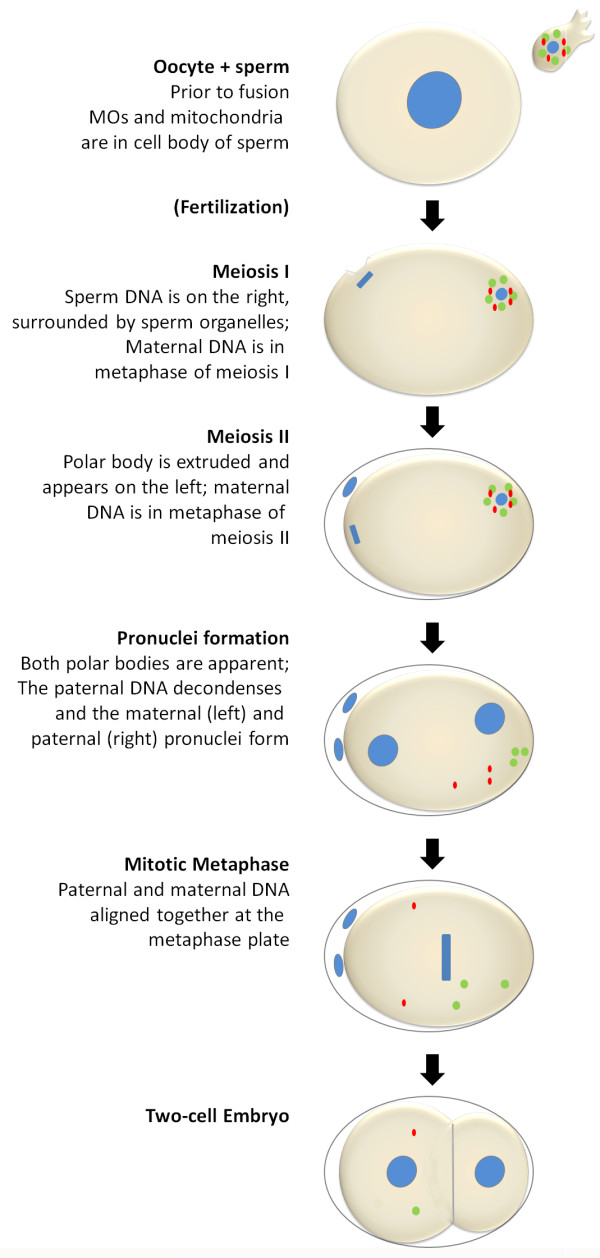
The process of fertilization involves a cell fusion event between the sperm and oocyte. Although sperm contain mitochondria when they fuse with the oocyte, paternal mitochondrial genomes do not persist in offspring and, thus, mitochondrial inheritance is maternal in most animals. Recent evidence suggests that paternal mitochondria may be eliminated via autophagy after fertilization. In C. elegans, sperm-specific organelles called membraneous organelles (MO) cluster together with paternal mitochondria immediately after fertilization. These MOs but not the mitochondria become polyubiquitinated and associated with proteasomes. The current model for the elimination of paternal mitochondria in C. elegans is that ubiquitination of the MOs induces the formation of autophagosomes which also capture the mitochondria and cause their degradation.
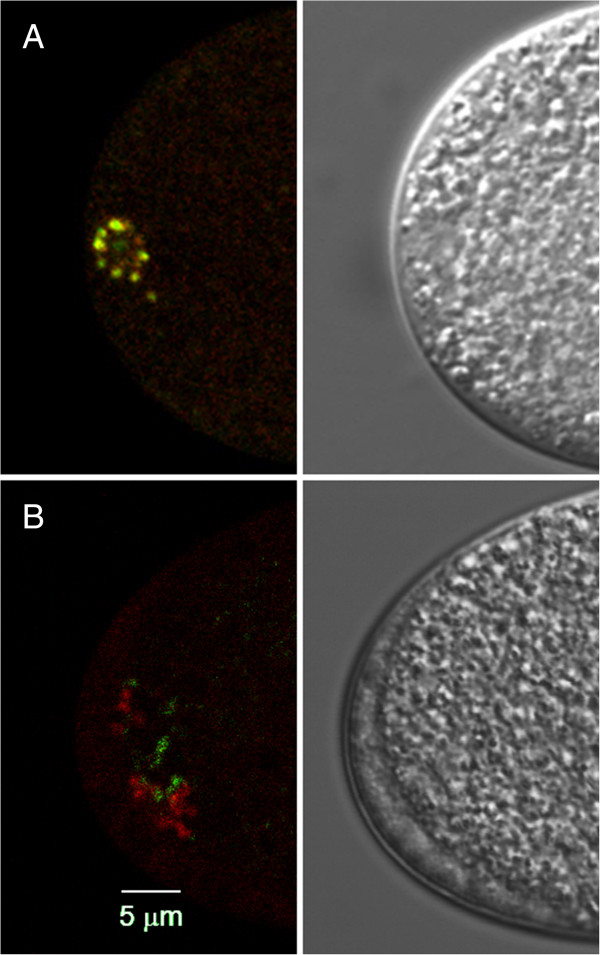
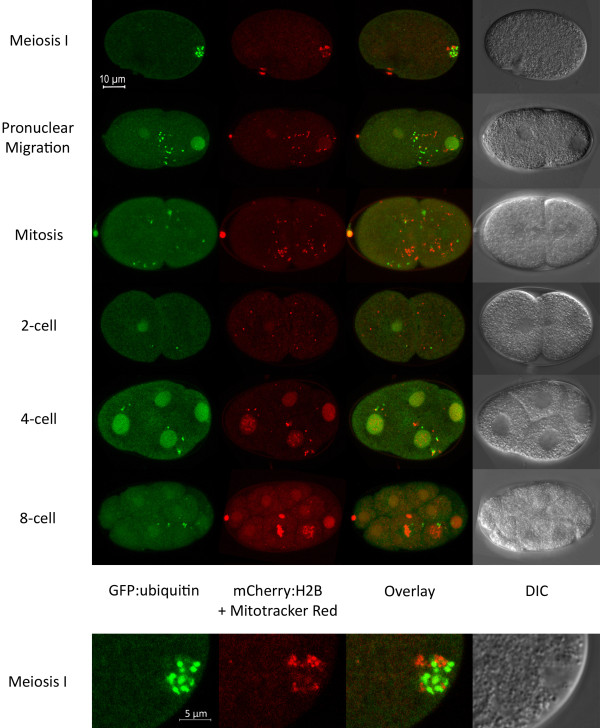
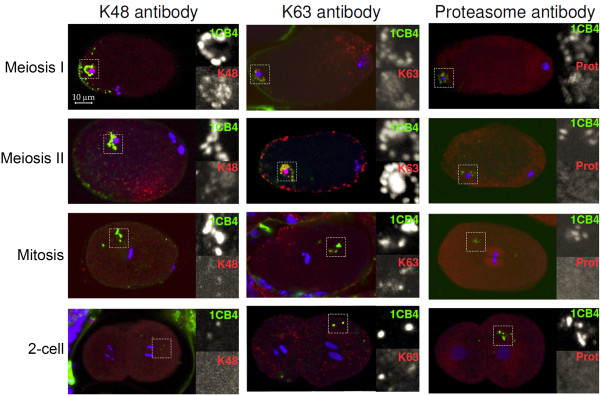
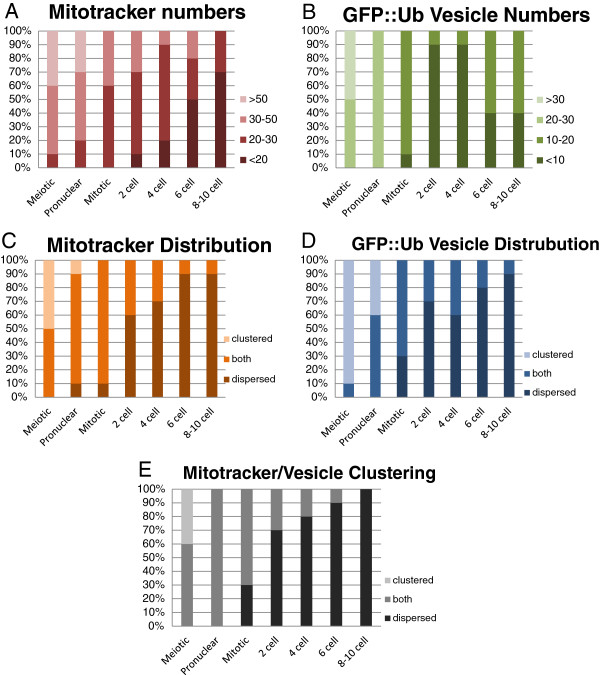
Sperm-derived mitochondria and MOs show a sharp decrease in number during the time between sperm-oocyte fusion and the onset of mitosis. During this time, paternal mitochondria remain closely clustered with the MOs. Two types of polyubiquitin chains are observed on the MOs: K48-linked ubiquitin chains which are known to lead to proteasomal degradation and K63-linked ubiquitin chains which have been linked to autophagy. K48-linked ubiquitin chains and proteasomes show up on MOs very soon after sperm-oocyte fusion. These are present on MOs for only a short period of time. Maternal proteasomes localize to MOs and sperm proteasomes localize to structures that are at the periphery of the MO cluster suggesting that these two proteasome populations may have different roles in degrading paternal material. K63-linked ubiquitin chains appear on MOs early and remain throughout the first several cell divisions.
Since there are two different types of polyubiquitin chains associated with sperm organelles and their timing differs, it suggests that ubiquitin has two or more roles in the processing of sperm components after fertilization. The K63 chains potentially provide a signal for autophagy of paternal organelles, whereas the K48 chains and proteasomes may be involved in degradation of specific proteins.
受精过程涉及精子与卵母细胞之间的细胞融合事件。尽管精子在与卵母细胞融合时含有线粒体,但父系线粒体基因组并不在后代中持续存在,因此,在大多数动物中线粒体遗传是母系遗传。最近的证据表明,受精后父系线粒体可能通过自噬被清除。在秀丽隐杆线虫中,称为膜细胞器(MO)的精子特异性细胞器在受精后立即与父系线粒体聚集在一起。这些MO而不是线粒体被多聚泛素化并与蛋白酶体相关联。秀丽隐杆线虫中消除父系线粒体的当前模型是,MO的泛素化诱导自噬体的形成,自噬体也捕获线粒体并导致其降解。
在精子 - 卵母细胞融合到有丝分裂开始的这段时间内,精子来源的线粒体和MO的数量急剧减少。在此期间,父系线粒体与MO保持紧密聚集。在MO上观察到两种类型的多聚泛素链:已知导致蛋白酶体降解的K48连接的泛素链和与自噬相关的K63连接的泛素链。精子 - 卵母细胞融合后不久,K48连接的泛素链和蛋白酶体就出现在MO上。它们仅在MO上存在很短的时间。母系蛋白酶体定位于MO,而精子蛋白酶体定位于MO簇外围的结构,这表明这两种蛋白酶体群体在降解父系物质中可能具有不同的作用。K63连接的泛素链早期出现在MO上,并在最初的几个细胞分裂过程中一直存在。
由于与精子细胞器相关的有两种不同类型的多聚泛素链,且它们出现的时间不同,这表明泛素在受精后精子成分的处理中具有两个或更多的作用。K63链可能为父系细胞器的自噬提供信号,而K48链和蛋白酶体可能参与特定蛋白质的降解。