Webb Leanne, Bambrick Hilary, Tait Peter, Green Donna, Alexander Lisa
Climate Change Research Centre, University of New South Wales, Sydney, NSW 2052, Australia.
Centre for Health Research, School of Medicine, University of Western Sydney, Sydney, NSW 2560, Australia.
Int J Environ Res Public Health. 2014 Feb 13;11(2):1942-59. doi: 10.3390/ijerph110201942.
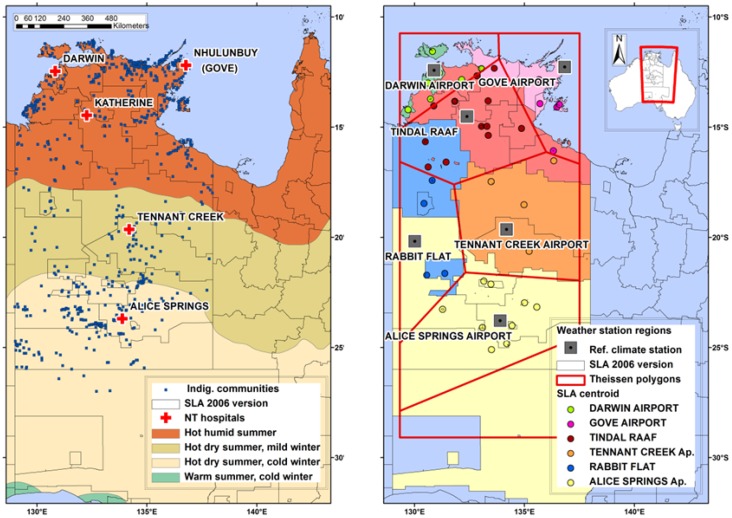
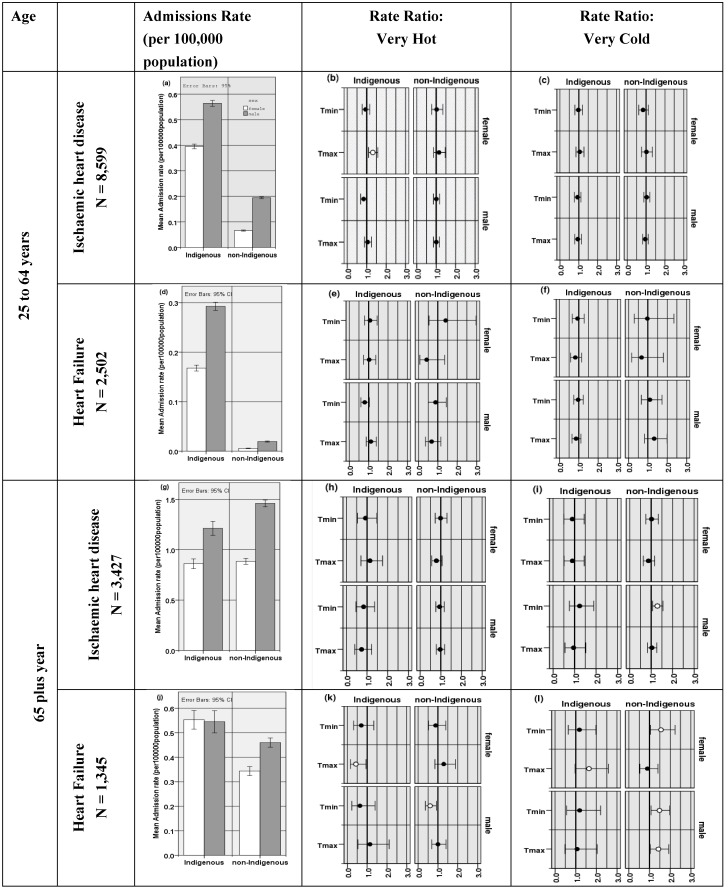
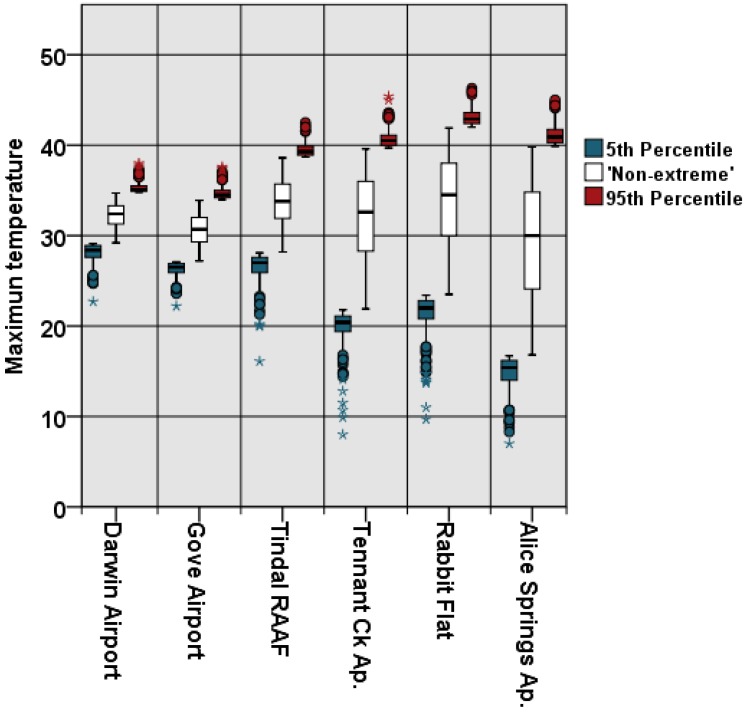
Hospitalisations are associated with ambient temperature, but little is known about responses in population sub-groups. In this study, heat responses for Indigenous and non-Indigenous people in two age groups were examined for two categories of cardiac diseases using daily hospital admissions from five Northern Territory hospitals (1992-2011). Admission rates during the hottest five per cent of days and the coolest five per cent of days were compared with rates at other times. Among 25-64 year olds, the Indigenous female population was more adversely affected by very hot days than the non-Indigenous female population, with admission rates for ischaemic heart disease (IHD) increasing by 32%. People older than 65 were more sensitive to cold, with non-Indigenous male admissions for heart failure increasing by 64%, and for IHD by 29%. For older Indigenous males, IHD admissions increased by 52% during cold conditions. For older non-Indigenous females, increases in admissions for heart failure were around 50% on these cold days, and 64% for older Indigenous females. We conclude that under projected climate change conditions, admissions for IHD amongst younger Indigenous people would increase in hot conditions, while admissions among elderly people during cold weather may be reduced. The responses to temperature, while showing significant relationships across the Northern Territory, may vary by region. These variations were not explored in this assessment.
住院治疗与环境温度有关,但对于人群亚组的反应却知之甚少。在本研究中,利用北领地五家医院(1992 - 2011年)的每日住院数据,对两个年龄组的原住民和非原住民针对两类心脏病的热反应进行了研究。将一年中最热的5%的日子和最冷的5%的日子的住院率与其他时间的住院率进行了比较。在25 - 64岁人群中,原住民女性比非原住民女性在极热天气下受到的不利影响更大,缺血性心脏病(IHD)的住院率增加了32%。65岁以上的人对寒冷更敏感,非原住民男性因心力衰竭的住院率增加了64%,因缺血性心脏病的住院率增加了29%。对于年长的原住民男性,寒冷天气期间缺血性心脏病的住院率增加了52%。对于年长的非原住民女性,寒冷天气下心力衰竭的住院率增加了约50%,年长的原住民女性则增加了64%。我们得出结论,在预计的气候变化条件下,年轻原住民因缺血性心脏病的住院率在炎热条件下会增加,而老年人在寒冷天气下的住院率可能会降低。对温度的反应虽然在北领地各地显示出显著关系,但可能因地区而异。本评估未探讨这些差异。