Bressloff Paul C, Coombes Stephen
Department of Mathematics, University of Utah, Salt Lake City, Utah 84112 USA.
Department of Mathematical Sciences, Center for Mathematical Medicine and Biology, University of Nottingham, Nottingham, NG7 2RD UK.
Cognit Comput. 2013;5(3):281-294. doi: 10.1007/s12559-013-9214-3. Epub 2013 Mar 28.
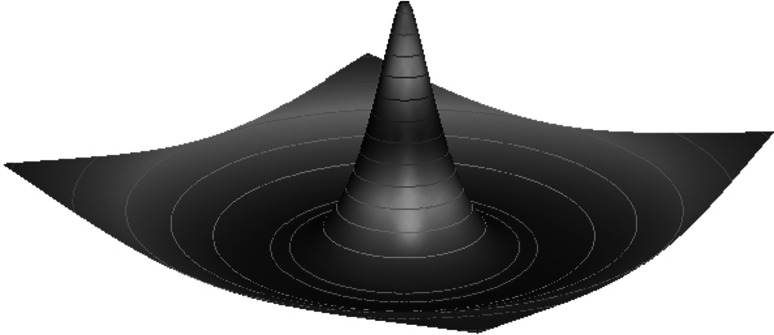
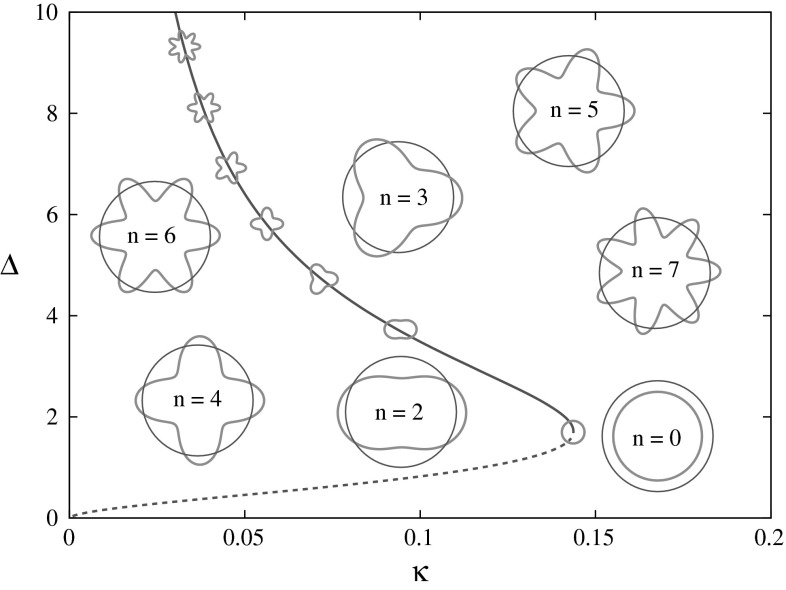
In this paper, we revisit the work of John G Taylor on neural 'bubble' dynamics in two-dimensional neural field models. This builds on original work of Amari in a one-dimensional setting and makes use of the fact that mathematical treatments are much simpler when the firing rate function is chosen to be a Heaviside. In this case, the dynamics of an excited or active region, defining a 'bubble', reduce to the dynamics of the boundary. The focus of John's work was on the properties of radially symmetric 'bubbles', including existence and radial stability, with applications to the theory of topographic map formation in self-organising neural networks. As well as reviewing John's work in this area, we also include some recent results that treat more general classes of perturbations.
在本文中,我们重新审视了约翰·G·泰勒关于二维神经场模型中神经“气泡”动力学的研究工作。这一工作建立在阿马里在一维环境下的原始研究基础之上,并利用了这样一个事实:当将发放率函数选择为海维赛德函数时,数学处理要简单得多。在这种情况下,定义一个“气泡”的兴奋或活跃区域的动力学就简化为边界的动力学。约翰的工作重点是径向对称“气泡”的性质,包括其存在性和径向稳定性,并将其应用于自组织神经网络中的地形图形成理论。除了回顾约翰在这一领域的工作外,我们还纳入了一些处理更一般扰动类别的最新成果。