Islam Mozaffarul, Sharma Smita, Teknos Theodoros N
Department of Otolaryngology-Head and Neck Surgery, The Ohio State University Wexner Medical Center, Columbus, Ohio, United States of America ; Comprehensive Cancer Center, The Ohio State University Wexner Medical Center, Columbus, Ohio, United States of America.
Comprehensive Cancer Center, The Ohio State University Wexner Medical Center, Columbus, Ohio, United States of America.
PLoS One. 2014 Feb 12;9(2):e88527. doi: 10.1371/journal.pone.0088527. eCollection 2014.
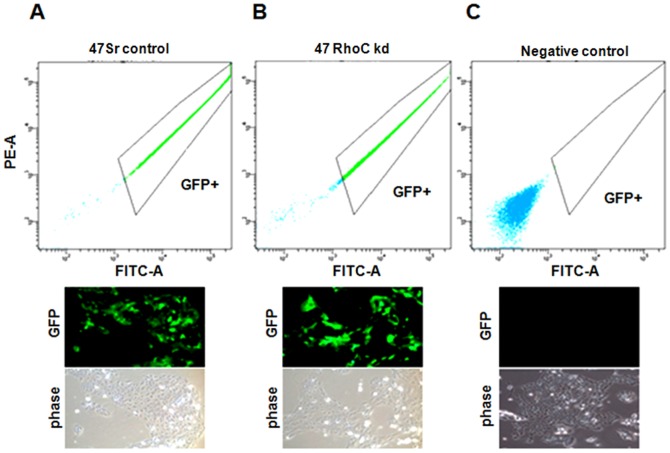
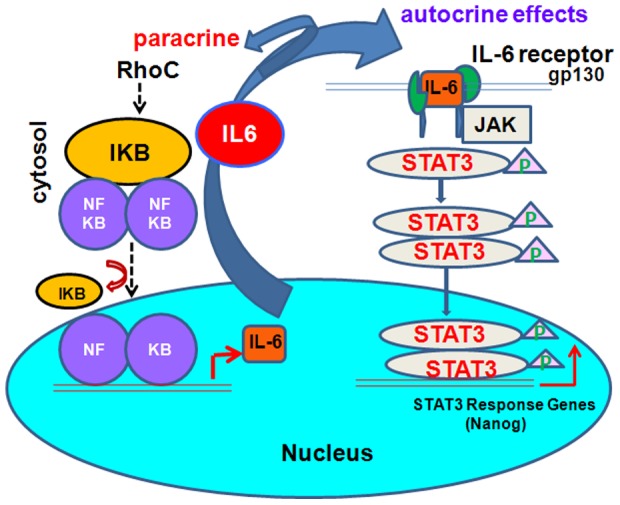
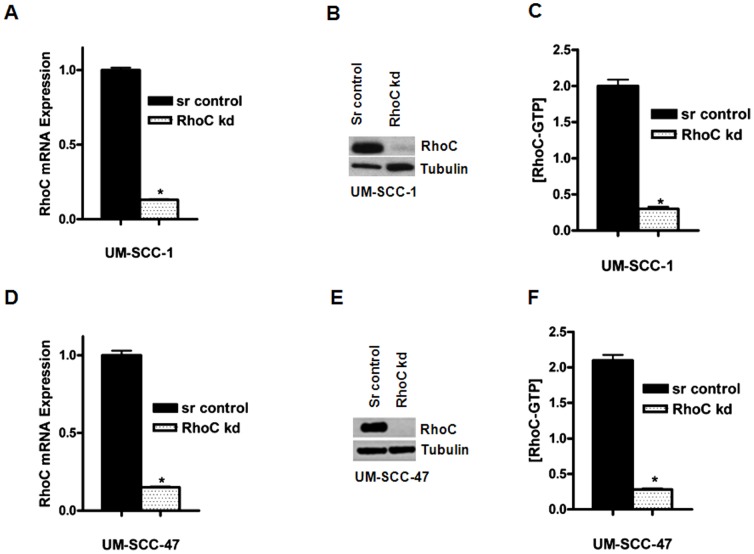
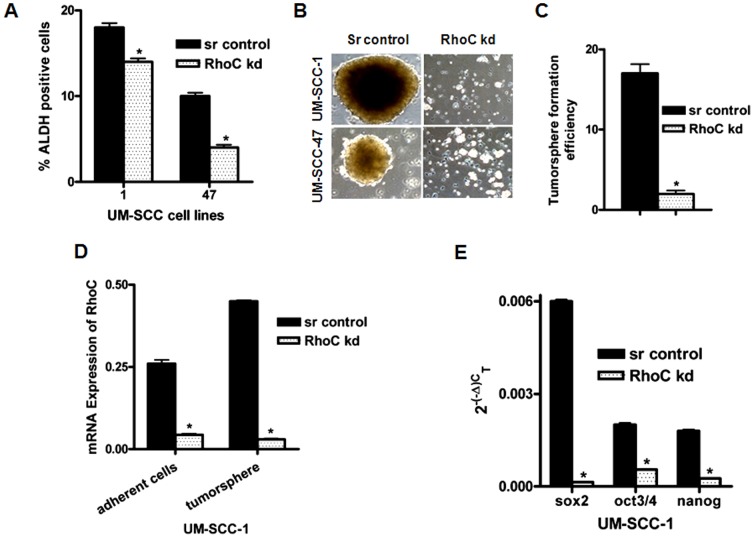
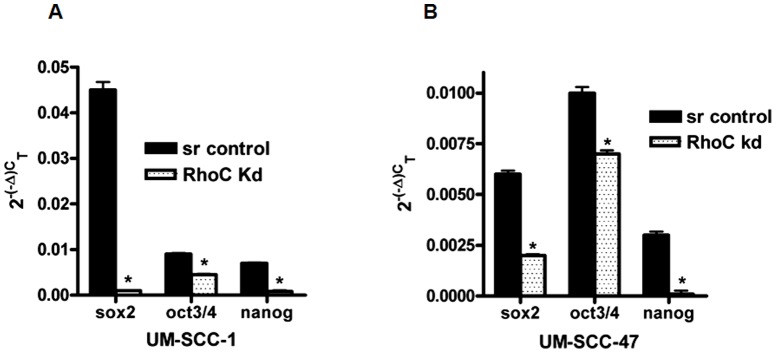
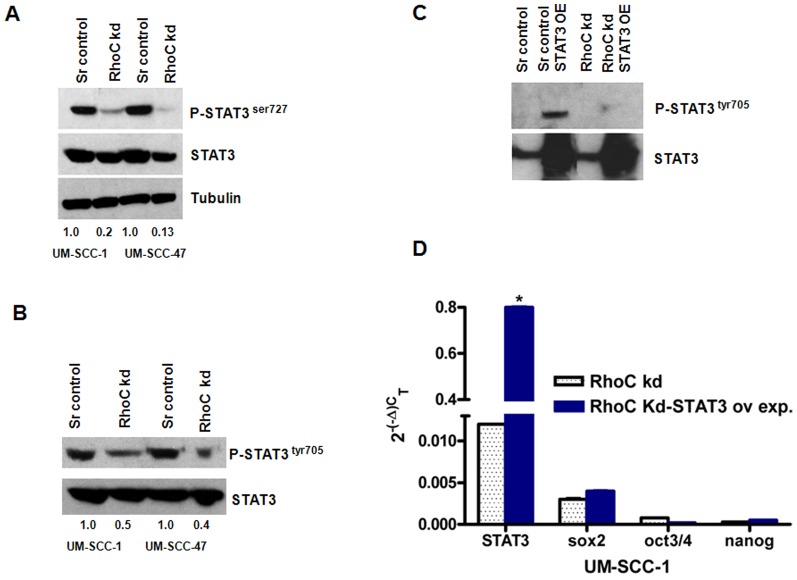
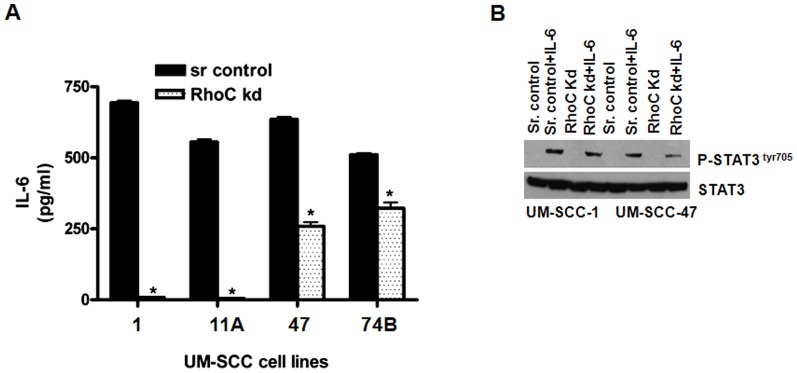
In this study we investigated the correlation between RhoC expression and cancer stem cells (CSCs) formation in head and neck squamous cell carcinoma (HNSCC). The inhibition of RhoC function was achieved using shRNA. The expression of stem cell surface markers, ALDH and CD44 were significantly low in two RhoC depleted HNSCC cell carcinoma cell lines. Furthermore, a striking reduction in tumorsphere formation was achieved in RhoC knockdown lines. The mRNA expression of RhoC in RhoC knockdown adherent and tumorspheres are dramatically down regulated as compared with the scrambled control. The mRNA expression of stem cell transcription factors; nanog, oct3/4 (Pouf1), and sox2 were significantly depleted in RhoC knockdown clones. Further, the phosphorylation of STAT3(ser727), and STAT3(tyr705) were significantly down regulated in RhoC knockdown clones. The overexpression of STAT3 in RhoC knockdown did not show any change in expression patterns of either-STAT3(tyr705) or stem cell transcription factors, signifying the role of RhoC in STAT3 activation and thus the expression of nanog, oct3/4 and sox2 in HNSCC. The expression of Inter leukin-6 (IL-6) in RhoC knockdown HNSCC cell lines was dramatically low as compared to the scrambled control. Further, we have shown a rescue in STAT3 phosphorylation by IL-6 stimulation in RhoC knockdown lines. This study is the first of its kind to establish the involvement of RhoC in STAT3 phosphorylation and hence in promoting the activation of core cancer stem cells (CSCs) transcription factors. These findings suggest that RhoC may be a novel target for HNSCC therapy.
在本研究中,我们调查了头颈鳞状细胞癌(HNSCC)中RhoC表达与癌症干细胞(CSC)形成之间的相关性。使用shRNA实现了RhoC功能的抑制。在两种RhoC缺失的HNSCC癌细胞系中,干细胞表面标志物醛脱氢酶(ALDH)和CD44的表达显著降低。此外,RhoC敲低的细胞系中肿瘤球形成显著减少。与乱序对照相比,RhoC敲低的贴壁细胞和肿瘤球中RhoC的mRNA表达显著下调。RhoC敲低克隆中干细胞转录因子纳米盒(nanog)、八聚体结合转录因子3/4(Oct3/4,即Pouf1)和性别决定区Y框蛋白2(Sox2)的mRNA表达显著减少。此外,RhoC敲低克隆中信号转导与转录激活因子3(STAT3)的丝氨酸727位点和酪氨酸705位点的磷酸化显著下调。在RhoC敲低的细胞中过表达STAT3,未显示STAT3酪氨酸705位点或干细胞转录因子的表达模式有任何变化,这表明RhoC在STAT3激活中起作用,进而在HNSCC中调控nanog、Oct3/4和Sox2的表达。与乱序对照相比,RhoC敲低的HNSCC细胞系中白细胞介素-6(IL-6)的表达显著降低。此外,我们已经证明在RhoC敲低的细胞系中,IL-6刺激可挽救STAT3的磷酸化。本研究首次证实RhoC参与STAT3磷酸化,从而促进核心癌症干细胞转录因子的激活。这些发现表明,RhoC可能是HNSCC治疗的一个新靶点。