Telemedicine Group, Roessingh Research and Development, P.O. Box 310, 7500 AH, Enschede, The Netherlands.
Sensors (Basel). 2014 Feb 18;14(2):3188-206. doi: 10.3390/s140203188.
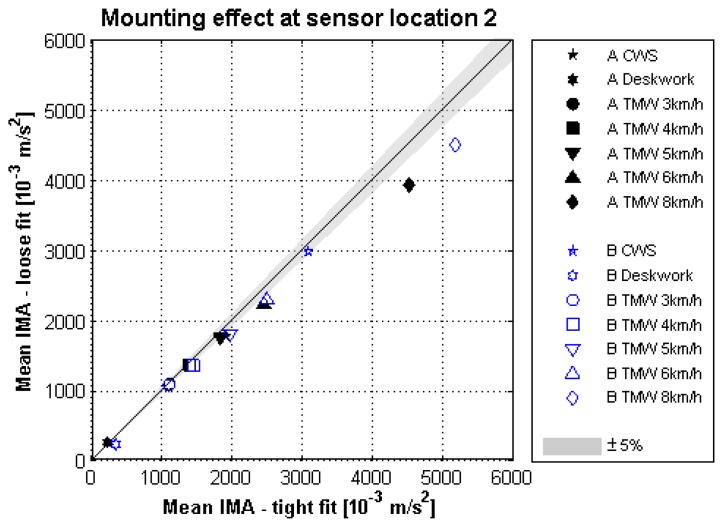
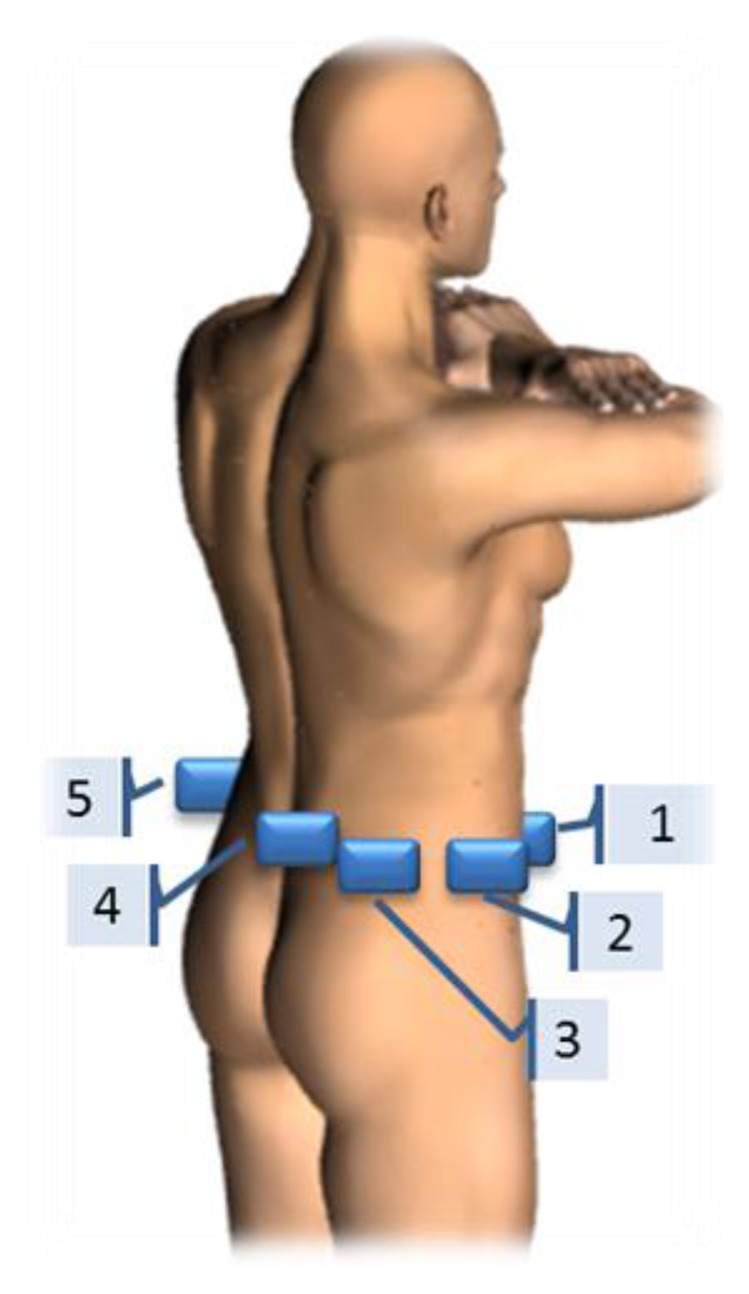
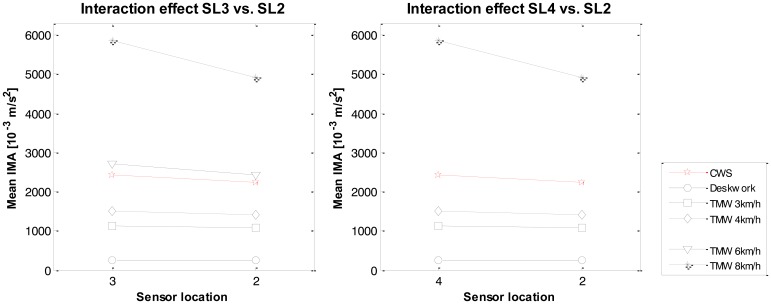
Accelerometer-based activity monitors are popular for monitoring physical activity. In this study, we investigated optimal sensor placement for increasing the quality of studies that utilize accelerometer data to assess physical activity. We performed a two-staged study, focused on sensor location and type of mounting. Ten subjects walked at various walking speeds on a treadmill, performed a deskwork protocol, and walked on level ground, while simultaneously wearing five ProMove2 sensors with a snug fit on an elastic waist belt. We found that sensor location, type of activity, and their interaction-effect affected sensor output. The most lateral positions on the waist belt were the least sensitive for interference. The effect of mounting was explored, by making two subjects repeat the experimental protocol with sensors more loosely fitted to the elastic belt. The loose fit resulted in lower sensor output, except for the deskwork protocol, where output was higher. In order to increase the reliability and to reduce the variability of sensor output, researchers should place activity sensors on the most lateral position of a participant's waist belt. If the sensor hampers free movement, it may be positioned slightly more forward on the belt. Finally, sensors should be fitted tightly to the body.
基于加速度计的活动监测器常用于监测身体活动。在这项研究中,我们研究了优化传感器放置位置的方法,以提高利用加速度计数据评估身体活动的研究质量。我们进行了两阶段研究,重点关注传感器位置和安装类型。十位参与者在跑步机上以不同的步行速度行走,执行办公桌工作协议,并在水平地面上行走,同时在弹性腰带的舒适贴合位置佩戴五个 ProMove2 传感器。我们发现传感器位置、活动类型及其相互作用会影响传感器的输出。腰带最外侧的位置受干扰的敏感性最低。通过让两位参与者重复实验协议,同时将传感器更宽松地安装在弹性腰带上,我们探索了安装方式的影响。宽松的安装方式导致传感器输出降低,除了办公桌工作协议外,输出反而更高。为了提高传感器输出的可靠性和降低变异性,研究人员应将活动传感器放置在参与者腰带的最外侧位置。如果传感器妨碍了自由移动,它可以稍微向前移动到腰带的位置。最后,传感器应紧密贴合身体。