Beijing University of Chinese Medicine, Bei San Huan Dong Lu, Chao Yang district, Beijing, China.
BMC Complement Altern Med. 2014 Feb 20;14:67. doi: 10.1186/1472-6882-14-67.
Chinese herbal formulae are composed of complex components and produce comprehensive pharmacological effects. Unlike chemical drugs that have only one clear single target, the components of Chinese herbal formulae have multiple channels and targets. How to discover the pharmacological targets of Chinese herbal formulae and their underlying molecular mechanism are still under investigation.
DanQi pill (DQP), which is one of the widely prescribed traditional Chinese medicines, is applied as an example drug. In this study, we used the drug target prediction model (DrugCIPHER-CS) to examine the underlying molecular mechanism of DQP, followed by experimental validation.
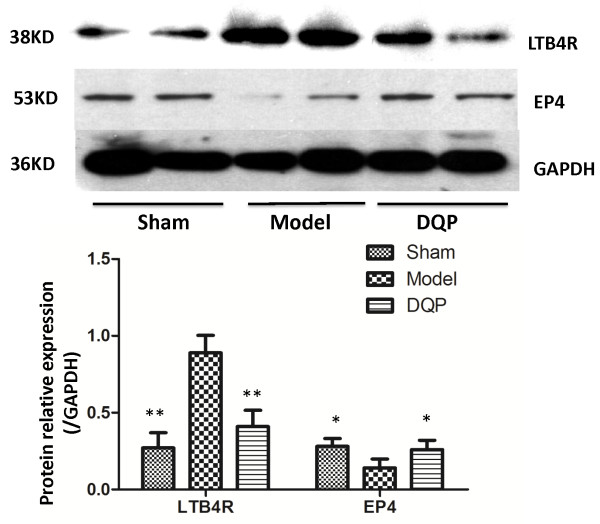
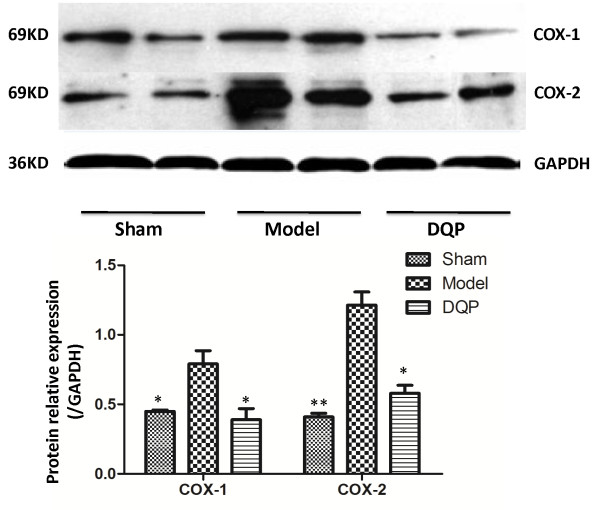
A novel therapeutic effect pattern of DQP was identified. After determining the compounds in DQP, we used DrugCIPHER-CS to predict their potential targets. These potential targets were significantly enriched in well-known cardiovascular disease-related pathways. For example, the biological processes of neuroactive ligand-receptor interaction, calcium-signaling pathway, and aminoacyl-tRNA biosynthesis were involved. A new and significant pathway, arachidonic acid (AA) metabolism, was also identified in this study. This predicted pathway alteration was validated with an animal model of heart failure (HF). Results show that DQP had effect both on thromboxane B2 (TXB2) and Prostaglandin I2 (PGI2) in different patterns. It can down-regulate the TXB2 and up-regulate the PGI2 in diverse way. Remarkably, it also had effect on cyclooxygenase (COX)-1 and COX2 by suppressing their levels, which may be the critical and novel mechanism of cardiacprotective efficacy for DQP. Furthermore, leukotrienes B4 (LTB4) receptor, another key molecule of AA metabolism which finally mediated gastrotoxic leukotrienes, was also reduced by DQP.
The combination of drug target prediction and experimental validation provides new insights into the complicated mechanism of DQP.
中草药配方由复杂的成分组成,产生全面的药理作用。与只有一个明确单一靶点的化学药物不同,中草药配方的成分具有多个通道和靶点。如何发现中草药配方的药理靶点及其潜在的分子机制仍在研究中。
以丹参滴丸(DQP)为例药。在这项研究中,我们使用药物靶标预测模型(DrugCIPHER-CS)来研究 DQP 的潜在分子机制,然后进行实验验证。
确定了 DQP 的一种新的治疗效果模式。确定 DQP 中的化合物后,我们使用 DrugCIPHER-CS 预测其潜在靶标。这些潜在靶标显著富集在已知的心血管疾病相关途径中。例如,涉及神经活性配体-受体相互作用、钙信号通路和氨酰-tRNA 生物合成的生物过程。在这项研究中还发现了一条新的、显著的通路,即花生四烯酸(AA)代谢。该预测通路的改变在心力衰竭(HF)动物模型中得到了验证。结果表明,DQP 对血栓烷 B2(TXB2)和前列腺素 I2(PGI2)具有不同的作用模式。它可以下调 TXB2,上调 PGI2,以不同的方式发挥作用。值得注意的是,它还通过抑制 COX-1 和 COX2 的水平对其产生影响,这可能是 DQP 具有心脏保护作用的关键和新颖机制。此外,AA 代谢的另一个关键分子白细胞三烯 B4(LTB4)受体也被 DQP 降低。
药物靶标预测与实验验证的结合为 DQP 的复杂机制提供了新的见解。