Ormond D Ryan, Shannon Craig, Oppenheim Julius, Zeman Richard, Das Kaushik, Murali Raj, Jhanwar-Uniyal Meena
Department of Neurosurgery, New York Medical College, Valhalla, New York, United States of America.
Department of Cell Biology and Anatomy, New York Medical College, Valhalla, New York, United States of America.
PLoS One. 2014 Feb 18;9(2):e88916. doi: 10.1371/journal.pone.0088916. eCollection 2014.
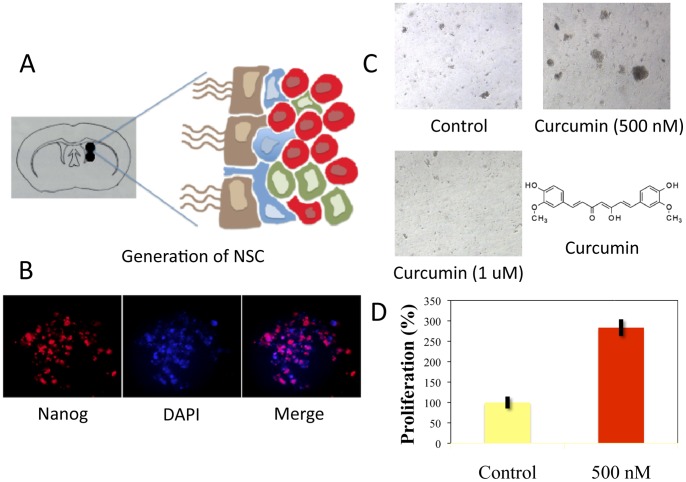
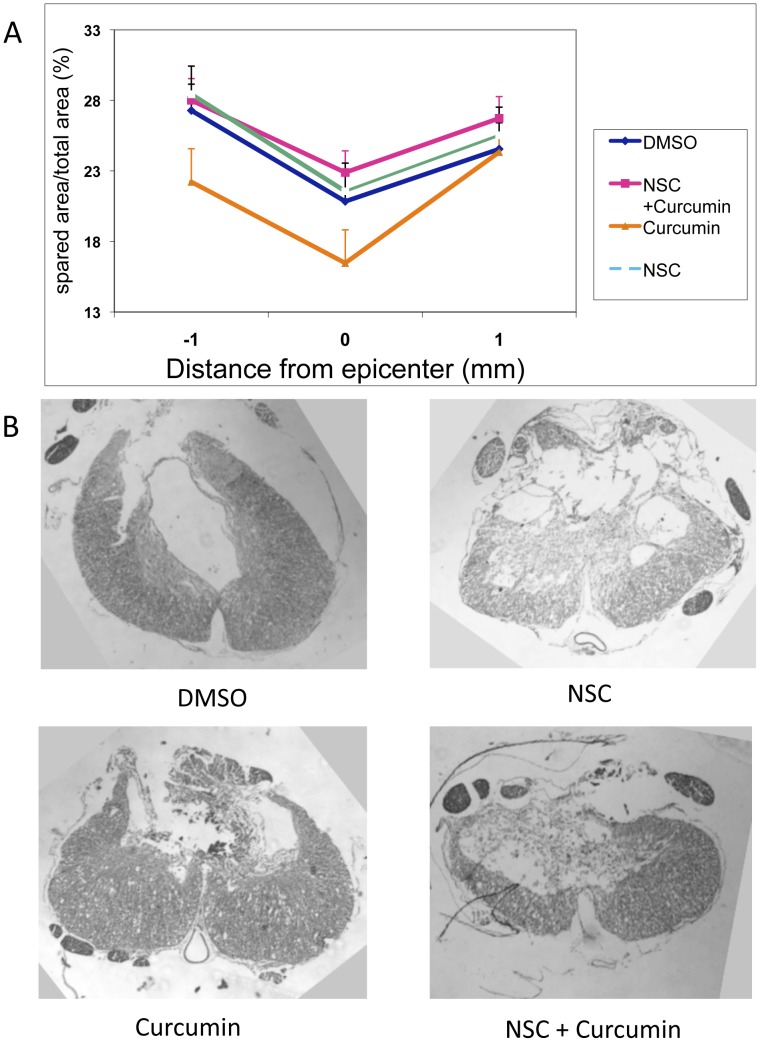
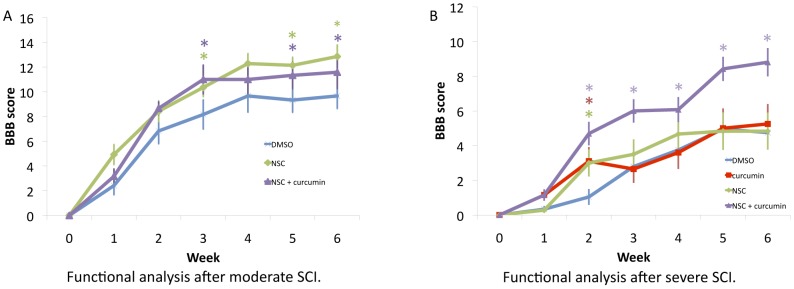
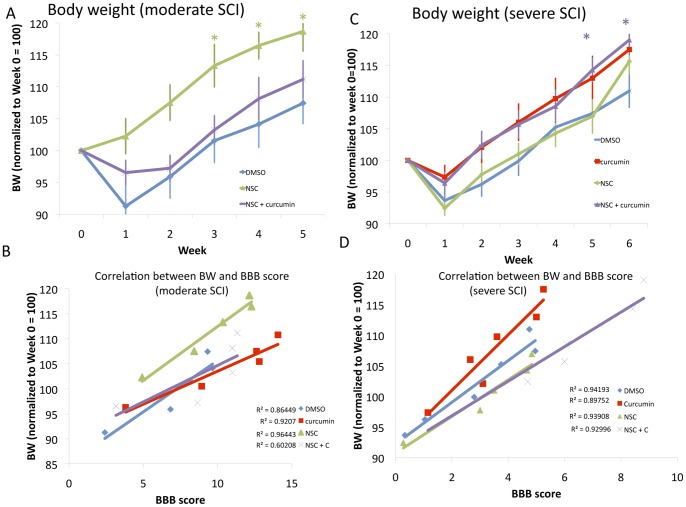
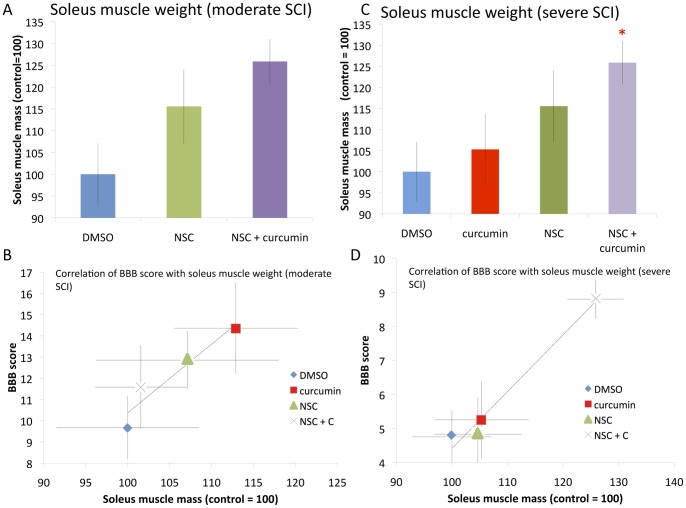
Acute traumatic spinal cord injury (SCI) is marked by the enhanced production of local cytokines and pro-inflammatory substances that induce gliosis and prevent reinnervation. The transplantation of stem cells is a promising treatment strategy for SCI. In order to facilitate functional recovery, we employed stem cell therapy alone or in combination with curcumin, a naturally-occurring anti-inflammatory component of turmeric (Curcuma longa), which potently inhibits NF-κB. Spinal cord contusion following laminectomy (T9-10) was performed using a weight drop apparatus (10 g over a 12.5 or 25 mm distance, representing moderate or severe SCI, respectively) in Sprague-Dawley rats. Neural stem cells (NSC) were isolated from subventricular zone (SVZ) and transplanted at the site of injury with or without curcumin treatment. Functional recovery was assessed by BBB score and body weight gain measured up to 6 weeks following SCI. At the conclusion of the study, the mass of soleus muscle was correlated with BBB score and body weight. Stem cell therapy improved recovery from moderate SCI, however, it had a limited effect on recovery after severe SCI. Curcumin stimulated NSC proliferation in vitro, and in combination with stem cell therapy, induced profound recovery from severe SCI as evidenced by improved functional locomotor recovery, increased body weight, and soleus muscle mass. These findings demonstrate that curcumin in conjunction with stem cell therapy synergistically improves recovery from severe SCI. Furthermore, our results indicate that the effect of curcumin extends beyond its known anti-inflammatory properties to the regulation of stem cell proliferation.
急性创伤性脊髓损伤(SCI)的特征是局部细胞因子和促炎物质的产生增加,这些物质会诱导胶质增生并阻止神经再支配。干细胞移植是一种很有前景的SCI治疗策略。为了促进功能恢复,我们单独使用干细胞疗法或与姜黄素联合使用,姜黄素是姜黄(Curcuma longa)中天然存在的抗炎成分,能有效抑制核因子κB(NF-κB)。在Sprague-Dawley大鼠中,使用重物下落装置(分别在12.5或25毫米的距离上施加10克重量,分别代表中度或重度SCI)进行椎板切除术后(T9 - 10)的脊髓挫伤。从脑室下区(SVZ)分离神经干细胞(NSC),并在损伤部位进行移植,同时进行或不进行姜黄素处理。通过BBB评分和SCI后长达6周测量的体重增加来评估功能恢复情况。在研究结束时,比目鱼肌的质量与BBB评分和体重相关。干细胞疗法改善了中度SCI后的恢复,然而,它对重度SCI后的恢复效果有限。姜黄素在体外刺激NSC增殖,并且与干细胞疗法联合使用时,能诱导重度SCI后的显著恢复,表现为运动功能恢复改善、体重增加和比目鱼肌质量增加。这些发现表明,姜黄素与干细胞疗法协同作用可改善重度SCI后的恢复。此外,我们的结果表明,姜黄素的作用不仅限于其已知的抗炎特性,还能调节干细胞增殖。