Ryan Mandy, Kinghorn Philip, Entwistle Vikki A, Francis Jill J
Health Economics Research Unit, University of Aberdeen, UK. Electronic address: http://www.abdn.ac.uk/heru.
Health Economics Research Unit, University of Aberdeen, UK; Health Economics Unit, University of Birmingham, UK.
Soc Sci Med. 2014 Apr;106(100):194-203. doi: 10.1016/j.socscimed.2014.01.013. Epub 2014 Jan 24.
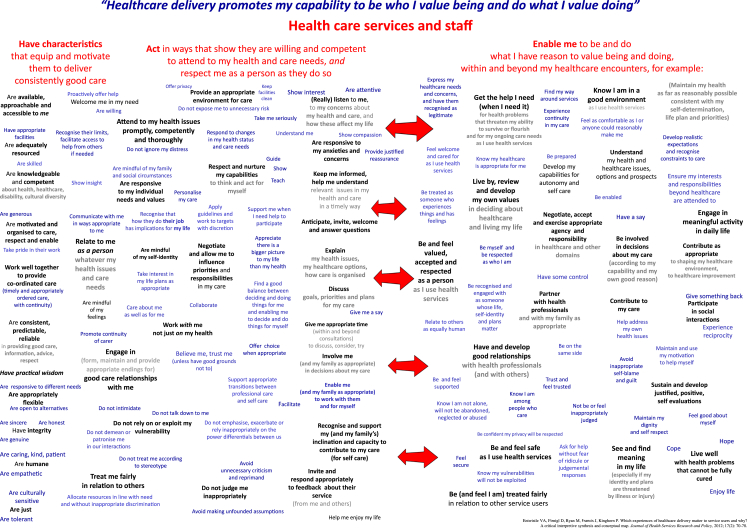
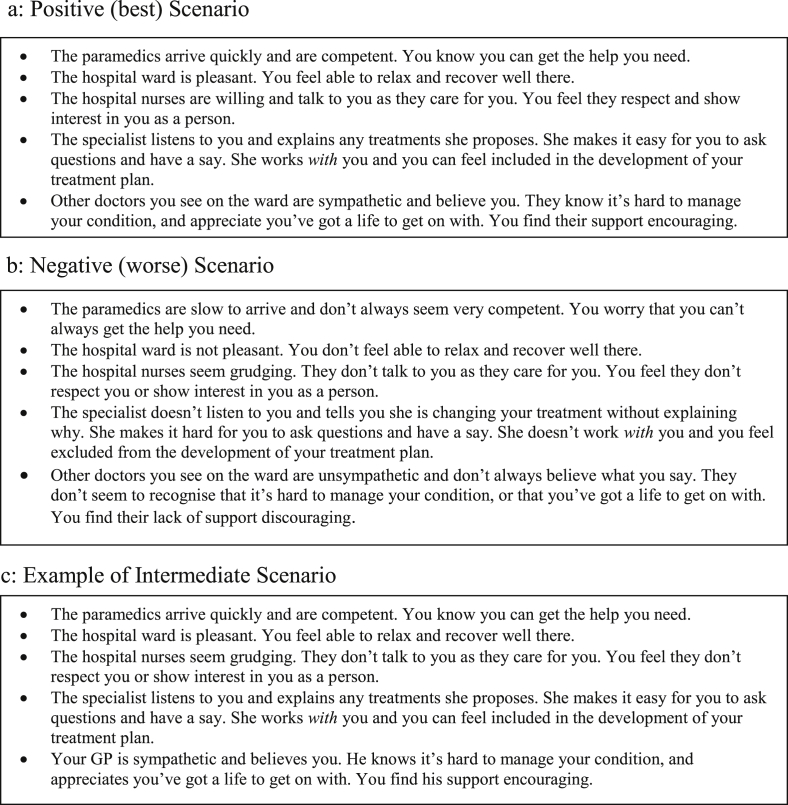
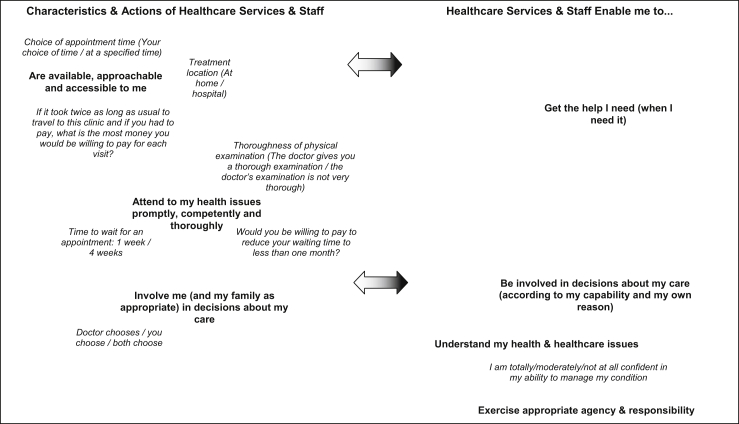
Healthcare policy leaders internationally recognise that people's experiences of healthcare delivery are important, and invest significant resources to monitor and improve them. However, the value of particular aspects of experiences of healthcare delivery - relative to each other and to other healthcare outcomes - is unclear. This paper considers how economic techniques have been and might be used to generate quantitative estimates of the value of particular experiences of healthcare delivery. A recently published conceptual map of patients' experiences served to guide the scope and focus of the enquiry. The map represented both what health services and staff are like and do and what individual patients can feel like, be and do (while they are using services and subsequently). We conducted a systematic search for applications of economic techniques to healthcare delivery. We found that these techniques have been quite widely used to estimate the value of features of healthcare systems and processes (e.g. of care delivery by a nurse rather than a doctor, or of a consultation of 10 minutes rather than 15 minutes), but much less to estimate the value of the implications of these features for patients personally. To inform future research relating to the valuation of experiences of healthcare delivery, we organised a workshop for key stakeholders. Participants undertook and discussed 'exercises' that explored the use of different economic techniques to value descriptions of healthcare delivery that linked processes to what patients felt like and were able to be and do. The workshop identified a number of methodological issues that need careful attention, and highlighted some important concerns about the ways in which quantitative estimates of the value of experiences of healthcare delivery might be used. However the workshop confirmed enthusiasm for efforts to attend directly to the implications of healthcare delivery from patients' perspectives, including in terms of their capabilities.
国际医疗保健政策领导者认识到人们在医疗保健服务过程中的体验很重要,并投入大量资源来监测和改善这些体验。然而,医疗保健服务体验中特定方面的价值——相对于彼此以及相对于其他医疗保健结果——尚不清楚。本文探讨了经济技术如何已经以及可能被用于对医疗保健服务特定体验的价值进行定量估计。最近发布的一份患者体验概念图为该调查的范围和重点提供了指导。该图既展示了医疗服务和工作人员的情况及行为,也展示了个体患者在使用服务期间及之后的感受、状态和行为。我们对经济技术在医疗保健服务中的应用进行了系统搜索。我们发现这些技术已被广泛用于估计医疗保健系统和流程特征的价值(例如护士而非医生提供护理的价值,或10分钟而非15分钟咨询的价值),但用于估计这些特征对患者个人影响的价值的情况则少得多。为了为未来有关医疗保健服务体验估值的研究提供信息参考,我们为关键利益相关者组织了一次研讨会。参与者进行并讨论了“练习”,这些练习探索了使用不同经济技术对将流程与患者的感受、状态和行为联系起来的医疗保健服务描述进行估值。该研讨会确定了一些需要仔细关注的方法学问题,并强调了对医疗保健服务体验价值定量估计可能的使用方式的一些重要担忧。然而,该研讨会证实了人们对直接从患者角度关注医疗保健服务影响(包括在其能力方面)的努力的热情。