Marjuki Henju, Mishin Vasiliy P, Chesnokov Anton P, De La Cruz Juan A, Fry Alicia M, Villanueva Julie, Gubareva Larisa V
Influenza Division, National Center for Immunization and Respiratory Diseases, Centers for Disease Control and Prevention.
Influenza Division, National Center for Immunization and Respiratory Diseases, Centers for Disease Control and Prevention Battelle Memorial Institute, Atlanta, Georgia.
J Infect Dis. 2014 Aug 1;210(3):435-40. doi: 10.1093/infdis/jiu105. Epub 2014 Feb 25.
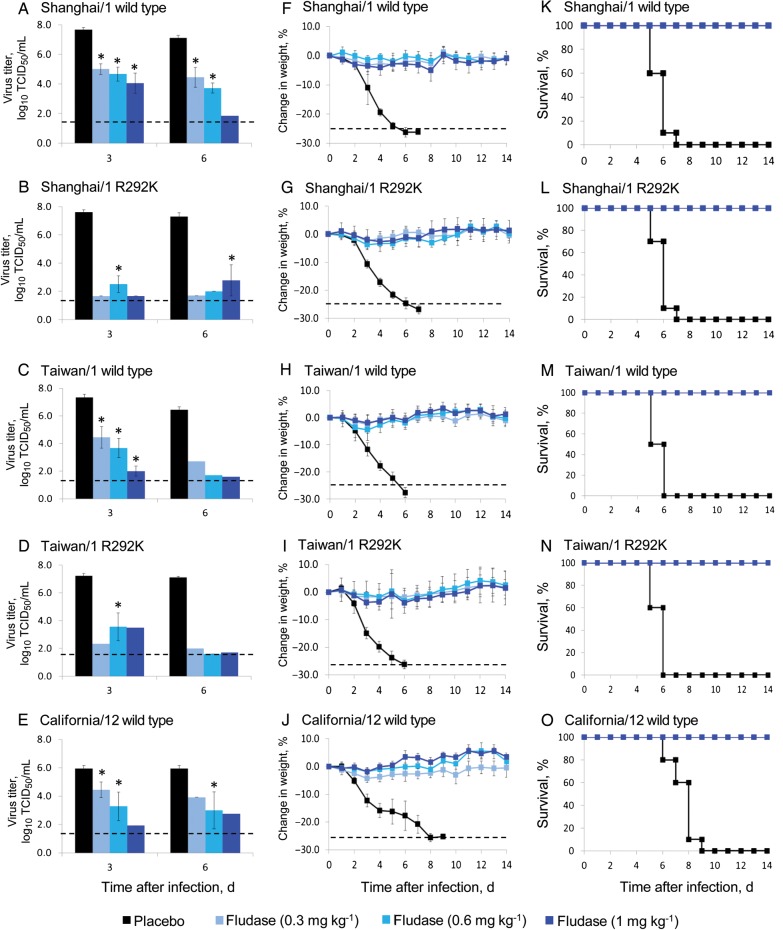
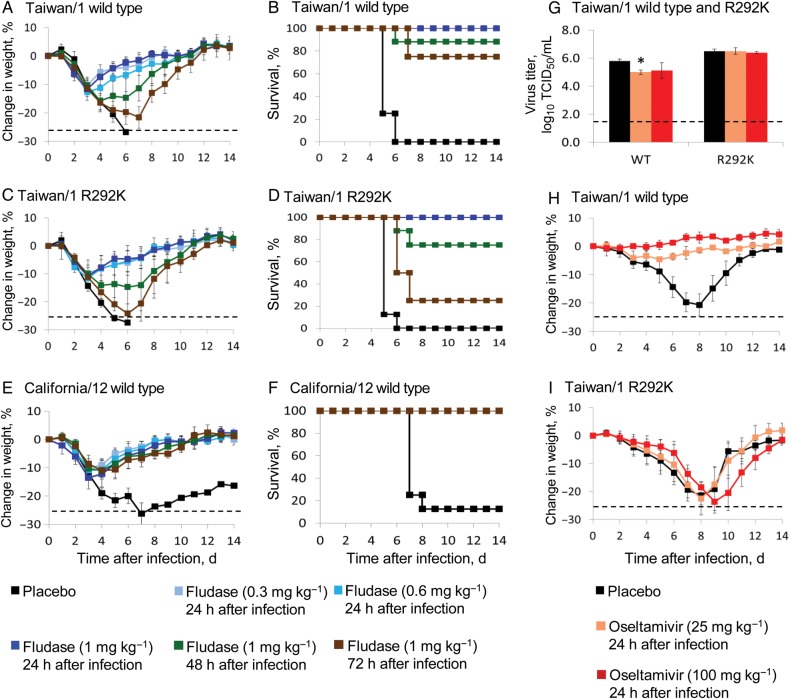
Human infections caused by avian influenza A virus type subtype H7N9 have been associated with substantial morbidity and mortality. Emergence of virus variants carrying markers of decreased susceptibility to neuraminidase inhibitors was reported. Here we show that DAS181 (Fludase), an antiviral drug with sialidase activity, potently inhibited replication of wild-type influenza A(H7N9) and its oseltamivir-resistant R292K variants in mice. A once-daily administration initiated early after lethal infection hampered body weight loss and completely protected mice from lethality. We observed a time-dependent effect for 24-72-hour delayed DAS181 treatments on morbidity and mortality. The results warrant further investigation of DAS181 for influenza treatment.
甲型H7N9禽流感病毒引起的人类感染与严重的发病率和死亡率相关。有报道称出现了携带对神经氨酸酶抑制剂敏感性降低标志物的病毒变体。在此我们表明,具有唾液酸酶活性的抗病毒药物DAS181(弗洛达酶)能有效抑制野生型甲型H7N9流感病毒及其耐奥司他韦的R292K变体在小鼠体内的复制。在致死性感染后早期开始每日一次给药可抑制体重减轻,并完全保护小鼠免于死亡。我们观察到DAS181治疗延迟24至72小时对发病率和死亡率有时间依赖性影响。这些结果值得对DAS181用于流感治疗进行进一步研究。