Discovery Biology, Oncology Product Creation Unit, Eisai Co., Ltd, Tsukuba, Ibaraki 300-2635, Japan.
Biomarkers and Personalized Medicine, Core Function Unit, Eisai Co., Ltd, Tsukuba, Ibaraki 300-2635, Japan.
Br J Cancer. 2014 Mar 18;110(6):1497-505. doi: 10.1038/bjc.2014.80. Epub 2014 Feb 25.
Eribulin mesilate (eribulin), a non-taxane microtubule dynamics inhibitor, has shown trends towards greater overall survival (OS) compared with progression-free survival in late-stage metastatic breast cancer patients in the clinic. This finding suggests that eribulin may have additional, previously unrecognised antitumour mechanisms beyond its established antimitotic activity. To investigate this possibility, eribulin's effects on the balance between epithelial-mesenchymal transition (EMT) and mesenchymal-epithelial transition (MET) in human breast cancer cells were investigated.
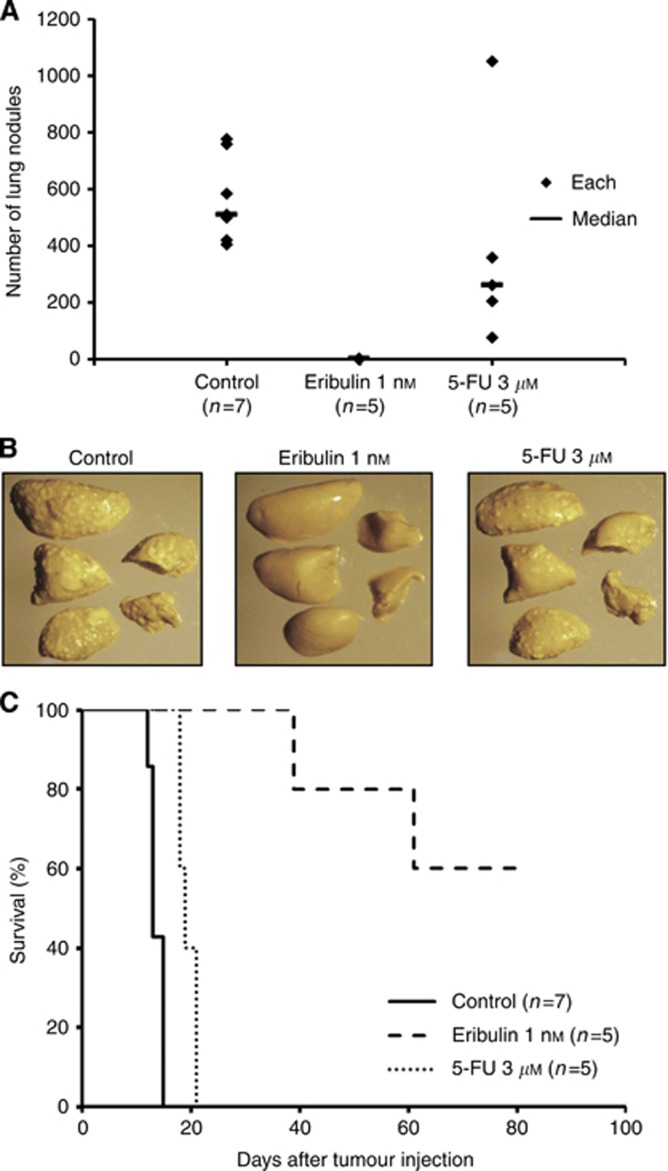
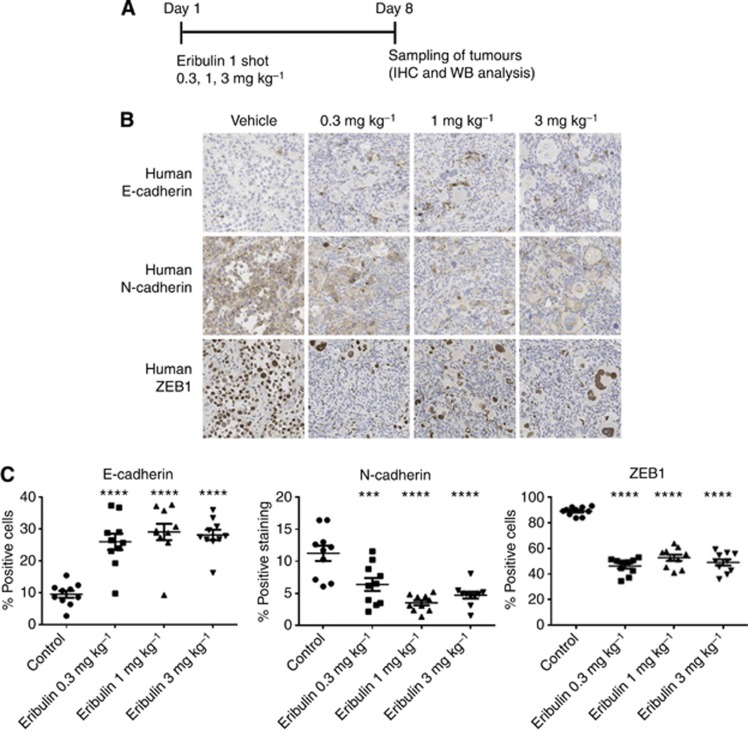
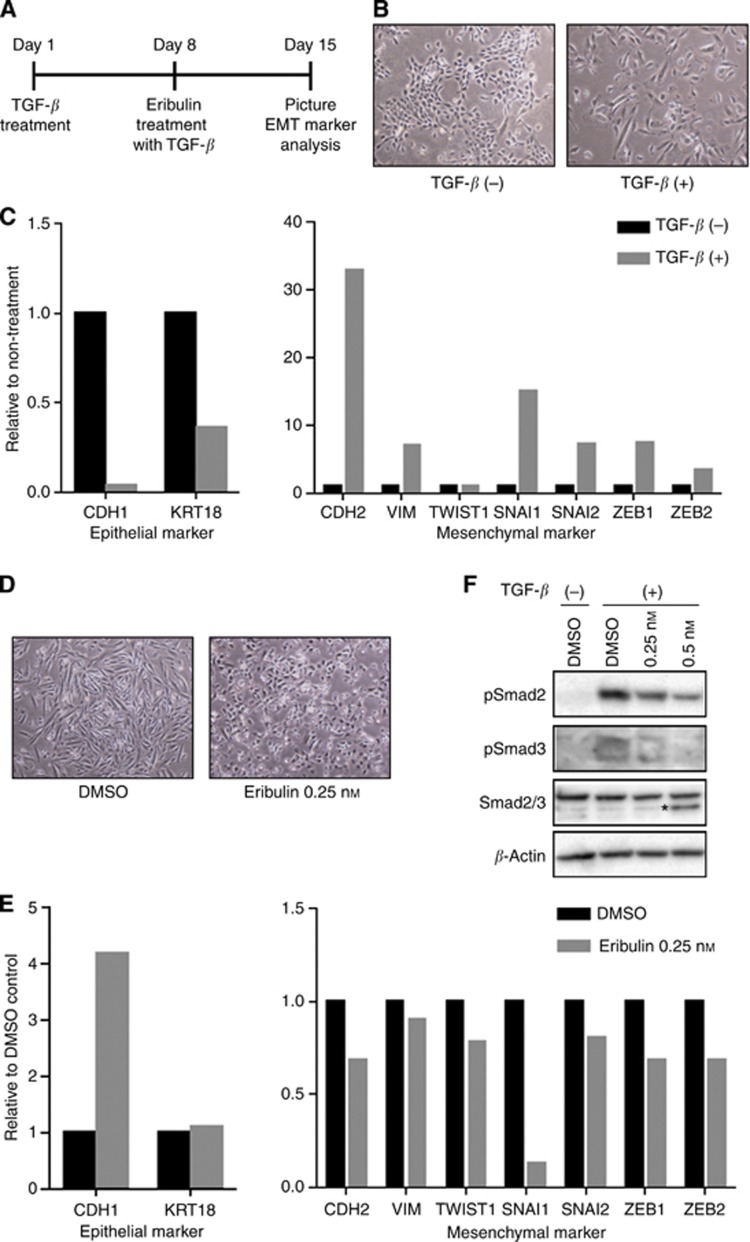
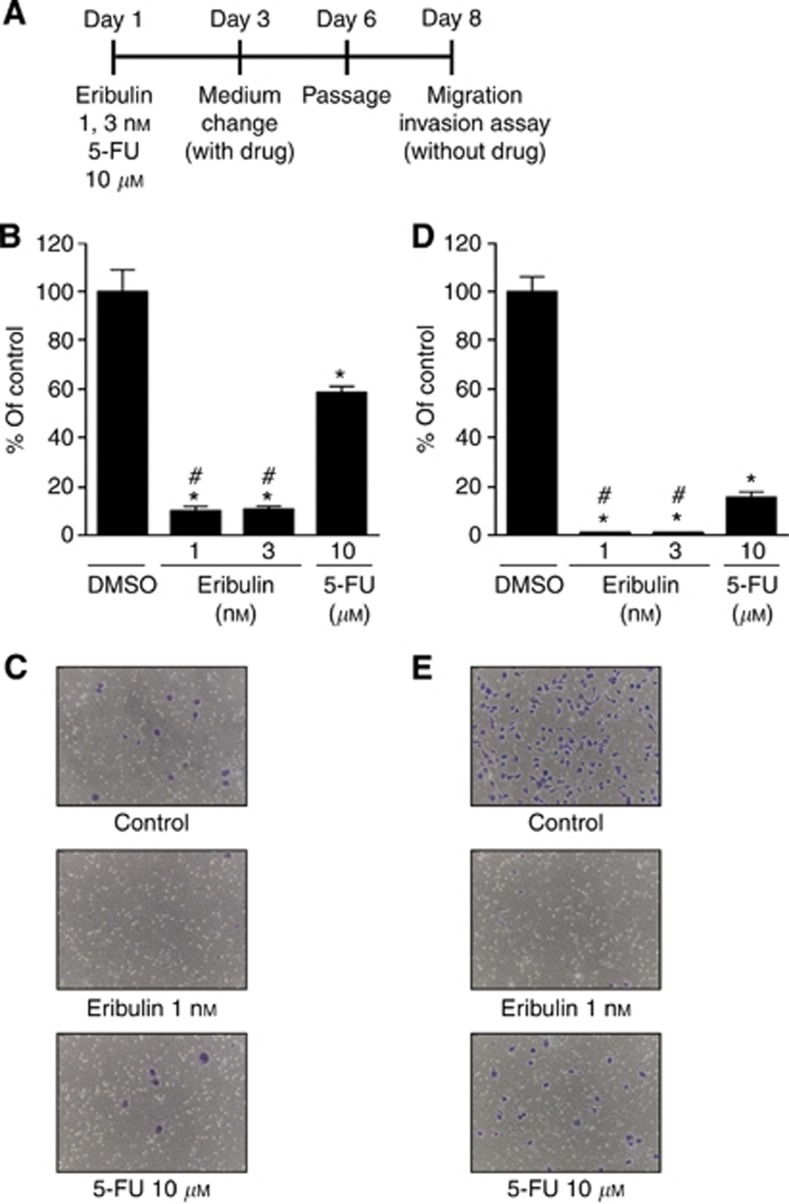
Triple negative breast cancer (TNBC) cells, which are oestrogen receptor (ER-)/progesterone receptor (PR-)/human epithelial growth receptor 2 (HER2-) and have a mesenchymal phenotype, were treated with eribulin for 7 days, followed by measurement of EMT-related gene and protein expression changes in the surviving cells by quantitative real-time PCR (qPCR) and immunoblot, respectively. In addition, proliferation, migration, and invasion assays were also conducted in eribulin-treated cells. To investigate the effects of eribulin on TGF-β/Smad signalling, the phosphorylation status of Smad proteins was analysed. In vivo, the EMT/MET status of TNBC xenografts in mice treated with eribulin was examined by qPCR, immunoblot, and immunohistochemical analysis. Finally, an experimental lung metastasis model was utilised to gauge the metastatic activity of eribulin-treated TNBC in the in vivo setting.
Treatment of TNBC cells with eribulin in vitro led to morphological changes consistent with transition from a mesenchymal to an epithelial phenotype. Expression analyses of EMT markers showed that eribulin treatment led to decreased expression of several mesenchymal marker genes, together with increased expression of several epithelial markers. In the TGF-β induced EMT model, eribulin treatment reversed EMT, coincident with inhibition of Smad2 and Smad3 phosphorylation. Consistent with these changes, TNBC cells treated with eribulin for 7 days showed decreased capacity for in vitro migration and invasiveness. In in vivo xenograft models, eribulin treatment reversed EMT and induced MET as assessed by qPCR, immunoblot, and immunohistochemical analyses of epithelial and mesenchymal marker proteins. Finally, surviving TNBC cells pretreated in vitro with eribulin for 7 days led to decreased numbers of lung metastasis when assessed in an in vivo experimental metastasis model.
Eribulin exerted significant effects on EMT/MET-related pathway components in human breast cancer cells in vitro and in vivo, consistent with a phenotypic switch from mesenchymal to epithelial states, and corresponding to observed decreases in migration and invasiveness in vitro as well as experimental metastasis in vivo. These preclinical findings may provide a plausible scientific basis for clinical observations of prolonged OS by suppression of further spread of metastasis in breast cancer patients treated with eribulin.
盐酸伊立替康(艾立布林)是一种非紫杉烷微管动力学抑制剂,在晚期转移性乳腺癌患者的临床研究中,与无进展生存期相比,其总体生存期(OS)有延长趋势。这一发现表明,艾立布林可能具有除其已确立的抗有丝分裂活性之外的其他先前未被认识的抗肿瘤机制。为了研究这种可能性,研究了艾立布林对人乳腺癌细胞中上皮间质转化(EMT)和间质上皮转化(MET)之间平衡的影响。
用艾立布林处理三阴性乳腺癌(TNBC)细胞 7 天,这些细胞雌激素受体(ER-)/孕激素受体(PR-)/人表皮生长因子受体 2(HER2-)且具有间质表型,然后通过定量实时 PCR(qPCR)和免疫印迹分别检测存活细胞中 EMT 相关基因和蛋白表达变化。此外,还在艾立布林处理的细胞中进行了增殖、迁移和侵袭实验。为了研究艾立布林对 TGF-β/Smad 信号通路的影响,分析了 Smad 蛋白的磷酸化状态。在体内,通过 qPCR、免疫印迹和免疫组织化学分析检测艾立布林处理的小鼠 TNBC 异种移植物的 EMT/MET 状态。最后,利用实验性肺转移模型来评估艾立布林处理的 TNBC 在体内的转移活性。
体外用艾立布林处理 TNBC 细胞导致形态学变化,与从间质表型向上皮表型的转变一致。EMT 标志物的表达分析表明,艾立布林处理导致几个间质标志物基因的表达降低,同时几个上皮标志物的表达增加。在 TGF-β诱导的 EMT 模型中,艾立布林处理逆转了 EMT,同时抑制了 Smad2 和 Smad3 的磷酸化。与这些变化一致,用艾立布林处理 7 天的 TNBC 细胞体外迁移和侵袭能力降低。在体内异种移植模型中,艾立布林处理通过 qPCR、免疫印迹和上皮和间质标志物蛋白的免疫组织化学分析逆转 EMT 并诱导 MET。最后,在体内实验性转移模型中,用艾立布林预处理 7 天的存活 TNBC 细胞导致肺转移数量减少。
艾立布林在体外和体内对人乳腺癌细胞中的 EMT/MET 相关途径成分产生了显著影响,与从间质表型向上皮表型的表型转变一致,并与体外迁移和侵袭能力的降低以及体内实验性转移的减少相对应。这些临床前发现可能为临床观察到的乳腺癌患者用艾立布林治疗后抑制转移进一步扩散导致的 OS 延长提供合理的科学依据。