Sénage Thomas, Février Dorothée, Michel Magali, Pichot Emmanuel, Duveau Daniel, Tsui Steven, Trochu Jean Noel, Roussel Jean Christian
From the *Department of Thoracic and Cardiovascular Surgery, Thorax Institut, Nantes Hospital University, Nantes, France; and †Department of Thoracic and Cardiovascular Surgery, Papworth Hospital NHS Foundation, Cambridge, United Kingdom.
ASAIO J. 2014 Mar-Apr;60(2):140-7. doi: 10.1097/MAT.0000000000000045.
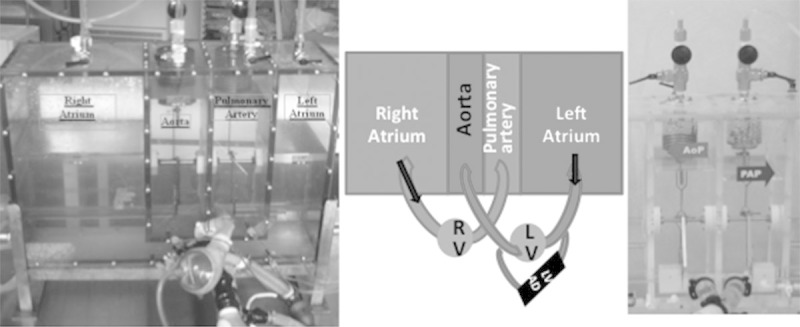
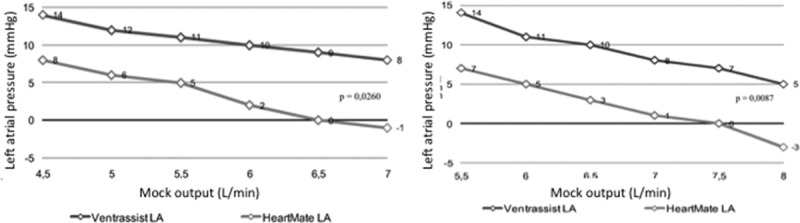
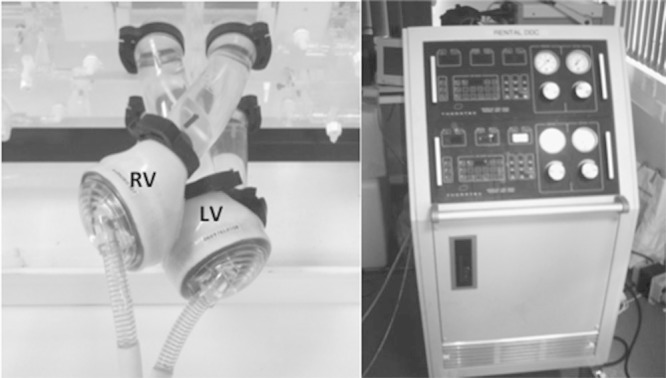
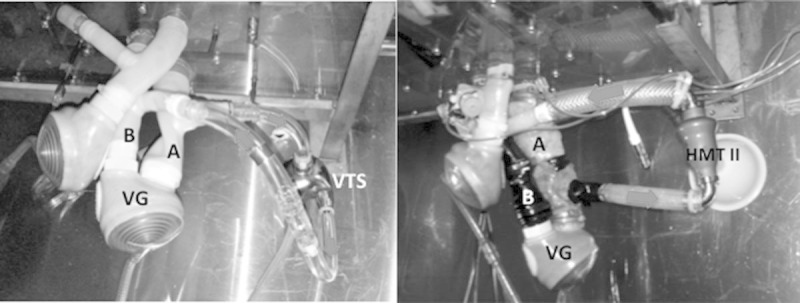
Hemodynamic performances comparisons between different types of left ventricular assist devices (LVADs) remain difficult in a clinical context. The aim of this study was to create an experimental model to assess and compare two types of LVAD under hemodynamic conditions that simulated physical effort and pulmonary hypertension. An experimental mock circulatory system was created to simulate the systemic and pulmonary circulations and consisted of pulsatile left and right cardiac simulators (cardiowest pump), air/water tanks to model compliances, and tubes to model the venous and arterial resistances. Two types of continuous-flow ventricular assist devices were connected to this pulsated model: an axial flow pump, Heartmate II (HTM II), and a centrifugal pump, VentrAssist (VTA). The hemodynamic conditions at rest and during exercise were replicated. Mean aortic pressures were not significantly different at rest and during effort but mean flow under maximum pump speed was higher with HTM II (13 L vs. 10 L, p = 0.02). Left atrial pressure was lower at rest and during effort for the HTM II (11 mm Hg vs. 3 mm Hg, p = 0.02 and 9 mm Hg vs. 2 mm Hg, p = 0.008) than with the VTA, but with greater risk of left-ventricle suck-down for the axial flow. Power consumption for a similar flow was lower with the VTA during rest (4.7 W vs. 6.9 W, p = 0.002) and during effort (4.3 W vs. 6.6 W, p = 0.008). In case of high pulmonary vascular resistance with preserved right ventricular function, lower right ventricular pressure was obtained with HTM II (21 mm Hg vs. 28 mm Hg, p = 0.03). Observed results are in favor of a better discharge of the left and right cavities with the HTM II compared to the VTA yet with a higher risk of left cavity collapse occurrence.
在临床环境中,比较不同类型的左心室辅助装置(LVAD)的血流动力学性能仍然很困难。本研究的目的是创建一个实验模型,以评估和比较两种类型的LVAD在模拟体力活动和肺动脉高压的血流动力学条件下的性能。创建了一个实验性模拟循环系统来模拟体循环和肺循环,该系统由脉动式左、右心脏模拟器(Cardiowest泵)、用于模拟顺应性的空气/水箱以及用于模拟静脉和动脉阻力的管道组成。两种类型的连续流心室辅助装置连接到这个脉动模型上:轴流泵Heartmate II(HTM II)和离心泵VentrAssist(VTA)。复制了静息和运动时的血流动力学条件。静息和运动时平均主动脉压无显著差异,但HTM II在最大泵速下的平均流量更高(13升对10升,p = 0.02)。与VTA相比,HTM II在静息和运动时的左心房压力更低(分别为11毫米汞柱对3毫米汞柱,p = 0.02;9毫米汞柱对2毫米汞柱,p = 0.008),但轴流泵导致左心室吸瘪的风险更高。静息时(4.7瓦对6.9瓦,p = 0.002)和运动时(4.3瓦对6.6瓦,p = 0.008),VTA在相似流量下的功耗更低。在肺动脉血管阻力高且右心室功能保留的情况下,HTM II获得的右心室压力更低(21毫米汞柱对28毫米汞柱,p = 0.03)。观察结果表明,与VTA相比,HTM II对左、右心腔的排空效果更好,但左腔塌陷的风险更高。