Krisko Anita, Copic Tea, Gabaldón Toni, Lehner Ben, Supek Fran
Genome Biol. 2014 Mar 3;15(3):R44. doi: 10.1186/gb-2014-15-3-r44.
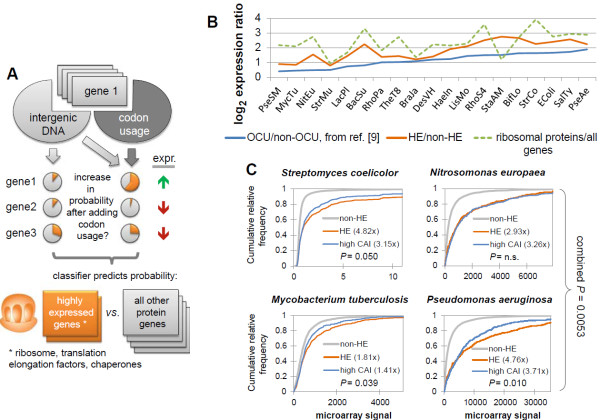
The genetic code is redundant, meaning that most amino acids can be encoded by more than one codon. Highly expressed genes tend to use optimal codons to increase the accuracy and speed of translation. Thus, codon usage biases provide a signature of the relative expression levels of genes, which can, uniquely, be quantified across the domains of life.
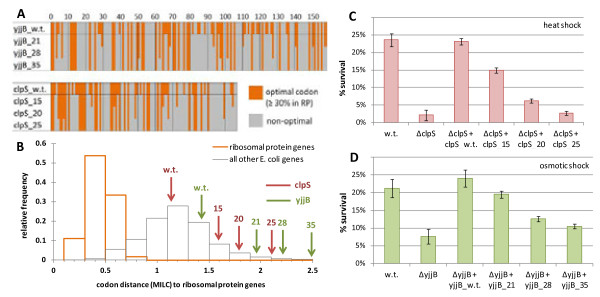
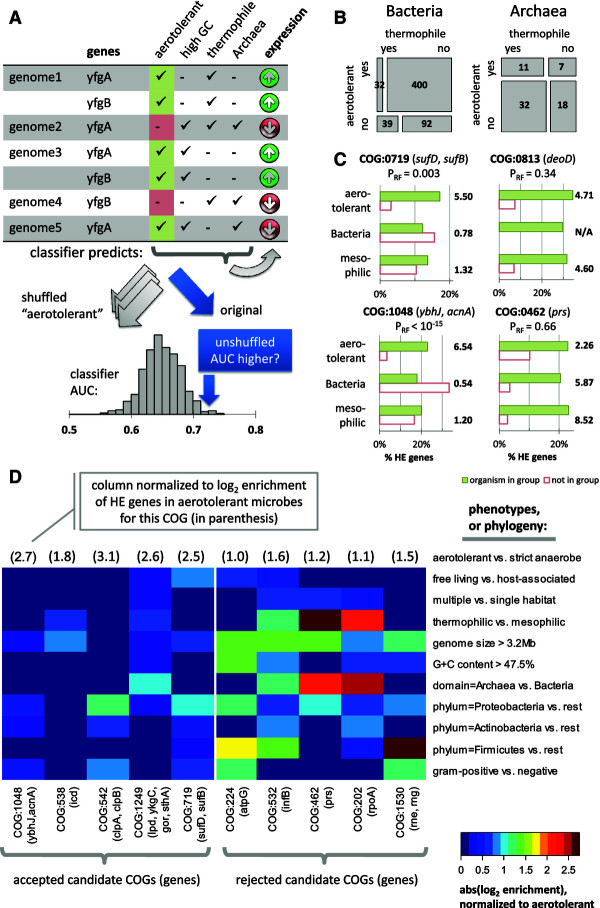
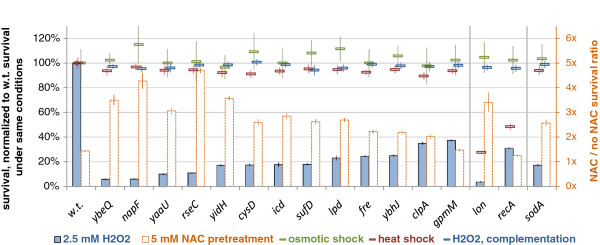
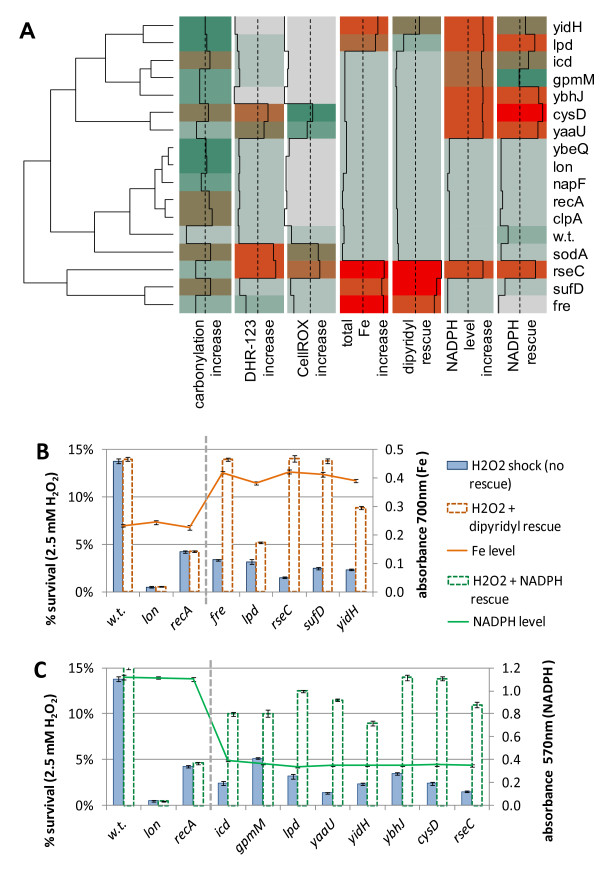
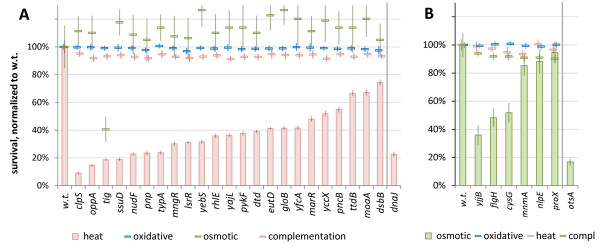
Here we describe a general statistical framework to exploit this phenomenon and to systematically associate genes with environments and phenotypic traits through changes in codon adaptation. By inferring evolutionary signatures of translation efficiency in 911 bacterial and archaeal genomes while controlling for confounding effects of phylogeny and inter-correlated phenotypes, we linked 187 gene families to 24 diverse phenotypic traits. A series of experiments in Escherichia coli revealed that 13 of 15, 19 of 23, and 3 of 6 gene families with changes in codon adaptation in aerotolerant, thermophilic, or halophilic microbes. Respectively, confer specific resistance to, respectively, hydrogen peroxide, heat, and high salinity. Further, we demonstrate experimentally that changes in codon optimality alone are sufficient to enhance stress resistance. Finally, we present evidence that multiple genes with altered codon optimality in aerobes confer oxidative stress resistance by controlling the levels of iron and NAD(P)H.
Taken together, these results provide experimental evidence for a widespread connection between changes in translation efficiency and phenotypic adaptation. As the number of sequenced genomes increases, this novel genomic context method for linking genes to phenotypes based on sequence alone will become increasingly useful.
遗传密码具有冗余性,这意味着大多数氨基酸可由多个密码子编码。高表达基因倾向于使用最优密码子来提高翻译的准确性和速度。因此,密码子使用偏好提供了基因相对表达水平的特征,这种特征能够独特地在生命各领域进行量化。
在此,我们描述了一个通用的统计框架,以利用这一现象,并通过密码子适应性变化将基因与环境及表型特征系统地关联起来。在控制系统发育和相互关联表型的混杂效应的同时,通过推断911个细菌和古菌基因组中翻译效率的进化特征,我们将187个基因家族与24种不同的表型特征联系起来。在大肠杆菌中进行的一系列实验表明,在耐氧、嗜热或嗜盐微生物中密码子适应性发生变化的15个基因家族中的13个、23个基因家族中的19个以及6个基因家族中的3个,分别赋予了对过氧化氢、热和高盐度的特异性抗性。此外,我们通过实验证明,仅密码子最优性的变化就足以增强抗逆性。最后,我们提供证据表明,需氧生物中多个密码子最优性发生改变的基因通过控制铁和NAD(P)H的水平赋予氧化应激抗性。
综上所述,这些结果为翻译效率变化与表型适应之间广泛存在的联系提供了实验证据。随着测序基因组数量的增加,这种仅基于序列将基因与表型联系起来的新型基因组背景方法将变得越来越有用。