Sitaras Ioannis, Kalthoff Donata, Beer Martin, Peeters Ben, de Jong Mart C M
Quantitative Veterinary Epidemiology, Department of Animal Sciences, Wageningen University, Wageningen, The Netherlands ; Department of Virology, Central Veterinary Institute of Wageningen University and Research Centre, Lelystad, The Netherlands.
Institute of Diagnostic Virology, Friedrich-Loeffler Institut, Greifswald-Insel Riems, Germany.
PLoS One. 2014 Feb 25;9(2):e84628. doi: 10.1371/journal.pone.0084628. eCollection 2014.
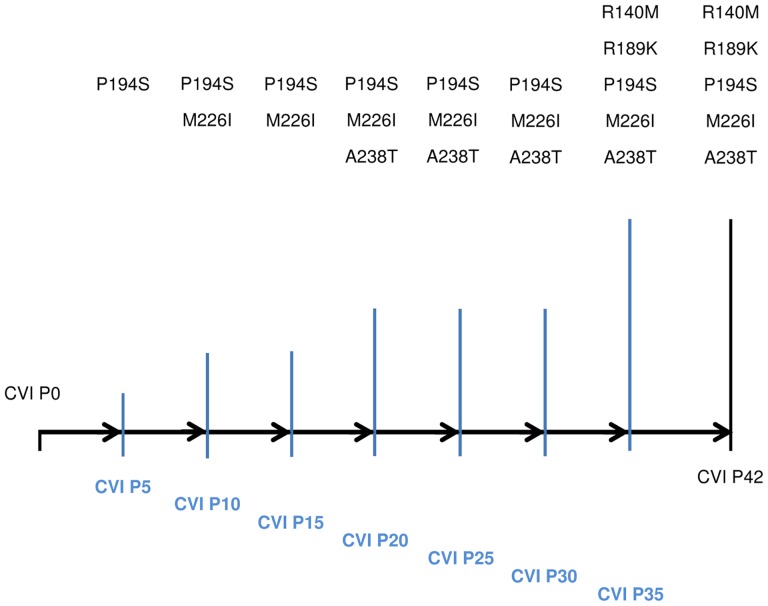
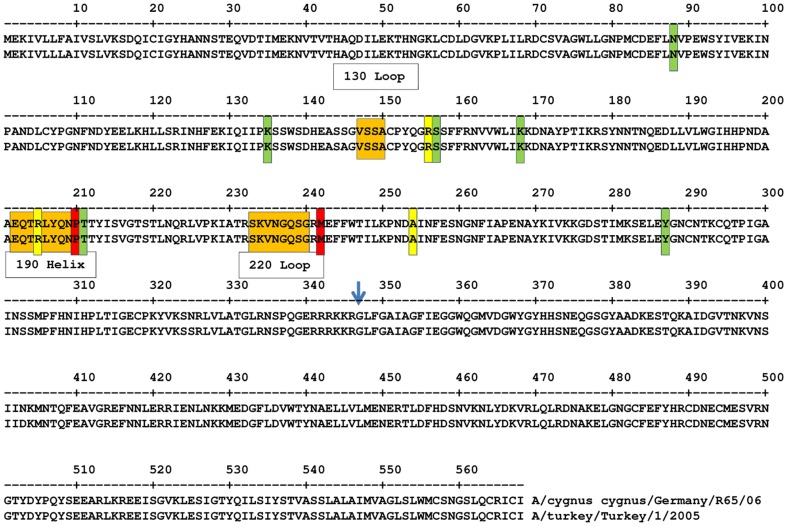
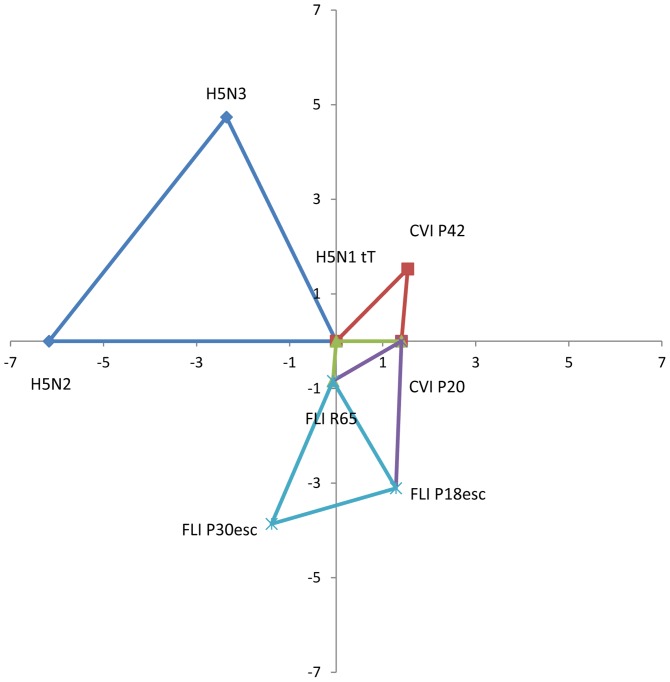
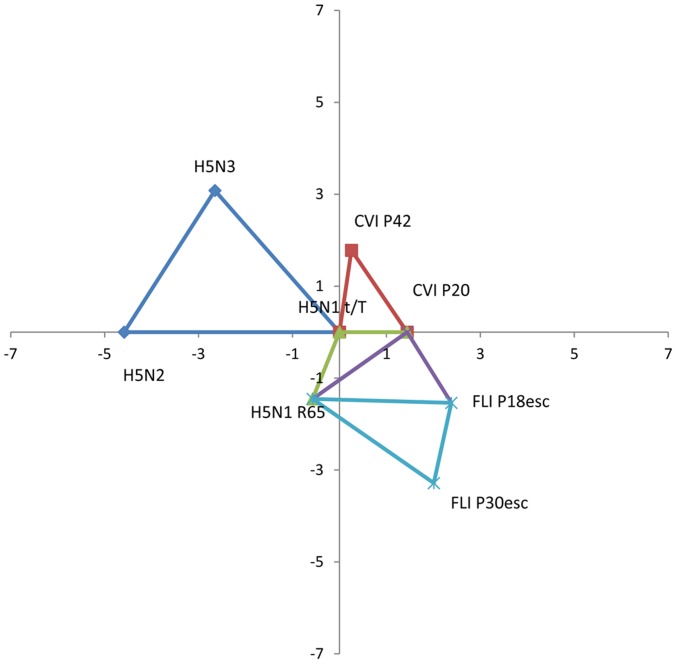
Evolution of Avian Influenza (AI) viruses--especially of the Highly Pathogenic Avian Influenza (HPAI) H5N1 subtype--is a major issue for the poultry industry. HPAI H5N1 epidemics are associated with huge economic losses and are sometimes connected to human morbidity and mortality. Vaccination (either as a preventive measure or as a means to control outbreaks) is an approach that splits the scientific community, due to the risk of it being a potential driving force in HPAI evolution through the selection of mutants able to escape vaccination-induced immunity. It is therefore essential to study how mutations are selected due to immune pressure. To this effect, we performed an in vitro selection of mutants from HPAI A/turkey/Turkey/1/05 (H5N1), using immune pressure from homologous polyclonal sera. After 42 rounds of selection, we identified 5 amino acid substitutions in the Haemagglutinin (HA) protein, most of which were located in areas of antigenic importance and suspected to be prone to selection pressure. We report that most of the mutations took place early in the selection process. Finally, our antigenic cartography studies showed that the antigenic distance between the selected isolates and their parent strain increased with passage number.
禽流感(AI)病毒的进化,尤其是高致病性禽流感(HPAI)H5N1亚型病毒的进化,是家禽业面临的一个主要问题。HPAI H5N1疫情会造成巨大的经济损失,有时还与人类发病和死亡有关。疫苗接种(无论是作为预防措施还是控制疫情的手段)是一种在科学界存在分歧的方法,因为它有可能通过选择能够逃避疫苗诱导免疫的突变体,成为HPAI进化的潜在驱动力。因此,研究免疫压力如何选择突变体至关重要。为此,我们利用同源多克隆血清产生的免疫压力,对HPAI A/火鸡/土耳其/1/05(H5N1)病毒进行了体外突变体筛选。经过42轮筛选,我们在血凝素(HA)蛋白中鉴定出5个氨基酸替换,其中大部分位于抗原重要区域,并且怀疑容易受到选择压力的影响。我们报告称,大多数突变发生在筛选过程的早期。最后,我们的抗原图谱研究表明,所选分离株与其亲本菌株之间的抗原距离随着传代次数的增加而增大。