Division of International Health, Public Health, Graduate School of Medical and Dental Sciences, Niigata University, Niigata, Japan.
PLoS One. 2012;7(6):e36455. doi: 10.1371/journal.pone.0036455. Epub 2012 Jun 27.
Pandemic influenza A(H1N1) 2009 virus was first detected in Japan in May 2009 and continued to circulate in the 2010-2011 season. This study aims to characterize human influenza viruses circulating in Japan in the pandemic and post-pandemic periods and to determine the prevalence of antiviral-resistant viruses.
Respiratory specimens were collected from patients with influenza-like illness on their first visit at outpatient clinics during the 2009-2010 and 2010-2011 influenza seasons. Cycling probe real-time PCR assays were performed to screen for antiviral-resistant strains. Sequencing and phylogenetic analysis of the HA and NA genes were done to characterize circulating strains.
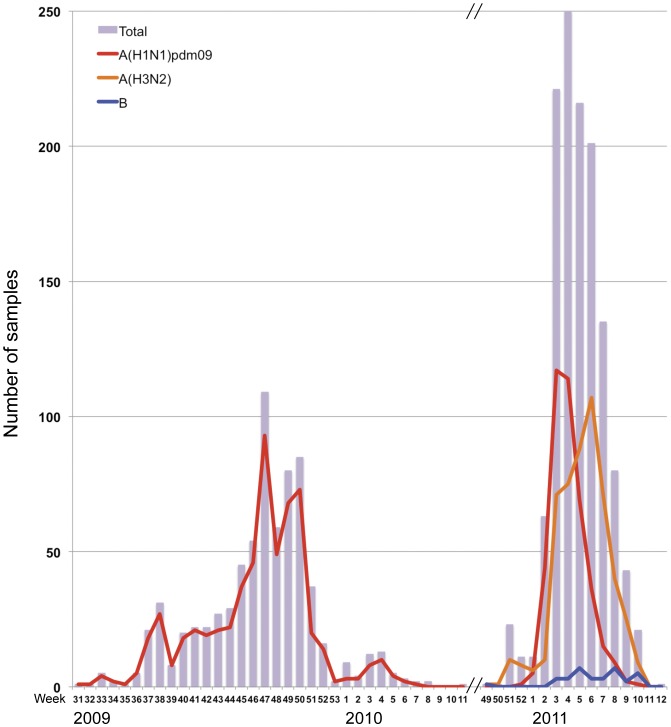
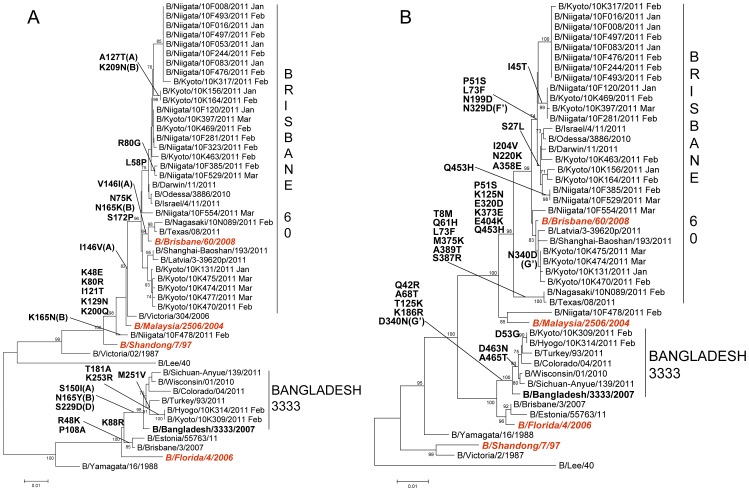
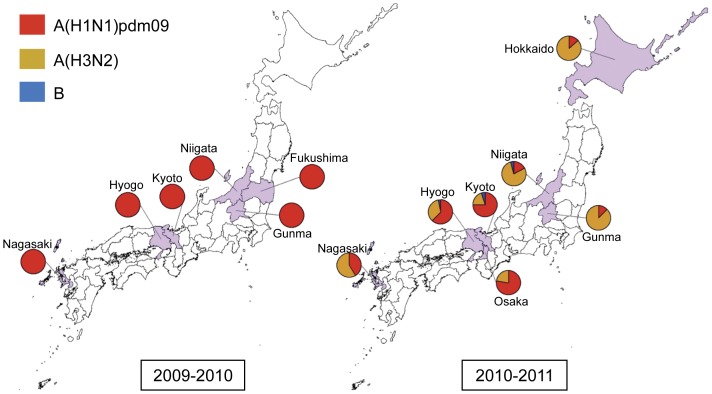
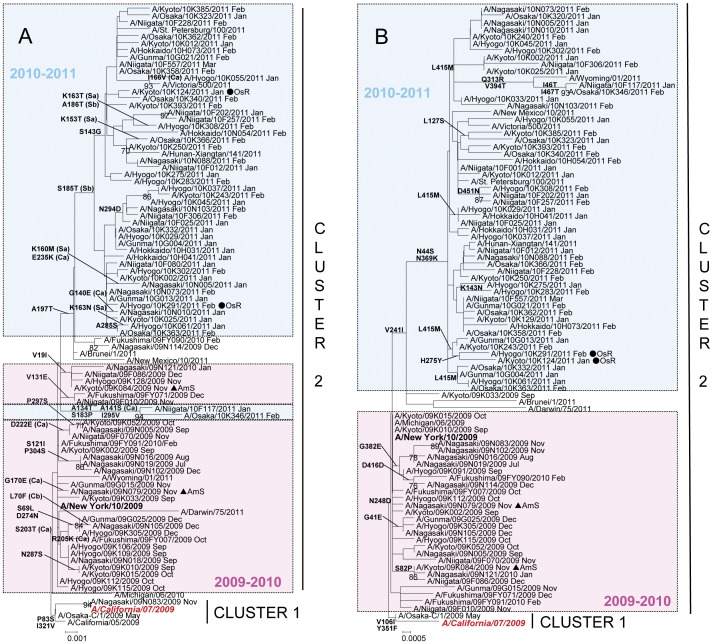
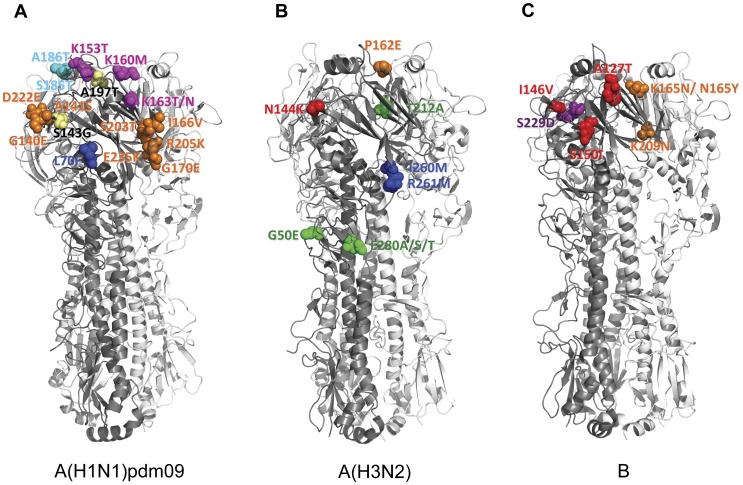
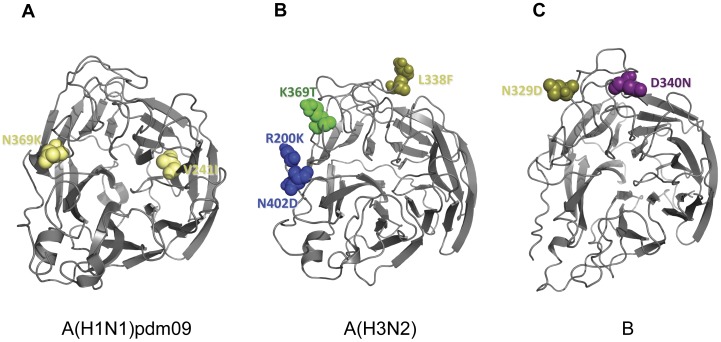
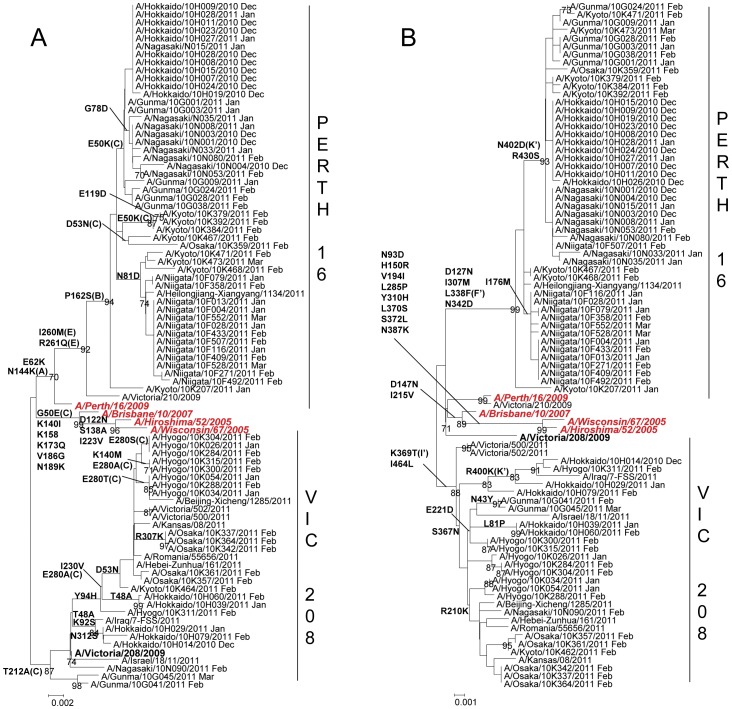
In the pandemic period (2009-2010), the pandemic influenza A(H1N1) 2009 virus was the only circulating strain isolated. None of the 601 A(H1N1)pdm09 virus isolates had the H275Y substitution in NA (oseltamivir resistance) while 599/601 isolates (99.7%) had the S31N substitution in M2 (amantadine resistance). In the post-pandemic period (2010-2011), cocirculation of different types and subtypes of influenza viruses was observed. Of the 1,278 samples analyzed, 414 (42.6%) were A(H1N1)pdm09, 525 (54.0%) were A(H3N2) and 33 (3.4%) were type-B viruses. Among A(H1N1)pdm09 isolates, 2 (0.5%) were oseltamivir-resistant and all were amantadine-resistant. Among A(H3N2) viruses, 520 (99.0%) were amantadine-resistant. Sequence and phylogenetic analyses of A(H1N1)pdm09 viruses from the post-pandemic period showed further evolution from the pandemic period viruses. For viruses that circulated in 2010-2011, strain predominance varied among prefectures. In Hokkaido, Niigata, Gunma and Nagasaki, A(H3N2) viruses (A/Perth/16/2009-like) were predominant whereas, in Kyoto, Hyogo and Osaka, A(H1N1)pdm09 viruses (A/New_York/10/2009-like) were predominant. Influenza B Victoria(HA)-Yamagata(NA) reassortant viruses (B/Brisbane/60/2008-like) were predominant while a small proportion was in Yamagata lineage. Genetic variants with mutations at antigenic sites were identified in A(H1N1)pdm09, A(H3N2) and type-B viruses in the 2010-2011 season but did not show a change in antigenicity when compared with respective vaccine strains.
甲型 H1N1 流感病毒于 2009 年 5 月在日本首次被发现,并在 2010-2011 年流感季节继续传播。本研究旨在描述大流行和大流行后时期在日本流行的人类流感病毒,并确定具有抗药性的病毒的流行率。
在 2009-2010 年和 2010-2011 年流感季节,在门诊患者首次就诊时采集流感样疾病患者的呼吸道标本。进行循环探针实时 PCR 检测以筛选具有抗药性的菌株。对 HA 和 NA 基因进行测序和系统发育分析,以描述流行株。
在大流行时期(2009-2010 年),仅分离到甲型 H1N1 2009 流感大流行病毒。601 株 A(H1N1)pdm09 病毒分离株中均未发现 NA 中的 H275Y 取代(奥司他韦耐药),而 599/601 株(99.7%)在 M2 中具有 S31N 取代(金刚烷胺耐药)。在大流行后时期(2010-2011 年),观察到不同类型和亚型的流感病毒同时流行。在分析的 1278 个样本中,414 个(42.6%)为 A(H1N1)pdm09,525 个(54.0%)为 A(H3N2),33 个(3.4%)为 B 型病毒。在 A(H1N1)pdm09 分离株中,有 2 株(0.5%)为奥司他韦耐药,均为金刚烷胺耐药。在 A(H3N2)病毒中,有 520 株(99.0%)对金刚烷胺耐药。对大流行后时期 A(H1N1)pdm09 病毒的序列和系统发育分析表明,其进一步进化来自大流行时期的病毒。在 2010-2011 年流行的病毒中,各县的优势株不同。在北海道、新泻、群马和长崎,A(H3N2)病毒(A/Perth/16/2009 样)占优势,而在京都、兵库和大阪,A(H1N1)pdm09 病毒(A/New_York/10/2009 样)占优势。B/Brisbane/60/2008 样的乙型流感 Victoria(HA)-Yamagata(NA)重组病毒占优势,而 Yamagata 谱系的比例较小。在 2010-2011 年季节,A(H1N1)pdm09、A(H3N2)和 B 型病毒中发现了具有抗原位点突变的遗传变异体,但与各自的疫苗株相比,抗原性没有变化。