Lin Bin, Wang Yufeng, Wang Zhen, Tan Huilian, Kong Xianghua, Shu Yang, Zhang Yuchao, Huang Yun, Zhu Yufei, Xu Heng, Wang Zhiqiang, Wang Ping, Ning Guang, Kong Xiangyin, Hu Guohong, Hu Landian
The Key Laboratory of Stem Cell Biology, Institute of Health Sciences, Shanghai Jiao Tong University School of Medicine (SJTUSM) and Shanghai Institutes for Biological Sciences (SIBS), Chinese Academy of Sciences (CAS), Shanghai, People's Republic of China.
Diagnosis and Treatment Center of Congenital Heart Disease, the First Hospital of Hebei Medical University, Shijiazhuang, Hebei, People's Republic of China.
PLoS One. 2014 Feb 28;9(2):e90215. doi: 10.1371/journal.pone.0090215. eCollection 2014.
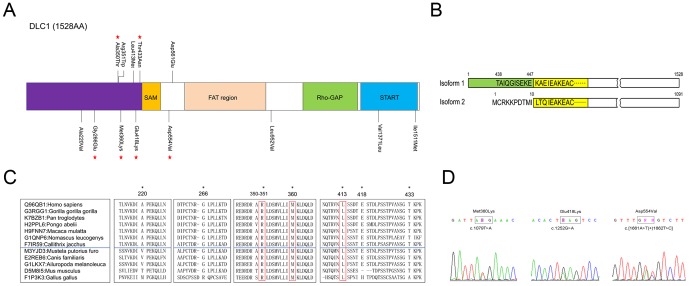
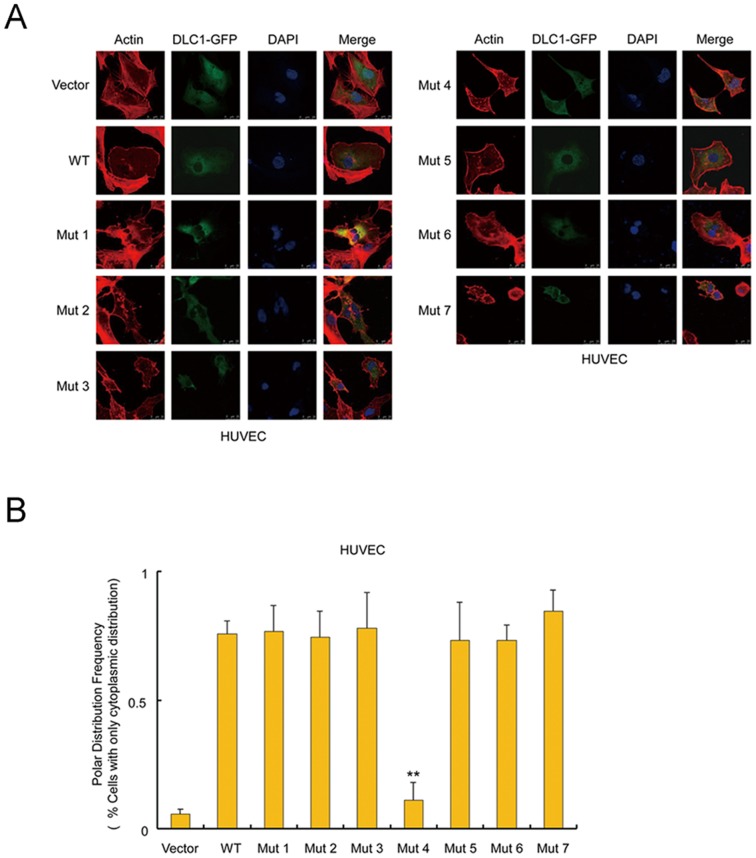
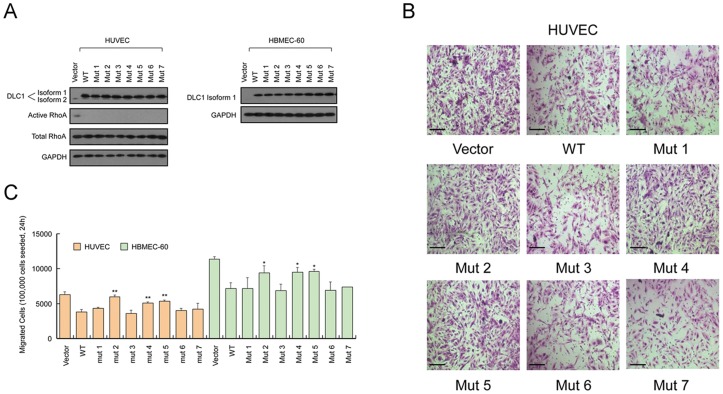
Congenital heart disease (CHD) is the most common birth defect affecting the structure and function of fetal hearts. Despite decades of extensive studies, the genetic mechanism of sporadic CHD remains obscure. Deleted in liver cancer 1 (DLC1) gene, encoding a GTPase-activating protein, is highly expressed in heart and essential for heart development according to the knowledge of Dlc1-deficient mice. To determine whether DLC1 is a susceptibility gene for sporadic CHD, we sequenced the coding region of DLC1 isoform 1 in 151 sporadic CHD patients and identified 13 non-synonymous rare variants (including 6 private variants) in the case cohort. Importantly, these rare variants (8/13) were enriched in the N-terminal region of the DLC1 isoform 1 protein. Seven of eight amino acids at the N-terminal variant positions were conserved among the primates. Among the 9 rare variants that were predicted as "damaging", five were located at the N-terminal region. Ensuing in vitro functional assays showed that three private variants (Met360Lys, Glu418Lys and Asp554Val) impaired the ability of DLC1 to inhibit cell migration or altered the subcellular location of the protein compared to wild-type DLC1 isoform 1. These data suggest that DLC1 might act as a CHD-associated gene in addition to its role as a tumor suppressor in cancer.
先天性心脏病(CHD)是影响胎儿心脏结构和功能的最常见出生缺陷。尽管经过了数十年的广泛研究,散发性CHD的遗传机制仍然不清楚。根据对Dlc1基因缺陷小鼠的了解,编码一种GTP酶激活蛋白的肝癌缺失1(DLC1)基因在心脏中高度表达,并且对心脏发育至关重要。为了确定DLC1是否是散发性CHD的易感基因,我们对151例散发性CHD患者的DLC1亚型1的编码区进行了测序,并在病例队列中鉴定出13个非同义罕见变异(包括6个私有变异)。重要的是,这些罕见变异(8/13)在DLC1亚型1蛋白的N端区域富集。在N端变异位置的8个氨基酸中有7个在灵长类动物中是保守的。在9个被预测为“有害”的罕见变异中,有5个位于N端区域。随后的体外功能分析表明,与野生型DLC1亚型1相比,3个私有变异(Met360Lys、Glu418Lys和Asp554Val)损害了DLC1抑制细胞迁移的能力或改变了该蛋白的亚细胞定位。这些数据表明,DLC1除了在癌症中作为肿瘤抑制因子发挥作用外,可能还作为一个与CHD相关的基因。