Nagae Masamichi, Yamaguchi Yoshiki
Structural Glycobiology Team, Systems Glycobiology Research Group, RIKEN-Max Planck Joint Research Center, RIKEN Global Research Cluster, 2-1 Hirosawa, Wako, Saitama 351-0198, Japan.
Int J Mol Sci. 2014 Mar 3;15(3):3768-83. doi: 10.3390/ijms15033768.
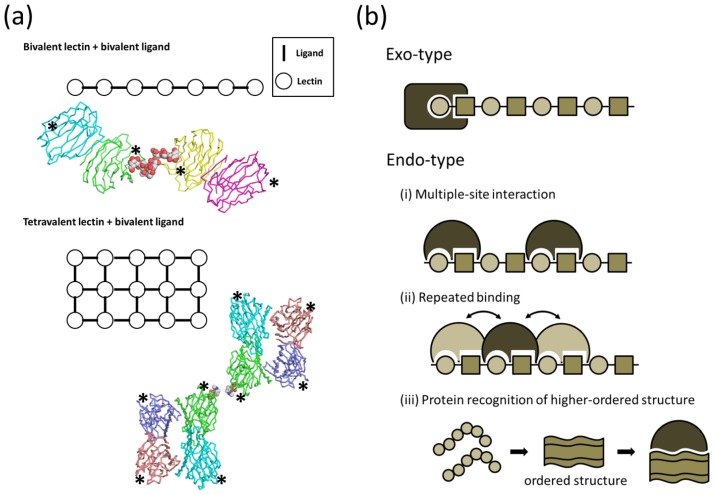
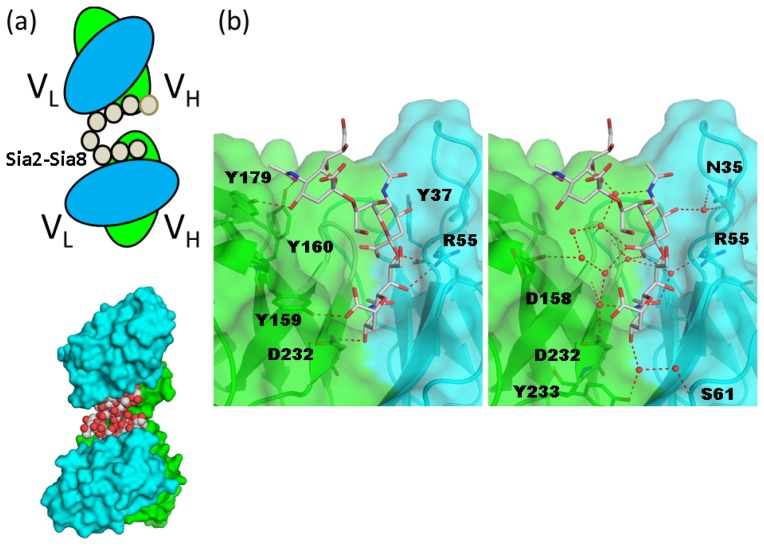
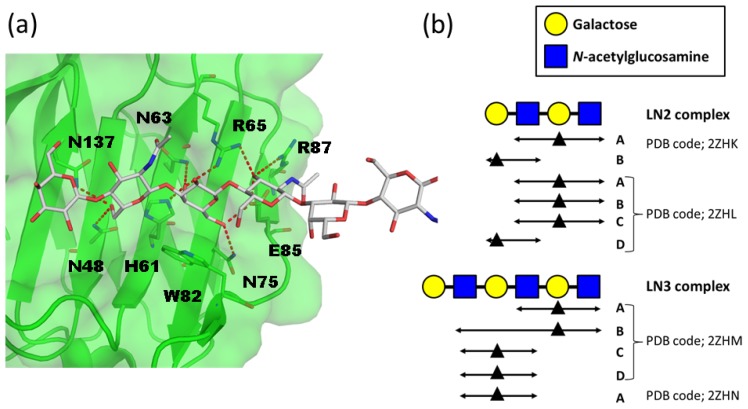
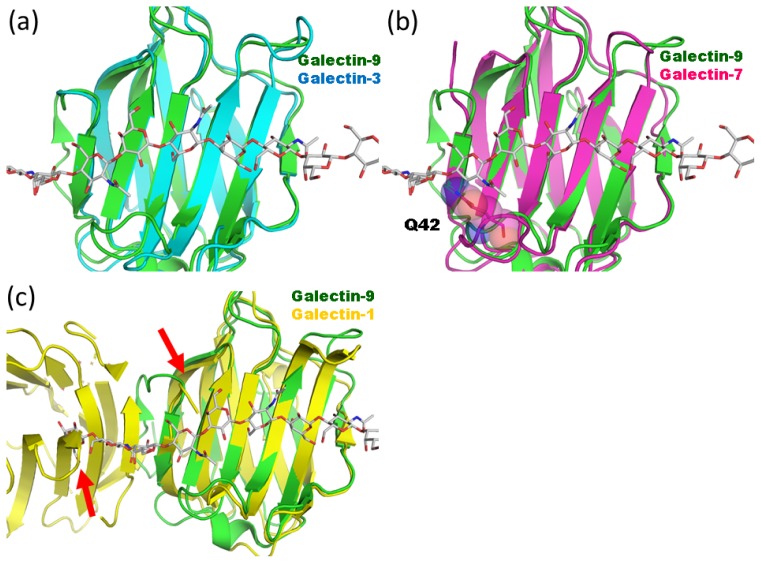
Linear polysaccharides are typically composed of repeating mono- or disaccharide units and are ubiquitous among living organisms. Polysaccharide diversity arises from chain-length variation, branching, and additional modifications. Structural diversity is associated with various physiological functions, which are often regulated by cognate polysaccharide-binding proteins. Proteins that interact with linear polysaccharides have been identified or developed, such as galectins and polysaccharide-specific antibodies, respectively. Currently, data is accumulating on the three-dimensional structure of polysaccharide-binding proteins. These proteins are classified into two types: exo-type and endo-type. The former group specifically interacts with the terminal units of polysaccharides, whereas the latter with internal units. In this review, we describe the structural aspects of exo-type and endo-type protein-polysaccharide interactions. Further, we discuss the structural basis for affinity and specificity enhancement in the face of inherently weak binding interactions.
线性多糖通常由重复的单糖或二糖单元组成,在生物体内广泛存在。多糖的多样性源于链长变化、分支和其他修饰。结构多样性与各种生理功能相关,这些功能通常由同源的多糖结合蛋白调节。已经分别鉴定或开发了与线性多糖相互作用的蛋白质,如半乳糖凝集素和多糖特异性抗体。目前,关于多糖结合蛋白三维结构的数据正在积累。这些蛋白质分为两种类型:外切型和内切型。前一组与多糖的末端单元特异性相互作用,而后者与内部单元相互作用。在这篇综述中,我们描述了外切型和内切型蛋白质-多糖相互作用的结构方面。此外,我们讨论了在固有弱结合相互作用面前亲和力和特异性增强的结构基础。