Onwuamah Chika K, Ekama Sabdat O, Audu Rosemary A, Ezechi Oliver C, Poirier Miriam C, Odeigah Peter G C
Human Virology Laboratory, Nigerian Institute of Medical Research, Yaba, Lagos, Nigeria.
Clinical Sciences Division, Nigerian Institute of Medical Research, Yaba, Lagos, Nigeria.
PLoS One. 2014 Mar 5;9(3):e90296. doi: 10.1371/journal.pone.0090296. eCollection 2014.
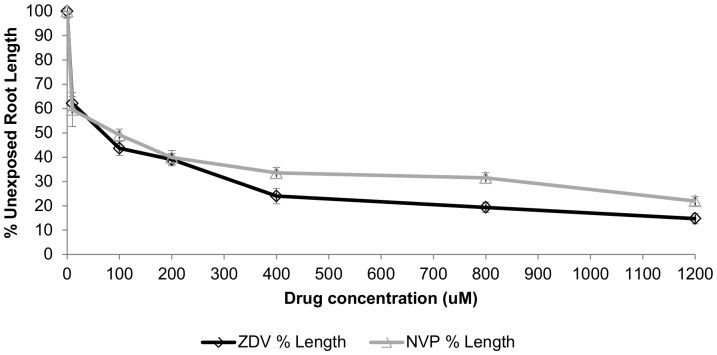
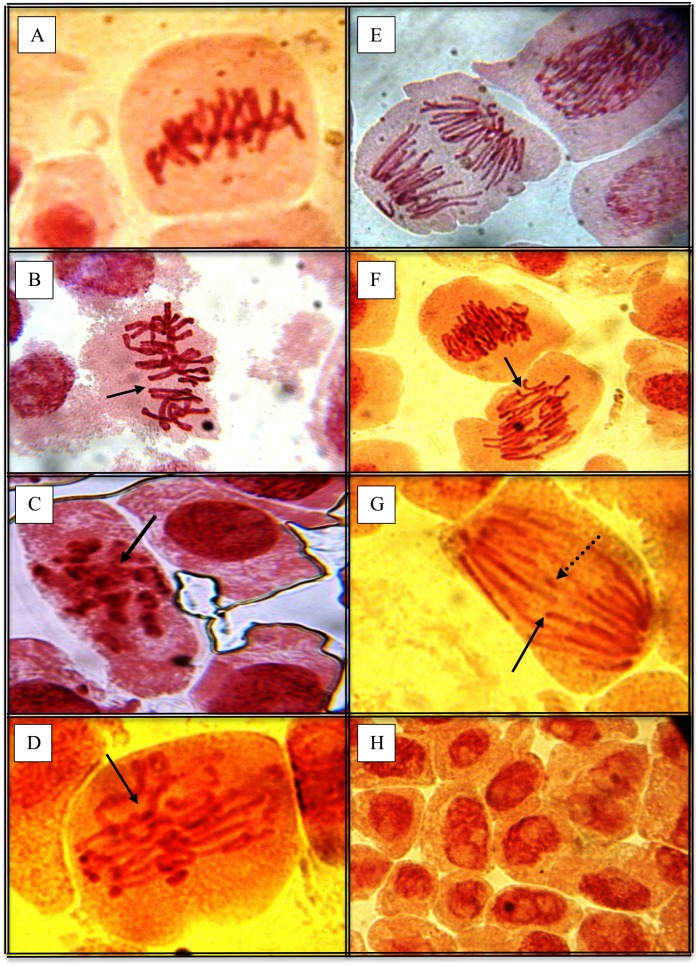
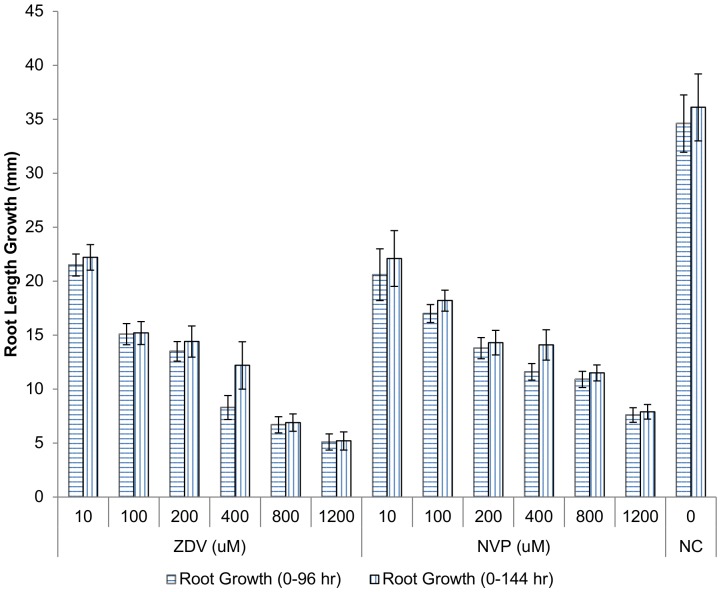
Antiretroviral drugs have proved useful in the clinical management of HIV-infected persons, though there are concerns about the effects of exposure to these DNA-reactive drugs. We investigated the potential of the plant model Allium cepa root tip assay to demonstrate the cytogenotoxicity of zidovudine and nevirapine and as a replace-reduce-refine programme amenable to resource-poor research settings. Cells mitotic index were determined in squashed root cells from Allium cepa bulbs exposed to zidovudine or nevirapine for 48 hr. The concentration of zidovudine and nevirapine inhibiting 50% root growth after 96 hr exposure was 65.0 µM and 92.5 µM respectively. Root length of all antiretroviral-exposed roots after 96 hr exposure was significantly shorter than the unexposed roots while additional root growth during a subsequent 48 hr recovery period in the absence of drug was not significantly different. By ANOVA, there was a significant association between percentage of cells in mitosis and zidovudine dose (p=0.004), but not nevirapine dose (p=0.68). Chromosomal aberrations such as sticky chromosomes, chromatin bridges, multipolar mitoses and binucleated cells were observed in root cells exposed to zidovudine and nevirapine for 48 hr. The most notable chromosomal aberration was drug-related increases in sticky chromosomes. Overall, the study showed inhibition in root length growth, changes in the mitotic index, and the induction of chromosomal aberrations in Allium bulbs treated for 96 hr or 48 hr with zidovudine and nevirapine. The study reveals generalized cytogenotoxic damage induced by exposure to zidovudine and nevirapine, and further show that the two compounds differ in their effects on mitosis and the types of chromosomal aberrations induced.
抗逆转录病毒药物已被证明在艾滋病毒感染者的临床管理中有用,尽管人们对接触这些具有DNA反应性的药物的影响存在担忧。我们研究了植物模型洋葱根尖试验显示齐多夫定和奈韦拉平细胞遗传毒性的潜力,以及作为适用于资源匮乏研究环境的替代-减少-优化方案的潜力。在暴露于齐多夫定或奈韦拉平48小时的洋葱鳞茎压片中的根细胞中测定细胞有丝分裂指数。暴露96小时后抑制50%根生长的齐多夫定和奈韦拉平浓度分别为65.0μM和92.5μM。暴露96小时后,所有暴露于抗逆转录病毒药物的根的长度明显短于未暴露的根,而在随后48小时无药物的恢复期内额外的根生长没有显著差异。通过方差分析,有丝分裂细胞百分比与齐多夫定剂量之间存在显著关联(p = 0.004),但与奈韦拉平剂量无关(p = 0.68)。在暴露于齐多夫定和奈韦拉平48小时的根细胞中观察到染色体畸变,如粘性染色体、染色质桥、多极有丝分裂和双核细胞。最显著的染色体畸变是与药物相关的粘性染色体增加。总体而言,该研究表明,用齐多夫定和奈韦拉平处理96小时或48小时的洋葱鳞茎中,根长度生长受到抑制,有丝分裂指数发生变化,并且诱导了染色体畸变。该研究揭示了暴露于齐多夫定和奈韦拉平引起的普遍细胞遗传毒性损伤,并进一步表明这两种化合物在对有丝分裂的影响以及诱导的染色体畸变类型方面存在差异。